1. Read ASAP! · Book Review Actions · Book Reviews · Business · Entrepreneurship

BR 316: Starbucks – with Howard Schultz (The Acquired Podcast)

Category: 1 – Read ASAP! (All Categories are 1 – Read ASAP!, 2 – BUY it!, 3 – SHELF it, 4 – SOMEDAY it)

Comments: This episode of the Acquired podcast was both wonderful and educational.

Insights that resonated:

(1) When Howard Schultz first raised $1.6M for Il Giornale (which would eventually become Starbucks), he pitched 242 investors. 217 said no – a 90% rejection rate.

Good perspective for the next time we feel discouraged about things not going our way.

(2) Starbucks founder Howard Schultz told a fascinating story about his return to the company in 2008. For a collection of reasons, Starbucks was in disarray and was months away from being insolvent.

During this time, he was introduced to Steve Jobs and he began telling Steve about some of his problems over a call. Steve asked him to come over to Cupertino so they could take a walk and talk it over.

During the walk, Howard laid out all the problems he was facing and what he was planning to do about it. After listening to it all, Steve practically screamed – “You know what you should do? Fire your executive team.”

Howard’s response was along the lines of “C’mon, I can’t do that. Who will do the work?”

To this, Steve shared that he thought they’ll all be gone in the next 6 months anyway.

9 months or so later, there was one person from that team left. When Howard next met Steve, he told him his prediction had come through. And Steve just pointed out that he could have saved himself from time.

(3) There was a lovely moment when they discussed the Starbucks mobile app.

Howard’s reflection was that while the mobile app was undoubtedly seductive, the trade-off is that it has significantly hit the Starbucks experience. It replaced that intimate connection between barista and customer with a connection with the app.

There was a moment around then when one of the podcast hosts said – “I look at the mobile app and see which Starbucks around me is accepting mobile orders. If a store isn’t accepting mobile orders, I don’t go there.”

“That breaks my heart.” was Howard’s pithy response.

I was struck by this discussion and reflection. Every growth strategy has trade-offs. I’m sure the numbers from Starbucks’ app made the strategy feel trade-off free. Higher utilization, record usage, and so on.

(4) Fascinating bits of business trivia –

  • At a time when Howard Schultz was almost screwed over by a famous Seattle businessman, the person who saved him was Bill Gates’ father. It’s a great story – one that even Bill Gates never knew (a testament to the grounded nature of the man).
  • The original owners of Starbucks took over Peet’s coffee just as Il Giornale (by Howard) took over Starbucks. That was a fascinating story.
2. BUY it! · Bio/Autobiographies · Book Review Actions · Book Reviews · Business · Career · Entrepreneurship · Technology

BR 292: Build by Tony Faddell

Category: 2 – BUY it! (All Categories are 1 – Read ASAP!, 2 – BUY it!, 3 – SHELF it, 4 – SOMEDAY it)

Comments: I enjoyed Tony Fadell’s book. It felt honest, direct, and helpful.

Insights that resonated: 

(1) I appreciated the many Apple/Steve Jobs stories. Some of it confirmed Steve’s intensity (e.g., Jobs on vacation was worse than Jobs at work) and some of it also showed just how much Steve cared about the details. For example, there was a lot of debate between Apple’s product and marketing teams about an “all glass” iPhone. The marketing team wanted something similar to the Blackberry. Steve simply stepped in, made the call, and asked the team to move on.

(2) I appreciated how long Tony spent thinking about thermostats. There’s a whole saga about thermostats at his home in Tahoe. My mental model for starting a company is that you should only start a company when you can’t not do it. It certainly was the case with Nest.

(3) Tony’s story about Nest at Google was a true and sobering look at big company acquisitions. Few work as intended.

(4) Tony keeps driving home the importance of having high standards as a leader. Everything flows from there. That resonated.

2. BUY it! · Book Review Actions · Book Reviews · Entrepreneurship · Leadership · Self Improvement

BR 258: Reboot by Jerry Colonna

Category: 2 – BUY it! (All Categories are 1 – Read ASAP!, 2 – BUY it!, 3 – SHELF it, 4 – SOMEDAY it)

Comments: This isn’t a “how to” lead book. It is a “here’s what leading technology companies looks like” from the perspective of a CEO coach. This book will resonate a lot more with you if you have an interest in tech start-ups. For everyone else, it may be a category 3 (“shelf it” for later book). I still believe it is one of those that you have to include on your bookshelf because I believe the central premise of the book is important – better humans make better leaders.

Insights that resonated:

1. Better humans make better leaders.

2. Heartbreak is universal. True grit is not only having your heart broken – but it is also managing to keep that heart open despite the losses.

3. What if being lost is part of the path? What if we are supposed to tack across the surface of the lake, sailing into the wind instead of wishing it was only at our backs? What if feeling lost, directionless, and uncertain of the progress is an indicator of growth? What if it means you’re exactly where you need to be, on the pathless path?

4. I took a few writing courses in college. The extraordinary poet Marie Ponsot would talk about the crow sitting on your shoulder saying things like: “That sucks,” ”How could you write that?” and “Are you kidding me?”

Diminutive, chain-smoking Marie would jut her tobacco-stained finger into the air, punctuating every word: Shoot. The. Damn. Crow.

5. One day, the Tibetan teacher Milarepa left his cave to gather firewood. When he returned, he found that his cave had been taken over by demons. There were demons everywhere!

His first thought upon seeing them was, “I have got to get rid of them!” He lunges toward them, chasing after them, trying forcefully to get them out of his cave. But the demons are completely unfazed. In fact, the more he chases them, the more comfortable and settled-in they seem to be.

Realizing that his efforts to run them out have failed miserably, Milarepa opts for a new approach and decides to teach them the dharma. If chasing them out won’t work, then maybe hearing the teachings will change their minds and get them to go. So he takes his seat and begins teaching about existence and nonexistence, compassion and kindness, the nature of impermanence.

After a while he looks around and realizes all the demons are still there. They simply stare at him with their huge bulging eyes; not a single one is leaving.

At this point Milarepa lets out a deep breath of surrender, knowing now that these demons will not be manipulated into leaving and that maybe he has something to learn from them. He looks deeply into the eyes of each demon and bows, saying, “It looks like we’re going to be here together. I open myself to whatever you have to teach me.”

In that moment all the demons but one disappear. One huge and especially fierce demon, with flaring nostrils and dripping fangs, is still there.

So Milarepa lets go even further. Stepping over to the largest demon, he offers himself completely, holding nothing back. “Eat me if you wish.” He places his head in the demon’s mouth, and at that moment the largest demon bows low and dissolves into space.


When dealing with the toughest challenges – the kind that involves the demons inside of us – brute force turns out to be a blunt instrument. Acceptance, kindness, and a willingness to open our hearts and minds to the learning ahead of us enable us to make the progress we seek.

3. SHELF it · Book Review Actions · Book Reviews · Business · Entrepreneurship

BR 257: The Infinite Game by Simon Sinek

Category: 3 – SHELF it (All Categories are 1 – Read ASAP!, 2 – BUY it!, 3 – SHELF it, 4 – SOMEDAY it)

Comments: A nice read – one of those books that could have been a long blog post though. :-)

Insights that resonated:

1. Values aren’t values until they cost us something. This lesson from a while ago was reinforced with a story focusing on the decision made by CVS pharmacies to not sell cigarettes (more here).

2. To change outcomes, we must change behavior. And, to change behavior, we must change culture. There was a memorable story about how Alan Mullaly changed the culture within Ford by insisting executives stopped bringing slides that showed all their initiatives marked as “green” despite the company not turning a profit. “We are going to lose billions of dollars this year. Is there anything that’s not going well here?” (more here)

3. The title itself. Life is an infinite game.. think long term. :-)

2. BUY it! · Book Review Actions · Book Reviews · Business · Entrepreneurship · Self Improvement

BR 256: Upstream by Dan Heath

Category: 2 – BUY it! (All Categories are 1 – Read ASAP!, 2 – BUY it!, 3 – SHELF it, 4 – SOMEDAY it)

Comments: I love books by the Heath brothers. While this didn’t quite hit the heights of a Decisive or Switch, it was still a good book that sought to focus energy on attempting to solve problems upstream vs. simply reacting to crises.

Insights that resonated:

1. “Every system is perfectly designed to get the results it gets.”

2. I loved this story from the beginning of the book.

“You and a friend are having a picnic by the side of a river. Suddenly you hear a shout from the direction of the water—a child is drowning. Without thinking, you both dive in, grab the child, and swim to shore.

Before you can recover, you hear another child cry for help. You and your friend jump back in the river to rescue her as well.

Then another struggling child drifts into sight. . . and another. . . and another.

The two of you can barely keep up.

Suddenly, you see your friend wading out of the water, seeming to leave you alone.

‘Where are you going?’ you demand.

Your friend answers, ‘I’m going upstream to tackle the guy who’s throwing all these kids in the water.’”

Other notes here.

3. SHELF it · Business · Entrepreneurship · Technology

BR 234: Subscribed by Tien Tzou

Category: 3 – SHELF it (All Categories are 1 – Read ASAP!, 2 – BUY it!, 3 – SHELF it, 4 – SOMEDAY it)

Comments: This felt like subscription economy 101.. I guess I expected more. :)

Top 3 Lessons:

  1. With subscriptions, product companies are replaced by companies who put the customer first.
  2. When we said newspapers and music were dead, what we were really saying is that the old business model was dead.
  3. The move from access to ownership means everyone is creating a subscription business. And the presence of sensors means even old manufacturers are embracing it. Schneider electric is making elevators default to most used floors for example.
3. SHELF it · Book Review Actions · Book Reviews · Business · Creativity · Entrepreneurship · Leadership · Management

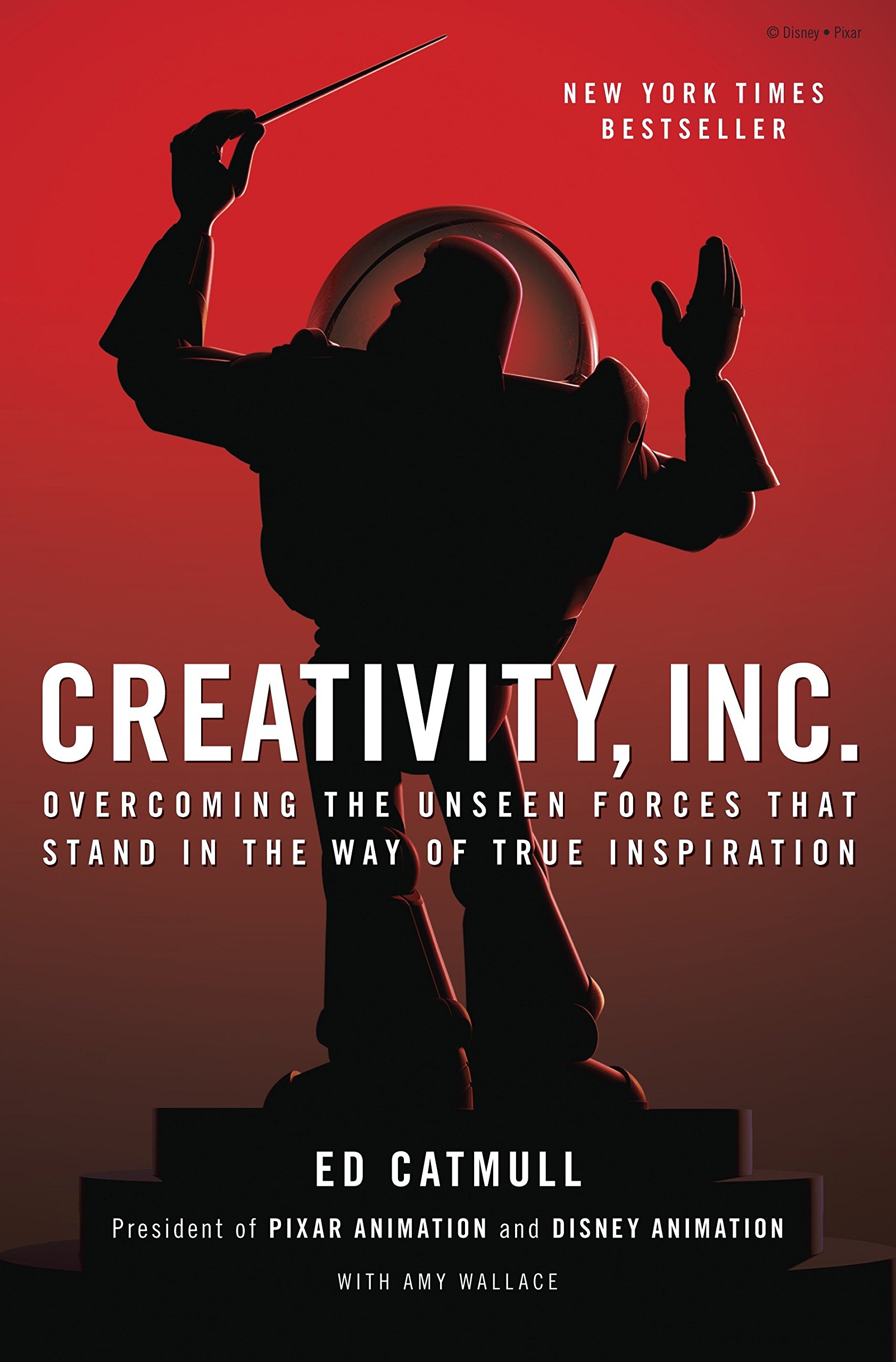
BR 226: Creativity Inc. by Ed Catmull

Category: 3 – SHELF it (All Categories are 1 – Read ASAP!, 2 – BUY it!, 3 – SHELF it, 4 – SOMEDAY it)

Comments: This will be a fun read if you are a Pixar fan. I enjoyed Ed Catmull’s narration of the Pixar story as most other versions I’ve read focus largely on the genius of John Lasseter (who, as expected, is a key character in this book too). I think my rating for the book was tainted a bit because of the news around John Lasseter’s sexual abuse allegations. :-(

Top 3 Lessons:

  1. For all the care you put in artistry, visual polish doesn’t matter if you’re not getting the story right.
  2. Drawing well requires us to learn how to see. The difficulty with drawing is that we let our mental models of objects get ahead of us and get us to jump to conclusions. So, we lose track of what is actually on the page. Art teachers teach students to conquer this by getting them to draw an object upside down or by asking them to drag the negative space around the object – both of which don’t require mental models.
    This is applicable to problem solving. Don’t just look at the problem. Look at the context/situation around it. In Pixar, a scene could sometimes only be fixed by looking at the entire story or preceding scenes.
  3. If there is more truth in the hallways than meetings, you are in trouble. For managers who go out of the way to prevent surprises, get over it.
3. SHELF it · Book Review Actions · Book Reviews · Business · Entrepreneurship · Technology

BR 220: Hackers and Painters by Paul Graham

Category: 3 – SHELF it (All Categories are 1 – Read ASAP!, 2 – BUY it!, 3 – SHELF it, 4 – SOMEDAY it)

Comments: Hackers and Painters was an interesting read. This is unvarnished Paul Graham from before his Y Combinator celebrity days. His writing has been a lot more controversial of late. But, in this book, he shows up as a compelling writer sharing his notes on a wide variety of topics – from education to hacking to design to programming languages.

Top 3 Lessons:

  1. The least sophisticated users tell you what you need to simplify and clarify while the most sophisticated users tell you what features you need to add.
  2. School was created as a means to keep kids busy while adults did work. (I’ve thought of this from time to time since I first read it)
  3. The difference between design and research seems to be a question of new versus good. Design has to be good while research has to be new. These two paths converge at the top – the best design surpasses others by using new ideas and the best research solves problems that are not only new but worth solving.
3. SHELF it · Book Review Actions · Book Reviews · Entrepreneurship · Skills · Technology

BR 216: Product Leadership by Richard Banfield, Martin Ericsson, Nate Walkingshaw

Category: 3 – SHELF it (All Categories are 1 – Read ASAP!, 2 – BUY it!, 3 – SHELF it, 4 – SOMEDAY it)

Comments: There are few good books written on technology product management. So, I’d still recommend folks in product management to read it. However, the biggest challenge I had with this book was that it felt like a collection of quotes from various PMs around the world. I wish there had been more of a central thesis or hypothesis laid out.

Top 3 Learnings: 

1.  Product Management is the intersection between business, user experience, and technology.

Business: Primarily focused on optimizing a product to achieve business goals while maximizing return on investment
Ux: Voice of the customer and must be passionate about the customer and their problems.
Tech: Understand the stack and the level of effort involved.

2. The best roadmap is a strategic communication artifact that is focused on the big picture and conveys the path you’ll take to fulfill your product vision. Split roadmap into themes based on customer problems

3. The product leader as CEO idea is misleading. A better analogy would be the product leader as the captain of a sports team, a conductor of an orchestra, or a university professor guiding their class. Like the professor, conductor, or team captain, the product leader is an individual who succeeds only by bringing the whole team along with them, working toward a common goal.

3. SHELF it · Book Review Actions · Book Reviews · Business · Creativity · Entrepreneurship · Novel Concepts and Interesting Research · Psychology

BR 210: Hunch by Bernadette Jiwa

Category: 3 – SHELF it (All Categories are 1 – Read ASAP!, 2 – BUY it!, 3 – SHELF it, 4 – SOMEDAY it)

Comments: This is a really easy and fun read. Bernadette Jiwa makes the case that we all have it in us to be insightful. We just have to learn to notice more. It’s one of those positive books that you could just pick up and read on a Sunday afternoon and walk out feeling optimistic and better.

Top 3 Learnings: 

  1. Don’t underestimate the power of the hunch in today’s data driven world. Noticing is the key to finding breakthrough ideas in everyday experiences.
  2. Cultivate curiosity, empathy and imagination to be in touch with your hunches.
  3. Empathy is feeling with someone. Sympathy is feeling for someone.