3. SHELF it · Book Review Actions · Book Reviews · Business · Creativity · Management

BR 309: Sonic Boom – The Impossible Rise of Warner Bros Records by Peter Ames Carlin

Category: 3 – SHELF it (All Categories are 1 – Read ASAP!, 2 – BUY it!, 3 – SHELF it, 4 – SOMEDAY it)

Comments: The is the story of Warner Brothers Music’s incredible thirty year run where they shaped the music industry via artists like Jimi Hendrix, Madonna, and Prince. I don’t know much about the music industry – certainly not much about the industry in the 70s and 80s. I also can’t remember how this book ended up in my collection. But I love scrappy origin stories – so maybe that explains it. This was an entertaining read.

Insights that resonated: One of my favorite anecdotes that gets to the heart of their success was that the ethos of the group was their insistence that their focus was to not make hits.

Instead, they were run top-down by an ethos of trying to make great music. Even when they failed commercially, the question the team was asked was – “Was it good?”

Combine this ethos with creative and edgy marketing and you have an incredible package.

As simple as this sounds, it is so hard to do consistently – especially when you’re under pressure to prove viability or to drive growth. And this is especially so when your original set of leaders aren’t in charge.

And that (leadership changes) is predictably what ended their epic run as well.
2. BUY it! · Book Review Actions · Creativity

BR 294: The Practice by Seth Godin

Category: 2 – BUY it! (All Categories are 1 – Read ASAP!, 2 – BUY it!, 3 – SHELF it, 4 – SOMEDAY it)

Comments: Seth’s blog is my favorite blog – my first read every time it shows up on my feed. I love seeing Seth’s books on my shelf as I pick them up when I need inspiration. They always deliver. Seth’s voice and message is consistent and uplifting.

Insights that resonated: 

(1) Seth shares a great story about an author called Robert Caro in “The Practice.” Caro had quit his job as a reporter and begun writing his first major biography – “The Power Broker.”

He took a modest advance and moved his family to a tiny apartment. But, years later, the end didn’t seem in sight. In 1975, he wrote a poignant story for The New York Times describing his despair.

Then, he was given a key to a back room at the New York Public Library. Only eleven writers had keys, and each was given a desk to write.

One day, he looked up and found James Flexner – one of his idols – ask a question he’d come to dread – “How long have you been working on it?”

“Five years”

“Oh, that’s not so long. I’ve been working on my Washington for nine years.”

The next day, another of his idols said quietly – “Eleanor and Franklin took me seven.”

He could have jumped up and kissed them. In a couple of sentences, both men – his idols – had wiped away five years of doubt.

The lesson “Find your cohort. The generous ones.” resonated deeply.

(2) “Asking why teaches you to see how things got to be the way they are. Asking why also puts us on the hook – it means that we’re also open to being asked why, and it means that at some level, we’re now responsible for doing something about the status quo.”

(3)

“If you want to get in shape, it’s not difficult. Spend an hour a day running or at the gym. Do that for six months or a year. Done.

That’s not the difficult part.

The difficult part is becoming the kind of person who goes to the gym every day.”

3. SHELF it · Book Review Actions · Book Reviews · Creativity · History

BR 277: Geography of Genius by Eric Weiner

See the source image

Category: 3 – SHELF it (All Categories are 1 – Read ASAP!, 2 – BUY it!, 3 – SHELF it, 4 – SOMEDAY it)

Comments: This book was a classic Eric Weiner book – lots of fascinating stories artfully weaved together with humor. A fun read and one for the bookshelf for when you’re in the mood for it.

Insights that resonated: 

(1) “What is honored in a country is cultivated there.” | Plato

(2) “Walking quiets the mind without silencing it completely.” | Eric Weiner, Geography of Genius

2. BUY it! · Book Review Actions · Book Reviews · Creativity · Skills

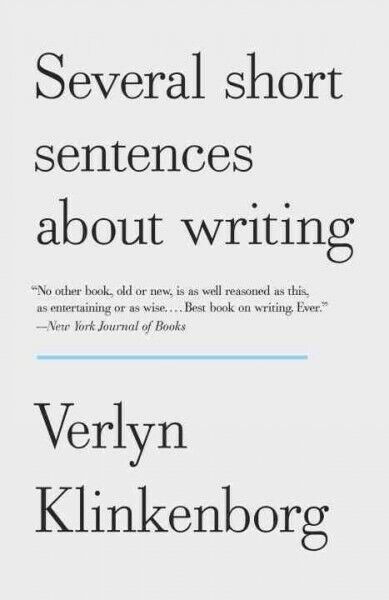
BR 270: Several short sentences about writing by Verlyn Klinkenborg

Category: 2 – BUY it! (All Categories are 1 – Read ASAP!, 2 – BUY it!, 3 – SHELF it, 4 – SOMEDAY it)

Comments: This is a fantastic book on writing. A true masterpiece. As an added bonus, it has plenty of wisdom about skills, practice, and life.

Insights that resonated: I’ve shared a few passages that resonated deeply here. My favorite is the one below.

Why are we talking about sentences?
Why no talk about the work as a whole, about shape, form, genre, the book, the feature story, the profile, even the paragraph?

The answer is simple.
Your job as a writer is making sentences.
Most of your time will be spent making sentences in your head.
In your head.
Did no one ever tell you this?
That is the writer’s life.
Never imagine you’ve left the level of the sentence behind.

1. Read ASAP! · Book Review Actions · Book Reviews · Creativity · Design · Novel Concepts and Interesting Research · Technology

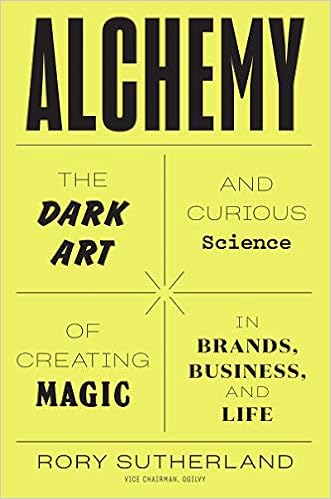
BR 249: Alchemy by Rory Sutherland

Category: 1 – Read ASAP! (All Categories are 1 – Read ASAP!, 2 – BUY it!, 3 – SHELF it, 4 – SOMEDAY it)

Comments: Book of the year. It’s impact on me was as follows – every time I hear someone say “that makes sense – should work” or something similar, I stop in my tracks and remind myself that things that the idea that things that make sense should work is a falsehood.” Alchemy has put in a reminder as strong as any that things that work don’t need to make sense and that a dash of alchemy is often what we need to solve problems. In that sense, its impact on me was profound.

Top 3 Lessons: 

1. The opposite of a good idea is often a good idea. The most successful supermarkets post recession were either really cheap or really expensive. Luxury brands work. So do mass market ubiquitous ones.

2. The Earl of Sandwich asked for a type of food that would allow him to eat without leaving the gambling table. The sandwich since has received mass adoption. But innovation happens at the edges. Not for the average user.

3. Why do we have reason? So many animals have survived just fine without it and evolution doesn’t plan for the future and predict reason will be necessary for us to send someone to the moon. One interesting theory is that we developed reason as a way of justifying our actions to others – a necessary investment in a legal and PR department in a highly social species.

It is honestly really hard to bring this down to a top 3.

2. BUY it! · Creativity · Novel Concepts and Interesting Research · Psychology · Technology

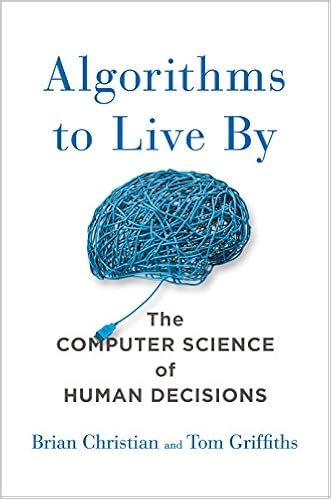
BR 232: Algorithms to Live By Brian Christian and Tom Griffiths

Category: 2 – BUY it!* (All Categories are 1 – Read ASAP!, 2 – BUY it!, 3 – SHELF it, 4 – SOMEDAY it)

Comments: Really fun, geeky, book that doubled up as being insightful and applicable.

Top 3 Lessons:

  1. Explore/exploit: Exploration early in the lifecycle is the right strategy. Kids were considered intellectually deficient. But, as researchers opened up to the idea that they were in the exploration phase of their life, it made sense. Same with smaller social networks for the elderly.
  2. Wrong lesson from the marshmellow test. University of Rochester researchers exposed kids to an adult who promised to bring them better supplies but didn’t. When those kids were exposed to the marshmellow test, they did far worse.Willpower is important in enabling kids to be successful. But, it is likely more important for kids to grow up in an environment where they trust the adults they grow up with. Still a small sample (28 kids) but worth revisiting the learning.
  3. Prisoner’s dilemma has a dominant strategy that is worse for everyone. Unlimited vacation works like that because everyone wants to be perceived as a little more hard working. Equilibrium is 0.
    The only way companies can get around that is by shifting equilibrium – e.g. enforce x weeks of mandatory vacation.
3. SHELF it · Book Review Actions · Book Reviews · Business · Creativity · Entrepreneurship · Leadership · Management

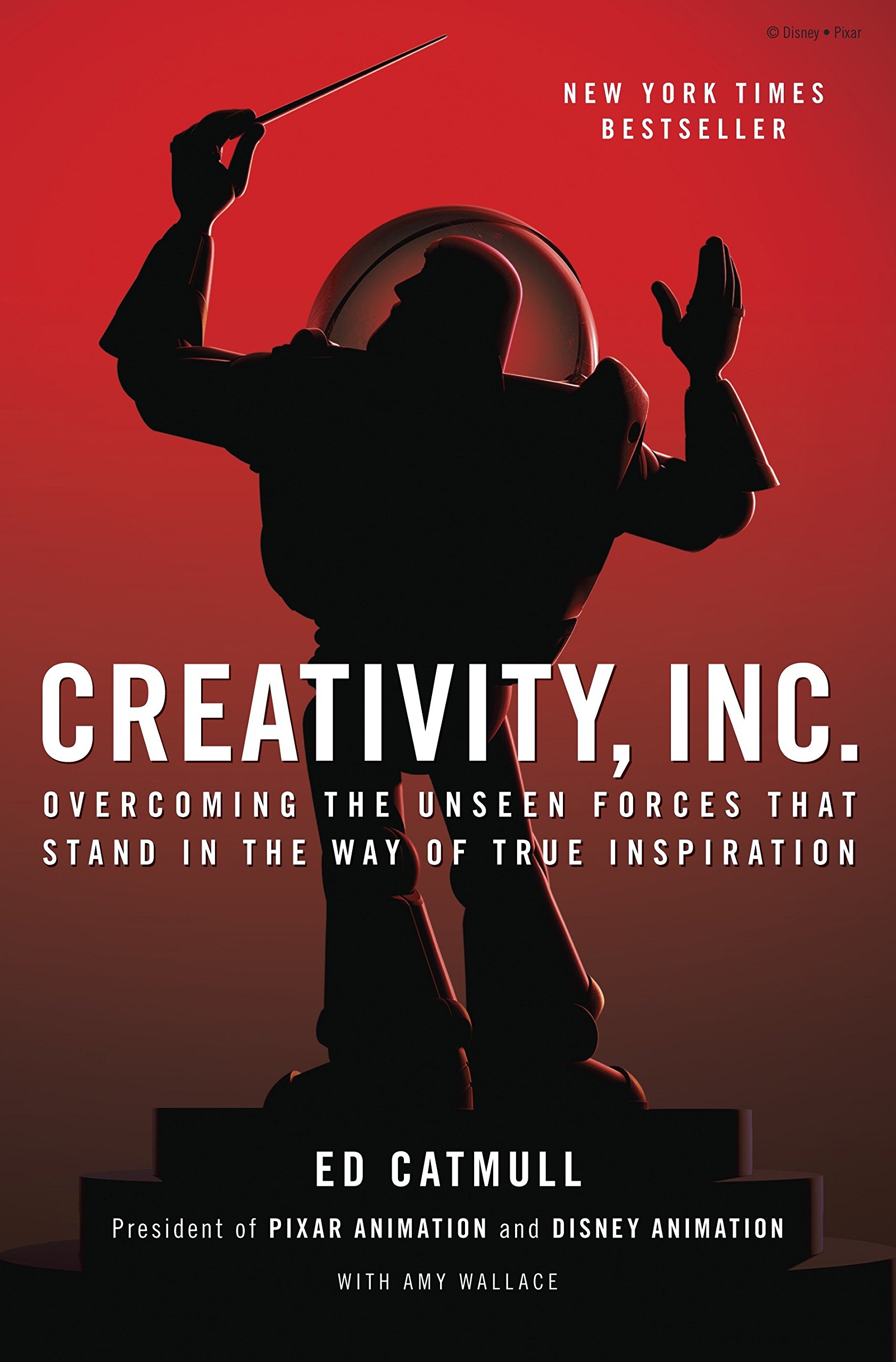
BR 226: Creativity Inc. by Ed Catmull

Category: 3 – SHELF it (All Categories are 1 – Read ASAP!, 2 – BUY it!, 3 – SHELF it, 4 – SOMEDAY it)

Comments: This will be a fun read if you are a Pixar fan. I enjoyed Ed Catmull’s narration of the Pixar story as most other versions I’ve read focus largely on the genius of John Lasseter (who, as expected, is a key character in this book too). I think my rating for the book was tainted a bit because of the news around John Lasseter’s sexual abuse allegations. :-(

Top 3 Lessons:

  1. For all the care you put in artistry, visual polish doesn’t matter if you’re not getting the story right.
  2. Drawing well requires us to learn how to see. The difficulty with drawing is that we let our mental models of objects get ahead of us and get us to jump to conclusions. So, we lose track of what is actually on the page. Art teachers teach students to conquer this by getting them to draw an object upside down or by asking them to drag the negative space around the object – both of which don’t require mental models.
    This is applicable to problem solving. Don’t just look at the problem. Look at the context/situation around it. In Pixar, a scene could sometimes only be fixed by looking at the entire story or preceding scenes.
  3. If there is more truth in the hallways than meetings, you are in trouble. For managers who go out of the way to prevent surprises, get over it.
2. BUY it! · Book Review Actions · Book Reviews · Career · Creativity · Novel Concepts and Interesting Research · Psychology

BR 222: When by Dan Pink

Category: 2 – BUY it!* (All Categories are 1 – Read ASAP!, 2 – BUY it!, 3 – SHELF it, 4 – SOMEDAY it)

Comments: Dan Pink, like the Heath brothers, is a specialist at condensing tons of great research into a few digestible ideas. He does that again by bringing together a ton of great research on timing with “When.”

Top 3 Lessons: I’ve gone with 5 as there were many cool nuggets.

  1. All studies on energy show a spike in the morning, a trough in the afternoon and a rebound in the evening. This is because nearly 70% of the population are “larks” and have spikes in the morning (stays true for most of life except in our teenage years – where most of us become “owls”). The afternoon trough is dangerous – more surgery mistakes, more accidents, and lower test scores.
  2. American Association of Pediatrics in 2014 and even the CDC have issued guidance that middle schools and upward should have starting times after 830. Starting early for kids who are going through prime owl years is a recipe for lower test scores, tardiness, less learning and even more accidents.
  3. Endings matter a lot. At the end of your week, note what you have accomplished, plan the next day, and send a thank you to someone.
  4. Managers email response time to their subordinates was a leading indicator of their subordinates happiness. (Fascinating)
  5. Living in the present isn’t always great advice. Instead, life requires us to integrate our past, present and future.
2. BUY it! · Book Review Actions · Book Reviews · Business · Creativity · Marketing · Novel Concepts and Interesting Research · Psychology · Relationships

BR 221: The Power of Moments by Chip and Dan Heath

Category: 2 – BUY it!* (All Categories are 1 – Read ASAP!, 2 – BUY it!, 3 – SHELF it, 4 – SOMEDAY it)

Comments: I love books by Chip and Dan Heath. While this book didn’t resonate as strongly as Decisive (their previous book) did, I thought it brought together lessons on a very important topic, Great moments are what we remember in this life. Understanding how these get made is, thus, as important a lesson as any.

Top 3 Lessons:

  1. A formula for excellent mentorship: High expectations + Assurance + Direction + Support
  2. Responsiveness is the key to strong relationships. It means you are attuned to the other person. The idea that physicians ask patients “what matters to you” revolutionized children’s healthcare in Scotland.
    Do we understand what matters to the people we care about? (Deep questions, thus, are a great way to get to know people.)
  3. In the short term, we often choose to fix problems over creating moments. In the long term, that backfires. Moments are not a means to the end, they are the end. They are what we remember in the end.
3. SHELF it · Book Review Actions · Book Reviews · Business · Creativity · Entrepreneurship · Novel Concepts and Interesting Research · Psychology

BR 210: Hunch by Bernadette Jiwa

Category: 3 – SHELF it (All Categories are 1 – Read ASAP!, 2 – BUY it!, 3 – SHELF it, 4 – SOMEDAY it)

Comments: This is a really easy and fun read. Bernadette Jiwa makes the case that we all have it in us to be insightful. We just have to learn to notice more. It’s one of those positive books that you could just pick up and read on a Sunday afternoon and walk out feeling optimistic and better.

Top 3 Learnings: 

  1. Don’t underestimate the power of the hunch in today’s data driven world. Noticing is the key to finding breakthrough ideas in everyday experiences.
  2. Cultivate curiosity, empathy and imagination to be in touch with your hunches.
  3. Empathy is feeling with someone. Sympathy is feeling for someone.