3. SHELF it · Book Review Actions · Book Reviews · Entrepreneurship · Psychology

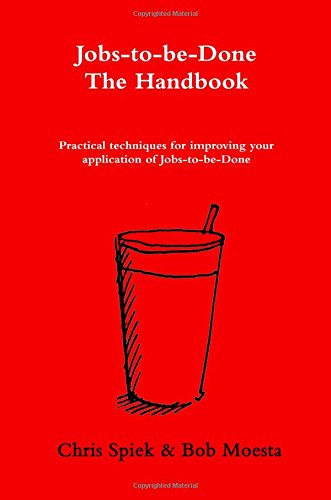
BR 185: The Jobs To Be Done Handbook by Bob Moesta and Chris Spiek

Jobs to be done, handbook, bob moesta, jtbd

Category: 3 – SHELF it (All Categories are 1 – Read ASAP!, 2 – BUY it!, 3 – SHELF it, 4 – SOMEDAY it)

Comments: Practical how-to guide on conducting “jobs to be done” interviews. I had attended a Bob Moesta presentation in person once and this book just felt like the extended version of that. Lots of tips and tricks.

Top 3 Learnings:

1. With jobs to be done, it is all about finding the “why” behind customer decisions and then figuring out ways to meet the unmet need

2. To hire a product, you must fire another product. Every customer has only so much space in their lives to use products. So, if you are trying to get them to change behavior, they will need to let go of a product that isn’t doing the job so well.

3. Good jobs to be done interviewing does not connect the dots for the interviewee. Be ignorant, make no assumptions and keep asking them questions. Again, in the live presentation, Bob Moesta conducted a demo interviewed and showcased this beautifully – that will stay with me. :)

Book notes here.

3. SHELF it · Book Review Actions · Book Reviews · Leadership · Psychology · Self Improvement

BR 184: Persuadable by Al Pitampalli

persuadable, al pitampalli

Category: 3 – SHELF it (All Categories are 1 – Read ASAP!, 2 – BUY it!, 3 – SHELF it, 4 – SOMEDAY it)

Comments: A really good book. I didn’t find it as new simply because it involves broadening Jeff Bezos’ philosophy about people who are right a lot continually changing their mind. In Persuadable, Al helps us understand how to think about being persuadable and shares a compelling rationale for being so.

Top 3 Learnings:

1. Two of my favorite business tales – Jeff Bezos on being right a lot  and Ray Dalio’s investment approach.

In 1981, Dalio was sure US was on the brink of a recession because he felt the government was too leveraged. He began publicizing it. But, to Dalio’s surprise, the stock market surged and led to a tremendous embarrassment and loss of fortune.

So kept detailed records of every trade he made and began noting what happened with every investment – learning from both his success and painful losses. Pain + success = progress. Kept finding “rules” for the market and kept improving it.

2. Thanks to Ralph Waldo Emerson’s writings which normally emphasize leadership bravado and single-mindedness, we focus a lot on consistency. So much so that whole political campaigns are won the moment a candidate switches views on a topic. While the rationale for this is because political candidates are often guilty of changing views based on when it suits them, we also end up punishing those who’re changing it because of better data.

Abraham Lincoln, for example, was a notorious flip flopper who changed his views on the civil rights movement as new data presented itself. even black scholar and activist W E B De Buy? who was often critical of Lincoln admired his always critical and flexible brand of leadership.

3. The overall point of the book is to view our approach to life and business as an evolving thesis. Seek new information, keep improving the thesis and get better.

Book notes here

3. SHELF it · Book Review Actions · Book Reviews · Entrepreneurship · Psychology · Self Improvement

BR 182: The One Thing by Gary Keller and Jay Papasan

One thing

Category: 3 – SHELF it (All Categories are 1 – Read ASAP!, 2 – BUY it!, 3 – SHELF it, 4 – SOMEDAY it)

Comments: The One Thing was a pleasant read. It felt like a “starter” self help book. Lots of interesting ideas packaged in a “how to,” without much focus on “why.”

Top 3 Learnings: Just one learning – of course.

At any given time, it will feel like you have many things you need to make progress on.

Take a step back and ask yourself – what is the ONE thing you need to focus on?

Then, make progress on that.

(No other book notes :))

3. SHELF it · Book Review Actions · Book Reviews · Psychology · Self Improvement

BR 180: The Willpower Instinct by Kelly McGonigal

willpower

Category: 3 – SHELF it (All Categories are 1 – Read ASAP!, 2 – BUY it!, 3 – SHELF it, 4 – SOMEDAY it)

Comments: A super practical and applicable guide to willpower.

Top 3 Learnings:

1. There is no point beating yourself up for a willpower failure. We do better when we learn to be kind to ourselves.

2. Pay attention to your thoughts and accept them. Just remember that you don’t have to act on them. Resisting thoughts is a bad idea.

3. The best long term solution to willpower is mindfulness when you feel cravings. That’s how you learn to conquer them.

Book notes here.

3. SHELF it · Book Review Actions · Book Reviews · Business · Entrepreneurship · History · Novel Concepts and Interesting Research · Psychology

BR 179: David and Goliath by Malcolm Gladwell

Category: 3 – SHELF it (All Categories are 1 – Read ASAP!, 2 – BUY it!, 3 – SHELF it, 4 – SOMEDAY it) Comments: Malcolm Gladwell is a masterful writer and weaves together many stories into a compelling book that asks us to rethink our traditional ideas of what constitutes an advantage. Top 3 Learnings: 1. You may be better off being a big fish in a small pond. More people get discouraged and depressed being average at a top institution. 2. David and Goliath was a mismatched battle. As a slinger, Goliath actually stood no chance. 3. There is such a thing as a desired level of adversity. That’s how character is built. Book notes here.
3. SHELF it · Book Review Actions · Book Reviews · Business · Entrepreneurship · Leadership · Management · Technology

BR 178: The Alliance by Reid Hoffman and Ben Casnocha

alliance

Category: 3 – SHELF it (All Categories are 1 – Read ASAP!, 2 – BUY it!, 3 – SHELF it, 4 – SOMEDAY it)

Comments: The contents and philosophy behind this book is very close to my heart as I’m heading to work at LinkedIn post school. A lot of it felt very familiar and true from my experience at LinkedIn over the summer. Thanks Reid – for sharing it with the world.

Top 3 Learnings:

1. The best way to retain talent is to accept the fact that talented folks will want to leave. Plan for that.

2. Build talent management around “tours of duty.” These are “missions” of sort which challenge talented employees for a certain period of time and ensure a win-win scenario for both the company and the employee.

3. The best companies treat employee relationships as a two-way alliance. This lasts long after the employee leaves the company.

Book notes here.

3. SHELF it · Book Review Actions · Book Reviews · Career · Leadership · Psychology · Self Improvement

BR 175: Why CEO’s Fail by David Dotlich and Peter C Cairo

Category: 3 – SHELF it (All Categories are 1 – Read ASAP!, 2 – BUY it!, 3 – SHELF it, 4 – SOMEDAY it) Comments: Powerful book that is best characterized by a single powerful insight – most CEO failures are really failures of self awareness. It is hard for senior leaders to be self aware because, as you move up, your jokes become funnier and your insights become more insightful. I didn’t do a book summary but did reflect on the takeaways from the book – that’s here.
3. SHELF it · Book Review Actions · Book Reviews · Business · Leadership · Management · Technology

BR 172: How Google Works by Eric Schmidt, Jonathan Rosenberg

How Google Works, Eric Schmidt, Jonathan Rosenberg

Category: 3 – SHELF it (All Categories are 1 – Read ASAP!, 2 – BUY it!, 3 – SHELF it, 4 – SOMEDAY it)

Comments: Good book – especially if you are interested in technology. Lots of interesting points of view on why Google chose to operate the way they did. This is particularly applicable because many of the best known technology firms followed Google’s lead in terms of workplace environment.

I do think there’s an important causality issue in the book’s logic. Eric and Jonathan often make it sound that the way they built Google’s culture and norms resulted in Google’s success. I think it is the other way around – their extraordinary technical insight enabled them to build their unique culture and norms which, in turn, reinforced their technical superiority.

Top 3 Learnings:

1. Open plan officers are important for creative work as they result in “collisions” of people that result in ideas being passed around. They are also important as they keep cross functional teams working together. It is just vital that you find ways to have workspaces where introverts can go and focus/get alone time as necessary.

2. Why have perks? Make the office a place where people really want to come to work. The more people want to work from home in jobs that require teamwork and creativity, the more you have a problem.

3. Bill Campbell style 1:1s

Book notes here.

3. SHELF it · Book Review Actions · Book Reviews · Business · Management

BR 171: Reputation Rules by Daniel Diermeier

reputation rules, trust radar

Category: 3 – SHELF it (All Categories are 1 – Read ASAP!, 2 – BUY it!, 3 – SHELF it, 4 – SOMEDAY it)

Comments: Reputation rules was required reading for an interesting course on Crisis Management at school and is written by a former Professor. Good book with many interesting examples. However, if I played devil’s advocate, it did feel like one of those where a long blog post would have sufficed.

Top Learnings:

1. The trust radar was a valuable crisis tool and is one I think I will remember for a long time.  See this post for more.

2. It was very interesting to learn about corporate activist groups from a crisis management point of view.

Book notes here.

3. SHELF it · Book Review Actions · Book Reviews · Entrepreneurship · Technology

BR 169: Zero to One by Peter Thiel

Category: 3 – SHELF it (All Categories are 1 – Read ASAP!, 2 – BUY it!, 3 – SHELF it, 4 – SOMEDAY it)

Comments: This book didn’t live up to the hype for me – likely because I’d read Thiel’s thinking around monopoly businesses on the internet before the book.

Top 2 Learnings:

1. Horizontal progress is when we take an idea that works in one place and copy it everywhere else. Vertical progress is true technological innovation (0 to 1).

2. Monopoly businesses are the best. Competition is for losers.