3. SHELF it · Book Review Actions · Book Reviews · Creativity · Novel Concepts and Interesting Research · Psychology

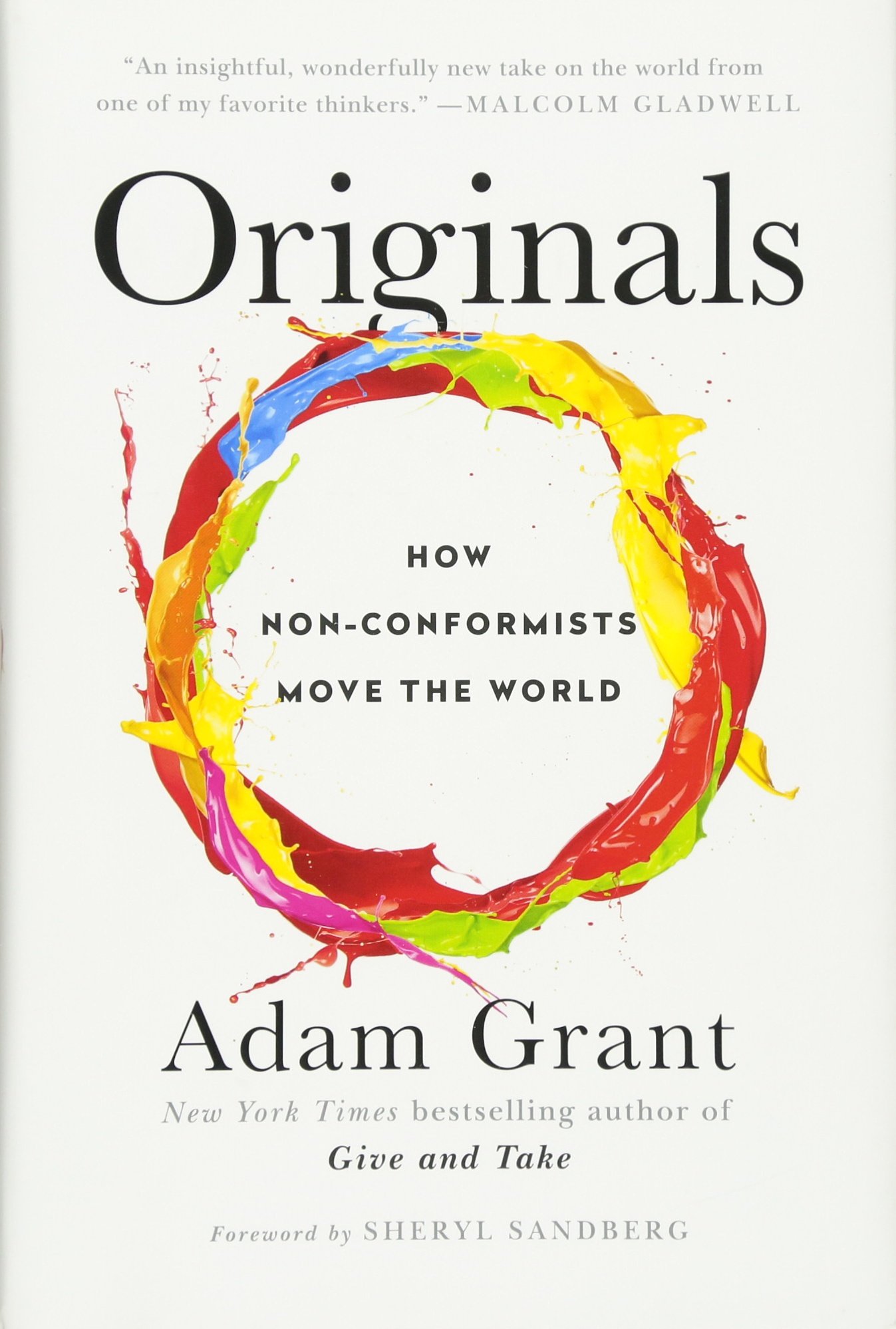
BR 208: Originals by Adam Grant

Category: 3 – SHELF it (All Categories are 1 – Read ASAP!, 2 – BUY it!, 3 – SHELF it, 4 – SOMEDAY it)

Comments: Interesting book with lots of anecdotes from various experiments. After a very compelling start, I felt the book lost its way a bit toward the middle.

Top 3 Learnings:

1. Entrepreneurship is more about de-risking than taking risks. Keep testing the riskiest assumptions with simple experiments (We had interviewed Neil Blumenthal from Warby Parker in business school. This was a repeat of what he shared but powerful nevertheless).

2. Child prodigies rarely live up to their potential as they rarely learn to be original. Creative kids can often be trouble makers.

3. Vu ja de. So much of creativity is combining old ideas into new combinations.

3. SHELF it · Bio/Autobiographies · Entrepreneurship · Technology

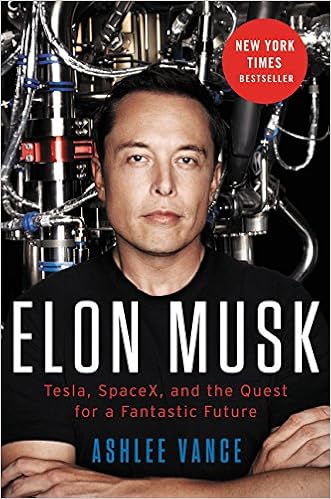
BR 207: Elon Musk by Ashlee Vance

Category: 3 – SHELF it (All Categories are 1 – Read ASAP!, 2 – BUY it!, 3 – SHELF it, 4 – SOMEDAY it)

Comments: Elon Musk’s book has a compelling narrative, a great inherent story and is very well written. It is not for everyone. However, if you are interested/intrigued by Elon Musk and/or have an interest in entrepreneurship, space or clean energy, this is a fascinating read.

Top 3 Learnings:
1. I found it fascinating to see how Musk kept buying himself career credit to do the next thing. His first tech company was a internet 1.0 version of Yelp meets Google Maps that exited for >$300M. This, then, gave him capital and credibility to work on X.com, which became PayPal. That, in turn, led to SpaceX.. And he chanced on Tesla because he was known to care a lot about clean energy.

2. Elon is a suitably weird/crazy, gifted person whose drive matches his considerable intellect. That said, he’s had to make some really big sacrifices to get to where he’s gotten to. He sees his mission as one that will save human kind (we care a lot about legacy as human beings) and his skills and experiences have positioned him beautifully for it. It isn’t for everyone. But, it is nevertheless inspiring to see him work toward what matters to him – even if his style occasionally is occasionally cold and un-empathetic.

3. I love Elon’s focus on first principles. His desire to understand the key drivers is phenomenal. The way he disaggregated the cost of a rocket’s components to get to understanding how over priced rockets are was, again, awe-inspiring.

No book notes. I treated this as a light read. :)

3. SHELF it · Leadership · Psychology

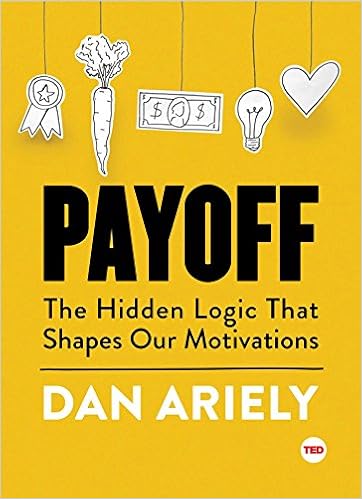
BR 203: Payoff by Dan Ariely

Category: 3 – SHELF it (All Categories are 1 – Read ASAP!, 2 – BUY it!, 3 – SHELF it, 4 – SOMEDAY it)

Comments: Payoff is a short book that is both simple and powerful. If you love Dan Ariely’s work and/or behavioral economics, you will enjoy this book.

Top 3 Learnings:
1. We tend to underestimate the power of goodwill in building motivated teams and work environments. If there’s one thing you take away from this book, it is that appreciation and goodwill are more powerful incentives than any financial incentives (assuming people’s pay covers basic needs).

2. Purpose matters over pleasure. Understanding why we do things goes a long way in helping us stay motivated.

3. As humans, we care a great deal about legacy. We’ve had a big fascination for life after death since the time of the pharaohs and that fascination continues today.

3. SHELF it · Creativity · Skills · Technology

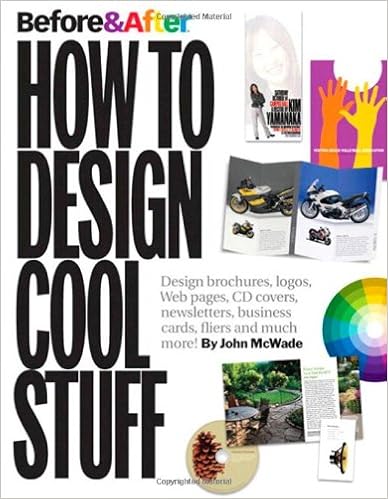
BR 202: How to Design Cool Stuff by John McWade

Category: 3 – SHELF it (All Categories are 1 – Read ASAP!, 2 – BUY it!, 3 – SHELF it, 4 – SOMEDAY it)

Comments: This is a beautifully designed book – as it should be. :) It has lots of interesting examples that demonstrate what is good design and what is bad design. I took away a fair number of tips – but I did miss principles.

Top 3 Learnings:
1. Colors such as yellow, orange and red are warm colors while colors such as blue and purple are cool colors. Cool colors point to professional settings.

2. Breaking images into multiple pieces can be very powerful. Scale: magnifying small pieces can greatly improve perception of importance. Similarly, Cropping images is a powerful tool. A small part of the image can tell a much more powerful story than the rest of the image.

3. Add a photo to the graph. If sales of strawberries, put a strawberry photo behind

Book notes here.

3. SHELF it · Skills

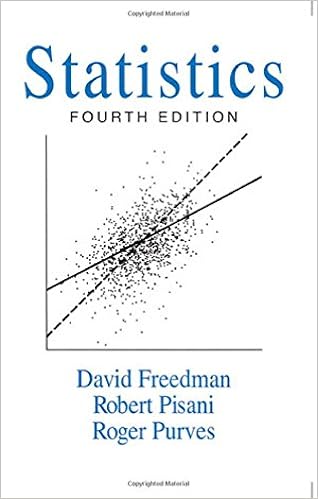
BR 201: Statistics, 4th Edition by Freedman, Pisani, Purves

Category: 3 – SHELF it (All Categories are 1 – Read ASAP!, 2 – BUY it!, 3 – SHELF it, 4 – SOMEDAY it)

Comments: This is a Statistics textbook. So, it definitely isn’t for everyone. However, if you are interested in Statistics, it is an awesome book. Lays out concepts with a ton of clarity.

Top 3 Learnings:
1. Let’s say you are tossing a coin.
The law of averages says nothing about an increased likelihood of a tail after 4 rows of heads. Instead, it says that – as you keep increasing the number of tosses, the chance error as a percentage of tosses keeps going down.

2. Regressions ONLY deal with associations or correlations. An increase in x is associated with an increase in y.

3. A test of significance gets at the question of whether an observed difference is real (alternative hypothesis) or just a chance variation (null hypothesis). The observed significance level is the chance of getting a test statistic as extreme or more extreme than the observed one. The chance is computed on the basis that the null hypothesis is right. Small values of p are evidence against the null hypothesis – i.e. the observed difference is real.

3. SHELF it · Book Review Actions · Book Reviews · Business · Skills · Technology

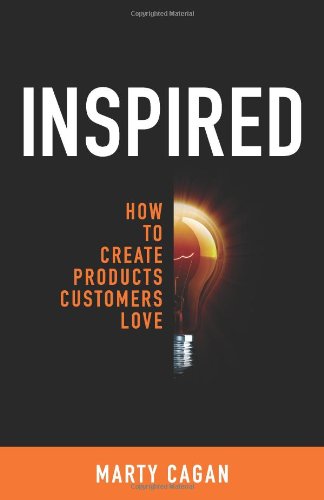
BR 200: Inspired by Marty Cagan

Category: 3 – SHELF it* (All Categories are 1 – Read ASAP!, 2 – BUY it!, 3 – SHELF it, 4 – SOMEDAY it)

*This is a really nice read if you are interested in Technology Product Management. I’d move this to “BUY It” in that case.

Comments: A really well written and well organized book that beautifully lays out the art and science of product management.

1. The job of the product manager is to discover a product that is valuable, usable, and feasible.

3 Steps to Building Products –

1. Is there a real opportunity?
2. Figure out what to build (build the right product) – is there enough evidence that it is valuable, useful and feasible?
3. Build it (building the product right).

2. Replace PRDs or Product Specs with a prototype. The majority of the product spec should be the high-fidelity prototype, representing the functional requirements, the information architecture, the interaction design, and the visual design of the user experience.

3. Fear, greed and lust. People buy and use products largely for emotional reasons. In the enterprise space, the dominant emotion is generally fear or greed. In the consumer space, the dominant emotions get more personal. If I buy this product or use this Web site, I will make friends (loneliness), find a date (love or lust), win money (greed), or show off my pictures or my taste in music (pride).

3. SHELF it · Bio/Autobiographies · Book Review Actions · Book Reviews · History

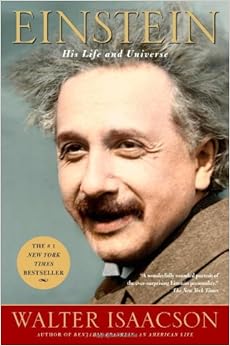
BR 198: Einstein by Walter Isaacson

Category: 3 – SHELF it (All Categories are 1 – Read ASAP!, 2 – BUY it!, 3 – SHELF it, 4 – SOMEDAY it)

Comments: I understand this book wouldn’t be for everyone. However, if you have any interest in science and the life and works of Albert Einstein, I’d suggest taking your time reading this one. The middle portion might get a bit boring. But, the end is worth it. Walter Isaacson takes his time to develop Einstein’s character. And, by the end, you realize that the time taken was completely worth it.

I began reading to understand Einstein the genius. And, I finished understanding Einstein, the wise human being. :)

Top 3 Learnings:

1. Einstein’s genius wasn’t about his brain but how his mind works. He was the true example of endless curiosity. You can imagine him as a kid lying sick and wondering about how the compass works and then wondering what it might be like to travel alongside a wave.

2. The most striking thing about Einstein was his wry detachment and equanimity. He never took himself or his work seriously. He may have blown hot or cold with his family when he felt confined. But, otherwise, he was a passionate and caring man who was adored by his colleagues. They hosted a wonderful 70th birthday ceremony where they spoke more about his character than his work.

He used his old age to defend the rights of those who were young and to use the luxury of his reputation to pursue his field theory. However, over the years, he relied more on complex math than the physics that had made him great. A part of his resistance was his now quaint refusal to accept quantum mechanics.

3.Is everything alright? “Everything is alright. I am not.” – he said to his secretary on his last day at the institute. :) His “wry detachment” is evident.

Book notes here.

3. SHELF it · Book Review Actions · Book Reviews · Parenting

BR 194: The Happiest Baby on the Block by Harvey Karp

Category: 3 – SHELF it (All Categories are 1 – Read ASAP!, 2 – BUY it!, 3 – SHELF it, 4 – SOMEDAY it)

Comments: The Happiest Baby on the Block is an all star parenting book/video. The list of parents who recommend this is very long. And, we were very thankful for Dr Harvey Karp. We just bought the 45 minute video and that worked great. I would posit that the video is probably better than the book as it is better to see what he says in action.

It had a transformational effect on me. I had never held babies before ours was born and was generally a bit nervous around them. But, his framework gave me so much confidence and served us extremely well in the first week as we were getting a hang of handling a baby.

Top 3 learnings:

1. Human babies come out less developed than animal babies due to the relative large size of our head. So, the first 2-3 months is, effectively, a fourth trimester. We must learn to view and treat our baby as a foetus.

2. A natural next step is to understand what calms a foetus. Dr Karp suggests that all babies have a “calming” reflex. And, this reflex is triggered when it feels it is still in mom’s stomach.

3. Hence, the 5 S’ – swaddle, shush, swing, side, and suck. Together and in combination, these work to help calm babies.

(Note: You can’t replace the 5S’ for a feed, of course. But, you can help calm your baby. And, that makes a huge difference in the first week.)

Book notes here.

PS: Parenting notes here.
3. SHELF it · Book Review Actions · Book Reviews · Business · Technology

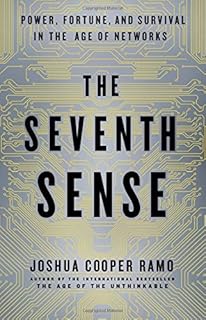
BR 192: The Seventh Sense by Joshua Cooper Ramo

the seventh sense, joshua cooper ramo

Category: 3 – SHELF it (All Categories are 1 – Read ASAP!, 2 – BUY it!, 3 – SHELF it, 4 – SOMEDAY it)

Comments: This is an interesting book. On paper, it is one that should have many fascinating takeaways. But, somehow, it fell short of the mark. I didn’t really have all that many interesting takeaways. And, I really expected to. Maybe it was a case of expectations versus reality.

Top 3 Learnings:

1. A series of nodes connected to each other is a network. And, a connection of objects can change the nature of the object itself.

2. Power was asymmetric in the age of aristocrats. Since then, power has been going through a gradual decentralization. However, networks have been making power asymmetric via power law distributions.

3. Gate keeping is very valuable in the age of networks. Threatening to leave countries out of networks like the internet could be an effective way to enforce nuclear pacts.

(The author believes that we are in great danger of being wiped out by artificial intelligence.)

Book notes here.