3. SHELF it · Business · Leadership · Management · Technology

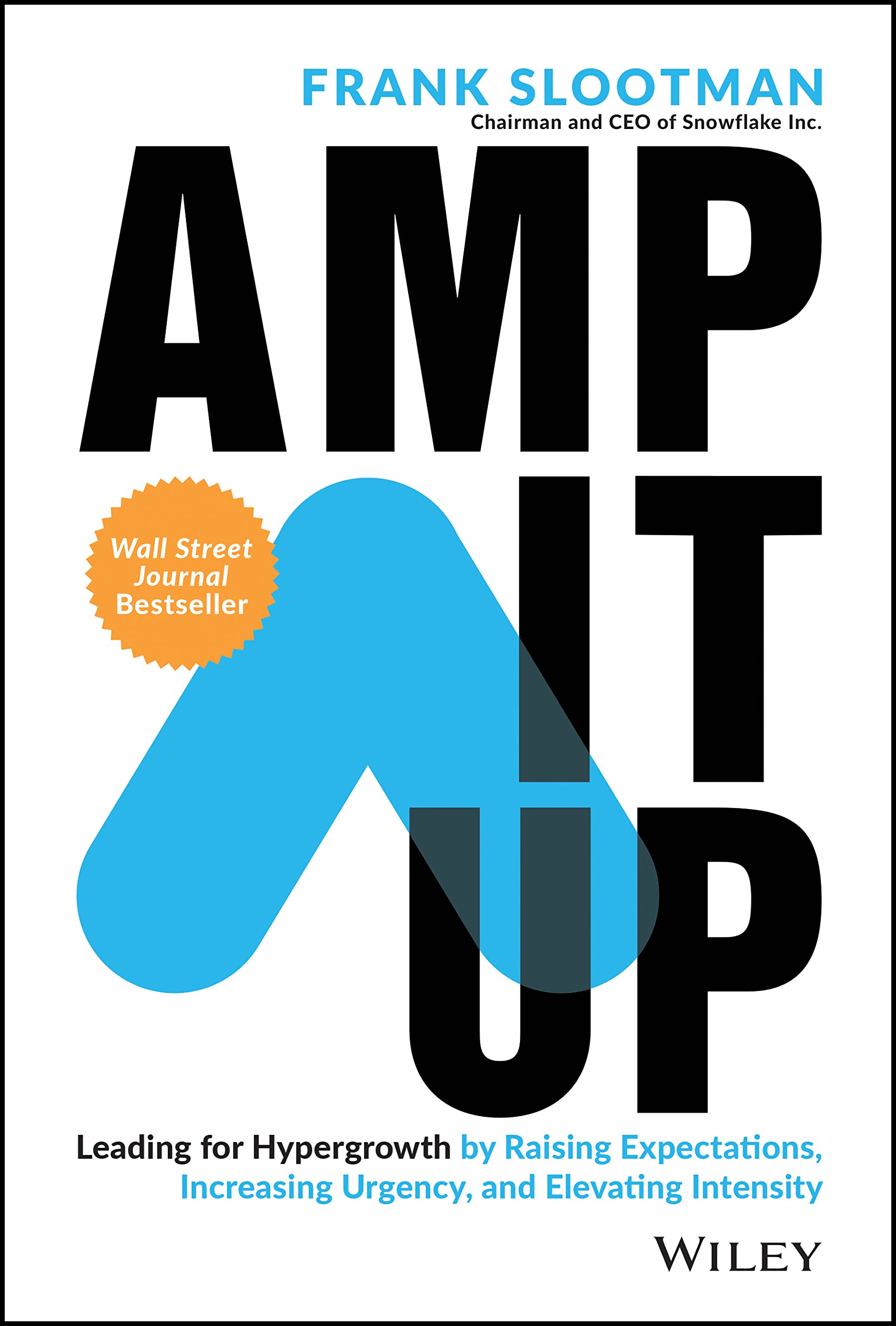
BR 286: Amp It Up by Frank Slootman

Category: 3 – SHELF it (All Categories are 1 – Read ASAP!, 2 – BUY it!, 3 – SHELF it, 4 – SOMEDAY it)

Comments: An interesting insight into the psychology of a 3 x successful tech CEO – Kevin Slootman scaled Datadog, ServiceNow, and Snowflake.

Insights that resonated: 

(1) “Years ago, I used to hesitate and wait situations out, often trying to fix underperforming people or products instead of pulling the plug. Back then I was seen as a much more reasonable and thoughtful leader — but that didn’t mean I was right. As I got more experience, I realized that I was often just wasting everybody’s time. If we knew that something or someone wasn’t working, why wait? As the saying goes, when there is doubt, there is no doubt.

(2) There’s a lot of upside to be unlocked by just being operationally excellent. Build good strategy and then spend disproportionate amount of energy creating a great operational cadence that helps your team/organization execute well.

2. BUY it! · Business · Psychology · Skills

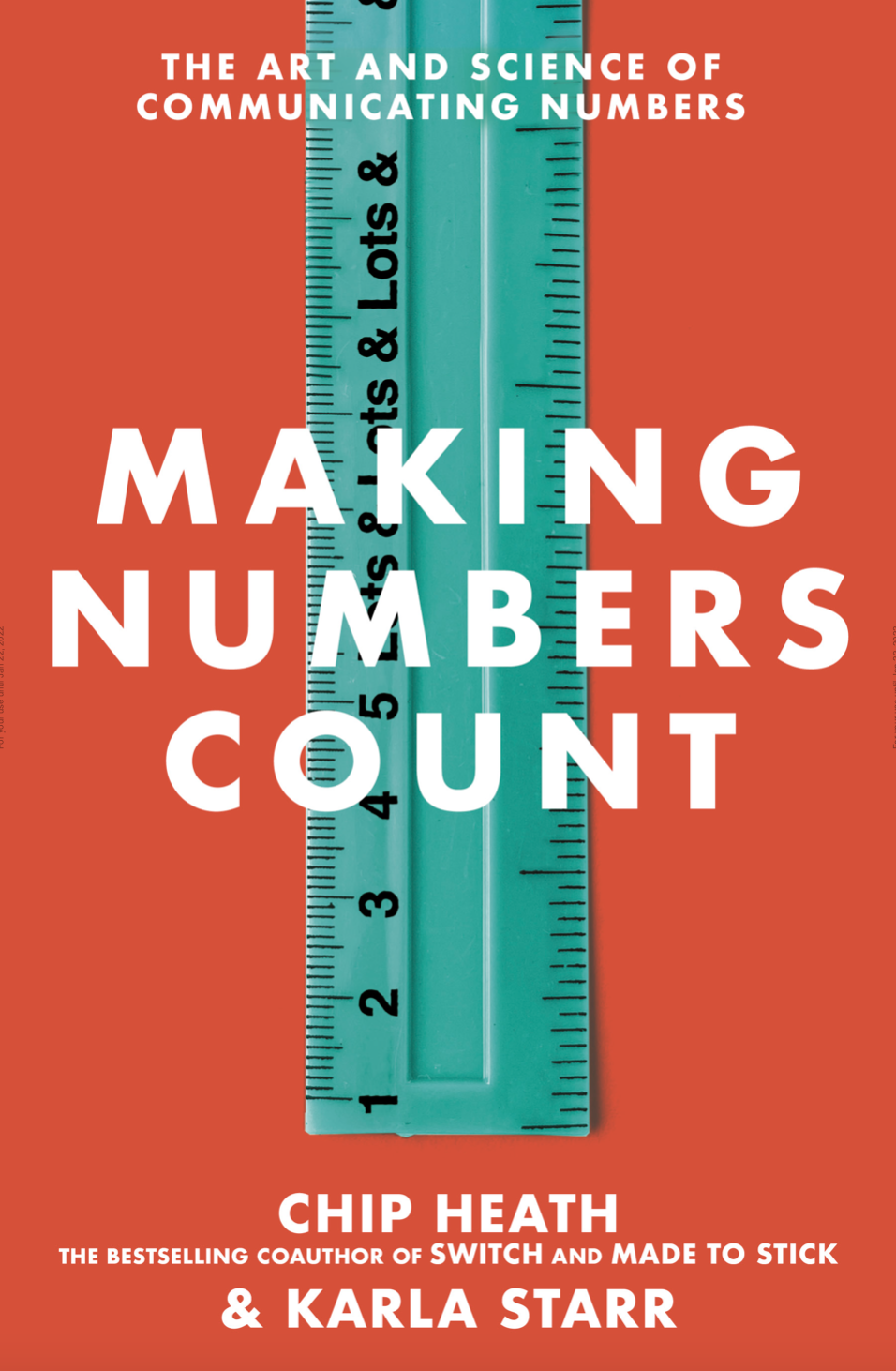
BR 287: Making Numbers Count by Chip Heath and Karla Starr

Category: 2 – BUY it! (All Categories are 1 – Read ASAP!, 2 – BUY it!, 3 – SHELF it, 4 – SOMEDAY it)

Comments: Another Heath Brothers classic – interesting research put masterfully together to make a simple point -> take the time to think about how we use numbers to make a point. There’s a lot of upside to getting it right.

Insights that resonated: 

(1) A million seconds is 12 days from now. A billion seconds?

32 years.

That difference surprised me as it wasn’t what I expected. A billion is significantly bigger than I had imagined.

We don’t have an intuitive understanding of big numbers. The implication is that we need to make the effort to always put numbers in context for the people we’re presenting to.

(2) Some “translations” that resonated:

The fastest human, Usain Bolt, would be beaten in a 100m dash by a Rhino by 2s and would be close to a Chimpanzee. he wouldn’t be close to a Cheetah or an Ostrich.

If cows were a country, they’d be #4 in Carbon emissions. They emit more than Saudi Arabia or Australia.

Apple market cap wealth is greater than 150 out of 171 countries. (or at least was – until recently :-))

If California were a country, it’s GDP would be more than all but 5 countries in the world.

Six sigma is 3.4 defects per millions. That means baking 2 decent chocolate chip cookies every day and going 37 years before baking one without a defect.

If everyone ate as much meat as a person in America, we would need to use every bit of land on the planet and add an extra Africa and Australia to meet the demand 

Imagine your (US) tax payment is visualized as employment over the course of a year. It would mean working 2 weeks for social security, 2 weeks for Medicare and Medicaid, 5 days on national debt, 1.5 weeks for Defence, then most of the rest of the year would be government payroll, 6 hours for “SNAP” (Nutrition assistance), 12 minutes to National Parks, and 2 mins to NASA.

Translations make abstract numbers accessible.

(3) Florence Nightingale was a data wizard (more in the book ;-)).

3. SHELF it · Business · Design

BR 285: The Secret Lives of Customers by David Scott Duncan

Category: 3 – SHELF it (All Categories are 1 – Read ASAP!, 2 – BUY it!, 3 – SHELF it, 4 – SOMEDAY it)

Comments: This book attempts to bring the idea of “Jobs to be done” to life with a story about a company that lost its way as it pursued hyper growth. It was an interesting read and one that I might come back to as I figure out how to apply “jobs to be done.”

Insights that resonated: 

(1) Customers hire our products to get specific jobs done – the more we understand these jobs, the more success we’ll find building the right solutions.

3. SHELF it · Psychology

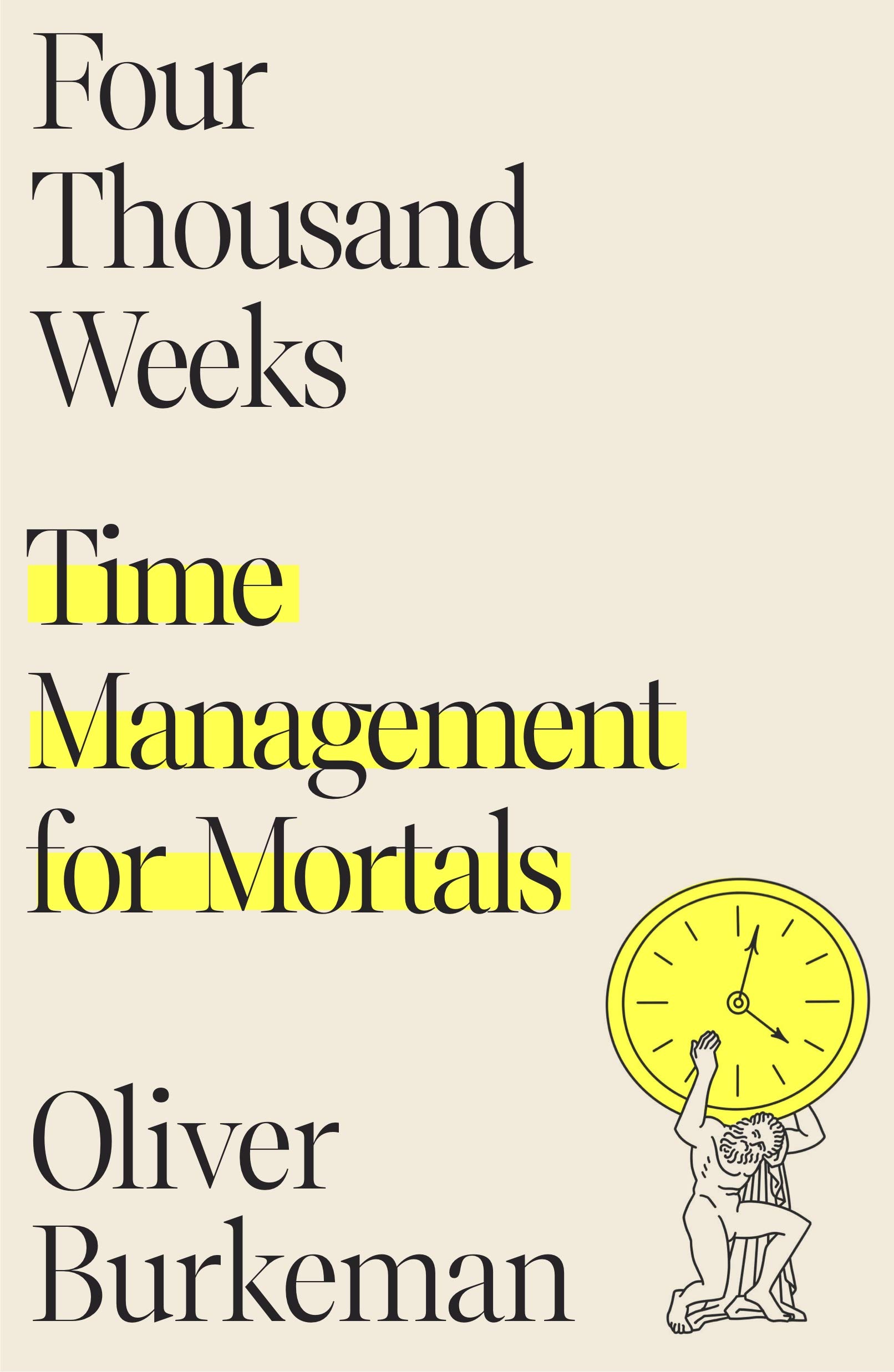
BR 284: Four Thousand Weeks by Oliver Burkeman

Category: 3 – SHELF it (All Categories are 1 – Read ASAP!, 2 – BUY it!, 3 – SHELF it, 4 – SOMEDAY it)

Comments: This was an interesting read with good ideas that occasionally felt a touch long. That said, I loved the fact that Oliver Burkeman wrote this to remind us of the brevity of life and the importance of saying no to things that don’t matter to make space for the things that do.

Insights that resonated: 

(1) “Consider all the technology intended to help us gain the upper hand over time: by any sane logic, in a world with dishwashers, microwaves, and jet engines, time ought to feel more expansive and abundant, thanks to all the hours freed up.

But this is nobody’s actual experience. Instead, life accelerates, and everyone grows more impatient. It’s somehow vastly more aggravating to wait two minutes for the microwave than two hours for the over – or ten seconds for a slow-loading web page versus three days to receive the same information by mail.”

(2) “The original Latin word for “decide”, decidere, means “to cut off,” as in slicing away alternatives; it’s a close cousin of words like “homicide” and “suicide.”

(3) “Some Zen Buddhists hold that the entirety of human suffering can be boiled down to this effort to resist paying full attention to the way things are going, because we wish they were going differently (“This shouldn’t be happening!”), or because we wish we felt more in control of the process.

There is a very down-to-earth kind of liberation in grasping that there are certain truths about being a limited human from which you’ll never be liberated. You don’t get to dictate the course of events. And the paradoxical reward for accepting reality’s constraints is that they no longer feel so constraining.”

(4) “The average human lifespan is absurdly, terrifyingly, insultingly short. But that isn’t a reason for unremitting despair, or for living in an anxiety-fueled panic about making the most of your limited time. It’s a cause for relief.

You get to give up on something that was always impossible – the quest to become the optimized, infinitely capable, emotionally invincible, fully independent person you’re officially supposed to be. Then you get to roll up your sleeves and start work on what’s gloriously possible instead.” 

(5) Robert Boice, a psychological professor, spent his career studying the writing habits of fellow academics.

His conclusion was that the most productive and successful among them made writing a smaller part of their daily routine than others. They wrote in brief daily sessions – sometimes as short as 10 minutes and never longer than 4 hours – and religiously took weekends off.

They cultivated the patience to tolerate the fact that they probably wouldn’t be producing very much on any given day, with the result that they produced much more over the long term.

2. BUY it! · Psychology · Relationships

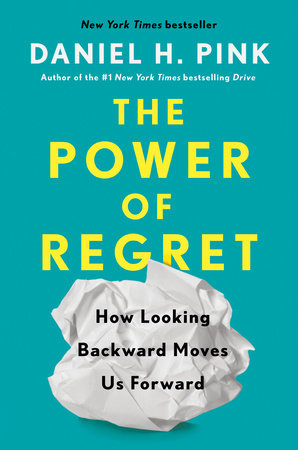
BR 283: The Power of Regret by Dan Pink

Category: 2 – BUY it! (All Categories are 1 – Read ASAP!, 2 – BUY it!, 3 – SHELF it, 4 – SOMEDAY it)

Comments: This is a classic Dan Pink book – well researched, extremely well structured, and chock full of thought provoking notes.

Insights that resonated: Dan recently shared a summary of the book in a few paragraphs in a short “graduation speech.” My cliff notes –

(1) Foundation regrets“The first of the big four regrets is what I call Foundation regrets. Foundation regrets emerge from small choices we make earlier in life that accumulate to negative consequences later in life.

We spend too much and save too little. We don’t eat right, sleep enough, or exercise
regularly. We apply only grudging effort on the job – or, yes, in the classroom”

“Foundation regrets sound like this: If only I’d done the work.”

(2) Boldness regrets“All regrets begin when we’re at a juncture. And with this category, the juncture presents a choice: Play it safe – or take the chance? And when we don’t take the chance – not all the time, but most of the time – we regret it.”

Boldness regrets sound like this: If only I’d taken the chance.

(3) Moral regrets“Once again, we’re at a juncture. We can take the high road
or we can take the low road. And when we choose what our conscience says is the wrong path, most of us – most of the time – regret it.

We hurt others. We break our word. We degrade what ought to be revered. And while at first the decision can feel fine – even exhilarating – before long it eats at us.”

“Moral regrets sound like this: If only I’d done the right thing.”

(4) Connection regrets“These are regrets about all the relationships in our lives. Partners. Parents. Children. Siblings. Cousins. Friends. Colleagues. Classmates.
A 45-year-old woman, from the District of Columbia, offered this: “My brother died
suddenly at forty-one. I regret not saying, ‘I love you,’ more.””

Connection regrets sound like this: If only I’d reached out.

(5) That brings us to the reverse image of a life well lived.

A decent foundation – enough stability so that life is not precarious. Boldness – a chance to learn and grow and do something meaningful during the vanishingly short time we’re alive. Morality – being good and decent and just. Connection – having people we love and who love us.

Or put differently.

Do the work.

Take the chance.

Do the right thing.

Reach out.

And ignore the rest.

1. Read ASAP! · Book Review Actions · Novel Concepts and Interesting Research · Technology

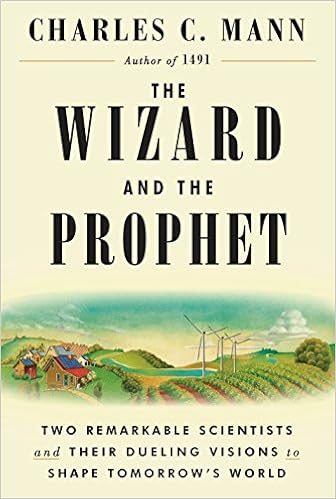
BR 282: The Wizard and the Prophet by Charles C Mann

Category: 1 – Read ASAP! (All Categories are 1 – Read ASAP!, 2 – BUY it!, 3 – SHELF it, 4 – SOMEDAY it)

Comments: I started reading The Wizard and the Prophet after reading this post on Seth’s blog. An excerpt:

Mann has given us a deeply researched narrative, a book that will change the way you see just about everything in the natural world and its relationship with humanity. It’s about an epic struggle and mostly, about our future.

It seems to be about two obscure characters of the 20th century, but it’s not. It’s about each of us and the tools we can choose to bring with us to the future. I found myself switching camps every few minutes.

Seth called it his book of the year. It is definitely up there on my list for the year too.

Charles Mann deconstructs some of the most important issues of our time – including food, water, and climate – and contrasts two approaches to tackling these problems.

The first is the school of sustainability built on the work of William Vogt that asserts that we need to consume less and be more mindful of ecological balance. And the second is the school of innovation built on the work of Norman Borlaug that focuses on innovation as the way out.

The book is incredible thanks to the way Charles Mann interweaves the story of these two men, the tussle between these schools of thought, and the complex challenges ahead of us on issues like food, water, and climate.

Insights that resonated: 

(1) There is no perfect strategy – there are only trade-offs. Both approaches bring trade-offs and there never has been or will be a perfect answer.

(2) When we deal with complex problems that don’t have clear answers, the middle path between the two approaches tends to be the way. That’s because taking the middle path helps us find the relative best of both approaches without necessarily attaching our identity to either.

2. BUY it! · Book Review Actions · Book Reviews · Business · Technology

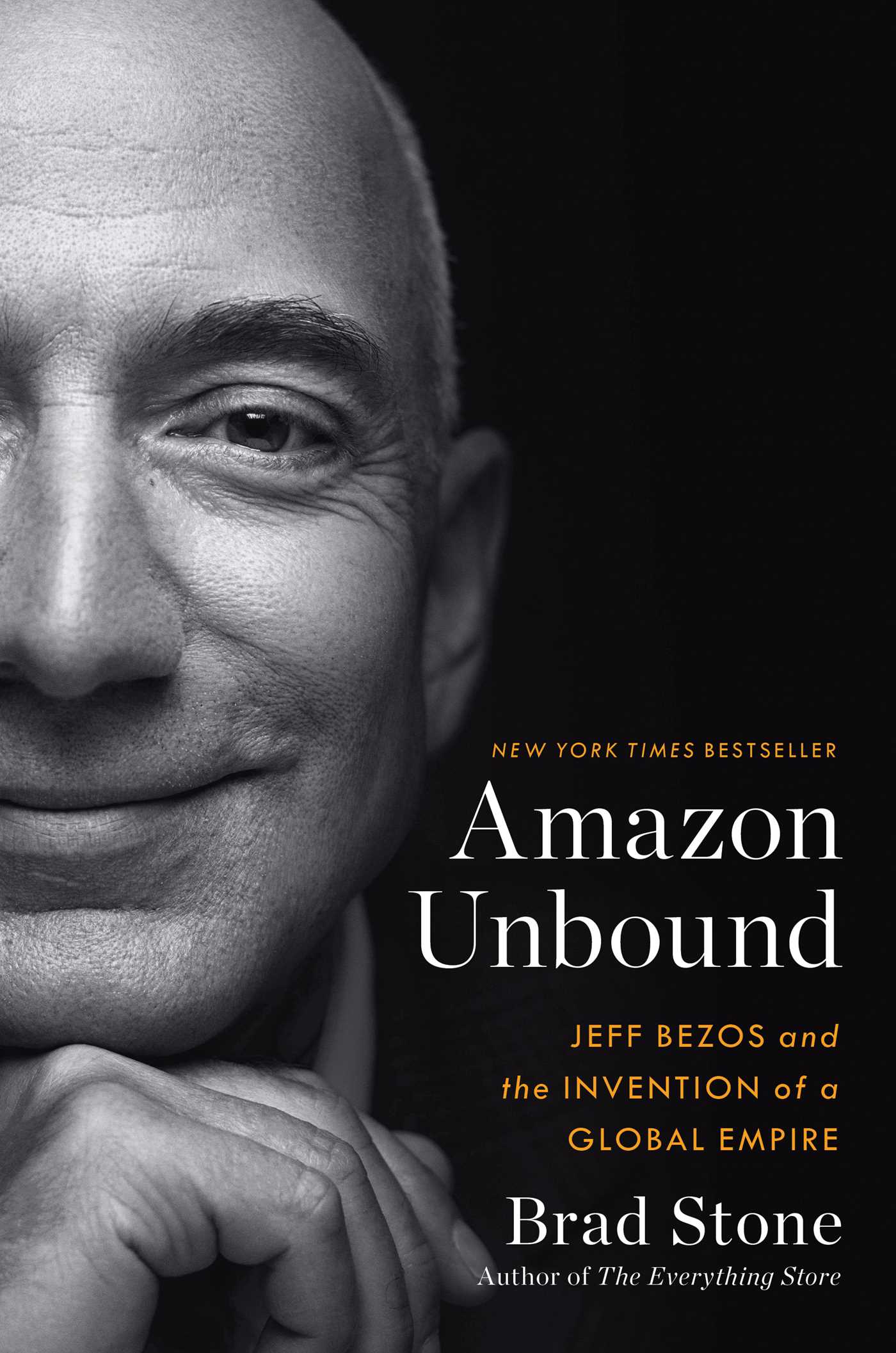
BR 281: Amazon Unbound by Brad Stone

Category: 2 – BUY it! (All Categories are 1 – Read ASAP!, 2 – BUY it!, 3 – SHELF it, 4 – SOMEDAY it)

Comments: Amazon Unbound is the follow up to Brad Stone’s excellent first book about Amazon – “The Everything Store.” It chronicles the growth of Amazon from incredible retailer to an all conquering conglomerate. A fascinating read for anyone interested in technology.

Insights that resonated: 
(1) “It has always seemed strange to me…The things we admire in men, kindness and generosity, openness, honesty, understanding and feeling, are the concomitants of failure in our system. And those traits we detest, sharpness, greed, acquisitiveness, meanness, egotism and self-interest, are the traits of success. And while men admire the quality of the first they love the produce of the second.” | John Steinbeck

An amazing starting quote.

(2) I was repeatedly blown away by Jeff Bezos’ propensity to invest in new and interesting bets. There are a number of occasions where his best and brightest share conversations with him that led to their deployment into a completely new and unproven bet. These bets went onto become billion dollar companies. But, the intentionality with which Bezos went after these – both in deploying high potential talent and staying close to it in the early days – was telling.

(3) The book drove home how much Amazon culture just resembles Jeff Bezos. The drive and intensity of the company mirrors Jeff’s drive and intensity.

(4) Brad also spent time on how wealth changed Jeff – leading eventually to the failure of his marriage. Extreme wealth and celebrity are very hard to handle.

3. SHELF it · Book Review Actions · Book Reviews · Business · Design · Psychology

BR 280: Competing against Luck by Clay Christensen, Taddy Hall, Karen Dillon, David Duncan

Category: 3 – SHELF it (All Categories are 1 – Read ASAP!, 2 – BUY it!, 3 – SHELF it, 4 – SOMEDAY it)

Comments: Competing Against Luck is intended to be an introduction to the “Job to be done” framework. It was an interesting read – however, it was less sticky than I hoped.

Insights that resonated: 

How do you figure out the job to be done? It involves asking 5 questions –

  1. What progress is that person trying to achieve? (Functional, social, emotional)
  2. What are the circumstances of the struggle?
  3. What obstacles are getting in the way of the person making progress?
  4. Are consumers making do with imperfect solutions or cobbling together hacks?
  5. How would they define what quality means and what trade-offs are they willing to make?
3. SHELF it · Book Review Actions · Book Reviews · Business · Management · Technology

BR 279: Working Backwards by Colin Bryar and Bill Carr

See the source image

Category: 3 – SHELF it (All Categories are 1 – Read ASAP!, 2 – BUY it!, 3 – SHELF it, 4 – SOMEDAY it)

Comments: Working Backwards attempts to codify interesting aspects of the Amazonian approach to building companies. This is one for the shelf as many of these insights/practices – 6 page memos, PR FAQs, bar raisers, etc., weren’t as new to me. Your mileage may vary. :)

Insights that resonated: 

(1) A key reason written documents work better than PowerPoint is because of the information density.

(2) When interviewing folks for your team, don’t let candidates who you won’t be excited about pass the hiring manager screen. Sending a “Maybe” candidate through isn’t raising the bar.

(3) Jeff Bezos’ appetite for risk combined with the practice of of developing top talent by giving them venture bets and the space to fail is incredible.

1. Read ASAP! · Book Review Actions · Book Reviews · History · Novel Concepts and Interesting Research · Psychology

BR 278: Caste by Isabel Wilkerson

See the source image

Category: 1 – Read ASAP! (All Categories are 1 – Read ASAP!, 2 – BUY it!, 3 – SHELF it, 4 – SOMEDAY it)

Comments: A perspective changer.

Insights that resonated: 

(1) Isabel Wilkerson’s book “Caste” is a recent read that I’ve thought about a lot. It is fascinating to dig into the history of a place. I’ve had some insight into the institution of slavery in the United States. But, there’s nothing like the kind of insight a seasoned reporter brings.

It was particularly powerful for me as she draws parallels to the treatment of Jews in Nazi Germany and the treatment of Dalits in India. She makes the case that calling this “racism” is a simplification. Caste systems go deeper than that.

Stories about caste in India always sadden me. That’s not just because of the heartbreaking stories. They remind me of our collective stupidity and our unwillingness to learn from experience.

Most Indians – regardless of caste – were treated horribly by the British during the years of the British occupation. And, yet, despite all the shared humanity that helped us get through that experience, we didn’t take those lessons forward.

(2) While Isabel Wilkerson focuses on these 3 caste systems, the truth is that caste exists everywhere. Just like other popular western exports, a caste-like hierarchy based on skin color has become the most popular kind around the world. But, there are other systems too. When I lived in Saudi Arabia for 10 months, the dominant caste was Muslim for example. And, if you’ve traveled around the world without a western passport, the global immigration system will never fail to remind you about the importance of the color of your passport, your accent, and the color of your skin.

(3) At its heart, caste systems are about pecking order. We attempt to establish pecking orders wherever we go. Then, we go to crazy extents to maintain them.

This isn’t just true about nations. It is true about any human group. It is likely such pecking orders exist where we work – some function is the equivalent of the “dominant caste” and does all it can to preserve its status.

(4) It is hard to empathize with groups below the pecking order if you haven’t been there. That’s part of the human condition too. Reading stories in Isabel Wilkerson’s book is one thing. Experiencing it every day is another.

We live in the San Francisco Bay Area. This place likely has more immigrants per square foot than most places on the planet. And, yet, even in a place where we are not the lone outsiders, we experience situations that remind us of our status in the hierarchy.

This week, it was getting honked and told to “get out of the way” in a parking lot as we were unloading our bikes and kids. Last week, it was being told what to do in a car wash. We have a long catalog of these experiences. It is nearly always an older white/caucasian man who assumes he has the authority to tell us what we should do and how we should behave.

If this is our experience in the Bay Area, I can only begin to imagine the daily slights many others who are lower in the hierarchy experience. It is enough to drive you crazy.

And, yes, the frequency and intensity of these daily slights have likely gone down – on average – in the past decades. But, they’re still around.

(5) It takes a lot to see through false narratives of those who seek to use it for their gain. As Seth beautifully described, identity is often used against us.

We can hope for mature responses from time to time (this one warmed my heart).

But, I don’t see any way out of pecking orders and caste system. I think it is a side effect of our fallibility.

(6) While I don’t believe we’ll ever live in a world without arbitrary hierarchies, I do hope for progress toward that ideal. In a few years, the US will have as much of its history without slavery being legal as it spent with that institution.

I hope we’ll cross many more such milestones and move closer to a world where we spend more time thinking about what we have in common vs. what is different. Over time, maybe we’ll extend that to the plants and animals we’re blessed to share this space with. Before it is too late – at any rate.

The only way that will happen though is if we construct the kind of society that doesn’t gloss over our past. Our history is full of bloody wars and cruelty toward each other for arbitrary reasons. We have much to learn from all that bloodshed and suffering.

The more time we spend understanding our past, the more we will be able to understand the imperfections in our culture/community/country in the present.

No culture or country is perfect.

The problem is when we think we are.