1. Read ASAP! · Book Review Actions · Book Reviews · Philosophy · Psychology · Self Improvement

BR 317: The Courage To Be Disliked by Ichiro Kishimi and Fumitake Koga

Category: 1 – Read ASAP! (All Categories are 1 – Read ASAP!, 2 – BUY it!, 3 – SHELF it, 4 – SOMEDAY it)

Comments: I found the book to be revelatory. In retrospect, it is because it unified ideas that have resonated strongly with me under one roof. Adler’s approach is at the heart of the many powerful ideas that have changed my life and that I’ve shared on this blog over the years.

Insights that resonated:

(1) The overarching theme in Alfred Adler’s approach is that “life is simple.” By this, his philosophy asserts that freedom, happiness, and meaning are all within reach. We don’t need to over complicate this. Our problems are not one of ability but of courage.

(2) You have the means to choose your life path. You’re not controlled by your past, trauma, or environment — only by the meaning you assign to them. You are free to choose goals that help you go where you want to go.

(3) All problems are interpersonal problems – use problems as a trigger for growth. Most of our issues — anxiety, anger, insecurity — come from how we relate to others. We typically react by over-compensating for what we think we lack with bouts of inferiority or superiority. Use such moments as a trigger to strive for learning and growth.

(4) Freedom arrives when we summon the courage to be disliked. You must be willing to live by your values, even if others don’t like it.

(5) Cultivate horizontal relationships” and embrace “separation of tasks.” Vertical relationships assume someone is in a position of relative authority or power. They typically involve attempts to control the other person.

Horizontal relationships involve mutual respect and a focus on controlling ourselves – including accepting our normal self. Horizontal relationships thrive on a “separation of tasks” – where we do what’s in our control and empower others to do what’s in their control. We can lead a horse to water but cannot make it drink.

(6) Happiness comes from contribution. Not from being praised or special, but from feeling useful to others and connected – this is described as community feeling or “Gemeinschaftsgefühl“.

(7) We keep life simple by keeping a bright spotlight on the present. When we’re on stage and see a bright spotlight, we can’t see much else. If we have dim lights on the other hand, we will be able to look beyond what’s around us and attempt to see our past and present.
2. BUY it! · Book Review Actions · Book Reviews · Novel Concepts and Interesting Research · Psychology · Relationships · Self Improvement

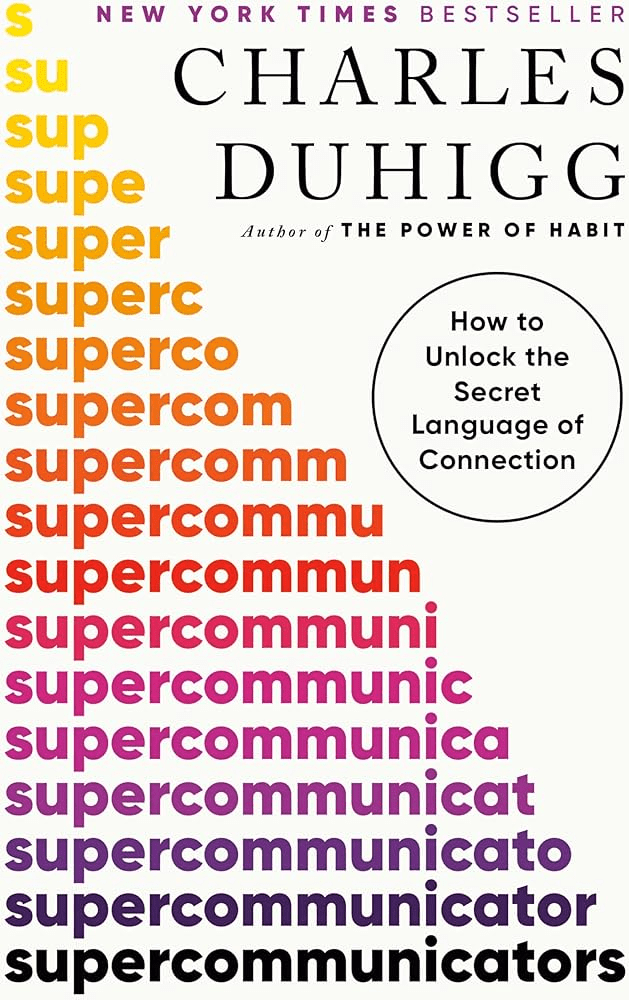
BR 315: Supercommunicators by Charles Duhigg

Category: 2 – BUY it! (All Categories are 1 – Read ASAP!, 2 – BUY it!, 3 – SHELF it, 4 – SOMEDAY it)

Comments: Solid book with a nice combination of stories and research about great communication.

Insights that resonated: 

(1) What kind of conversation are we in: Does the other person want to be helped, hugged, or heard?

(2) Effective communication often comes down to our ability to match the mood and energy of the person we’re communicating with. 

(3) The most powerful thing we can do to show that we are seeking to understand and not to be understood in a tense conversation is to: (a) take the time to wait for the person to finish, (b) then play back what we understood and, (c) check if what we understood was what they were trying to say.

(4) “While there are many factors that determine if a romantic relationship succeeds or flounders, one key factor is whether makes the people in it feel more in control of their happiness or less in control of their happiness.”

In detailed examinations of conversations among unhappy couples, researchers found that the partners tended to focus on trying to control the other person. For example, they might say “don’t go there” or “don’t use your voice against me” or “you always do this all that.”

Happy couples instead focused either on controlling themselves or the environment. For example, they’d talk slower and make sure that they kept that cool. The key with happy couples was focusing on things that they could control together and ensuring that they kept an argument as small as possible, instead of letting it expand into other areas and throwing “the kitchen sink” at each other.

(5) Social identities have a noticeable impact in our behavior. For example, without any intervention, studies with graduate level students found that women consistently performed consistently worse than men in math tests. That’s because, by default, they were aware of a stereotype that women are worse at math than men.

However, in tests where these women were reminded of other identities, e.g. that of a puzzle-solver or a successful sportsperson, the performance differences disappeared.

These identities matter a ton in communication because conflicts escalate when they move from being about the topic to being perceived as threatening the person’s identity.

That’s where motivational interviewing comes in. With tricky issues, motivational interviewing focuses on asking questions to help a person understand both sides of an issue and why they might be for against it.

The goal isn’t to persuade – it is to simply understand both sides of the issues and reinforce that there are other identities they could choose. He made the point with fascinating examples involving polarizing issues such as gun rights and vaccines.

(5) From 7 decades of data from the famous Grant study, the people who were most satisfied in the relationships at age 50 were the healthiest and happiest at age 80. One researcher put it bluntly – “The most defining factor for happiness and satisfaction of life is love, not romantic love, but the love and connection with our friends, family, coworkers and their community.”

1. Read ASAP! · Book Review Actions · Book Reviews · History · Novel Concepts and Interesting Research · Psychology

BR 306: Same as ever by Morgan Housel

Category: 1 – Read ASAP! (All Categories are 1 – Read ASAP!, 2 – BUY it!, 3 – SHELF it, 4 – SOMEDAY it)

Comments: I have been a Morgan Housel fan for over a decade. He’s gone onto earn deserved praise for his exceptional writing style that mixes powerful anecdotes with timeless wisdom about investing and life.

Same as ever is classic Morgan Housel.

Insights that resonated: 

(1) The world isn’t crazier than it was before. With 8 billion people, crazy things every day are inevitable. 

(2) Calm plants the seeds of crazy. If stocks keep going up, the market is going to get too confident. That, then, will lead to a crash.

The world is calmer and safer than ever before – primarily because of the progress we’ve made against deadly diseases thanks to vaccines. But that made us over-confident and thoroughly unprepared for a pandemic. And so on.

Every time this (recession, pandemic, etc.) happens, we will feel the pain of the wound. The wounds will heal but the scars will last.

(3) Slow progress among a barrage of bad news is normal. Bad news is about what happened, good news is invisible because it is about things that didn’t happen. Improvements in heart disease at 1% per year for 70 years saved 25 million Americans. It’d never make the headlines any given year. But, over 7 decades, it is massive.

(4) Plan like a pessimist, dream like an optimist. The key is surviving the short term to make it to the long term. 

(5) It’s supposed to be hard

In 1990, David Letterman asked his friend Jerry Seinfeld how his new sitcom was going. Jerry said there was one frustrating problem: NBC supplied the show with teams of comedy writers, and he didn’t think they were getting much good material from them.

“Wouldn’t it be weirder if they were good?” David asked.

“What do you mean?” Jerry asked.

“Wouldn’t it be strange if they could all just produce reams of hilarious material day after day?”

Recalling the conversation a few years ago, Seinfeld laughed and told Letterman: “It’s supposed to be hard.”

(6) The grass is greener on the other side because it is fertilized by bullshit. You only get the smell when you come close enough. This idea might have been my favorite.

(7) Incentives are the most powerful force in the world.

3. SHELF it · Book Review Actions · Book Reviews · Psychology · Self Improvement · Sports

BR 299: The Inner Game of Tennis by W Timothy Gallwey

Category: 3 – SHELF it (All Categories are 1 – Read ASAP!, 2 – BUY it!, 3 – SHELF it, 4 – SOMEDAY it)

Comments: The premise of this book is understanding the mental side to peak performance from a former tennis coach. But it really is a book about our psychology and how we can learn to work with it to learn and coach.

It had an immediate impact on my attempts to teach my son. Long may this impact stay.

Insights that resonated: 

There are 3 core concepts in the book :

  • Self 1 vs. Self 2: Self 1 is our conscious, analytical mind that often gives instructions and critiques while Self 2 is the intuitive and, instinctive self-capable of executing tasks without conscious interference. The goal is to quiet the critical Self 1 to allow the more natural and skilled Self 2 to perform.
  • Non-Judgmental awareness and relaxed focus: Gallwey’s thesis is that our ability to harness Self 2’s incredible powers is by practicing non-judgmental awareness. This means observing our actions and performance without attaching harsh judgments or criticisms. This enables us to focus our attention on the task at hand and achieve a state of “relaxed concentration.”
  • Trust in the Body’s Abilities: Once we visualize what we want our body to do, our body will know how to do it. The key is to trust in its abilities and let it perform naturally.

One key theme in his anecdotes is about players who “over-coach” themselves. They talk too much to themselves instead of letting themselves just play. The body is an incredibly complex machine – any attempt to micromanage is laughable and counter-productive.

This resonated.

Growing up, I never trained in any sport as we moved homes often. When I was in my 8th grade, I finally got an opportunity to train in table tennis. I loved this and enjoyed training hard for the best part of two years.

I stopped training 2 years in – to focus on academics to go to a good college and because I was too late anyway – I still got the opportunity to participate in a few tournaments in high school during the ensuing years. And I almost always choked. When push came to shove, I seemed to find a way to lose games against players I’d normally be able to beat. Many of these players weren’t as good – but they were seasoned tournament players. And they always had me beat on the mental game.

That’s why Gallwey’s notes hit a nerve. It reminded me of the few times I played my absolute best – it was when I didn’t attempt to control every move.

I’ve been attempting to teach our 5 year old football/soccer recently. This book has changed how I approach it. Previously, I used to try to get him to kick or pass the ball with the right technique. And that would inevitably lead to “over-coaching.”

Instead, I’ve started asking him to simply look at the target and kick. And, in time, when the kicks are good, I ask him to simply remember the feeling and replicate it.

His kicks have gotten better much faster with this approach.

It makes sense. Our bodies are awe-inspiring machines. We often get the best results from giving it body some direction and getting out of the way.

1. Read ASAP! · Book Review Actions · Book Reviews · Psychology · Relationships · Self Improvement

BR 298: Excellent Advice for Living by Kevin Kelly

Category: 1 – Read ASAP! (All Categories are 1 – Read ASAP!, 2 – BUY it!, 3 – SHELF it, 4 – SOMEDAY it)

Comments: I’ve loved Kevin Kelly’s birthday posts – pithy compilations of lessons he’s learned over the years. So I knew this book would be a treat. And it exceeded my high expectations. It is a wonderful compilation of 70 years of wisdom from a fascinating human being. I’m sure I’ll pick this book up from my shelf from time to time and I’ll be gifting it for years to come.

It also has made a profound impression on how I think about writing to have an impact. A great reminder of the power of brevity.

Insights that resonated: A choice few…

“To be rich, you don’t need to make more money; you chiefly need to better manage the money already flowing through your hands.”

“Measure your wealth not by the things you can buy but by the things that no money can buy.”

Before you are old, attend as many funerals as you can bear, and listen. Nobody talks about the departed’s achievements. They only thing people will remember is what kind of person you where while you were achieving.

“The big dirty secret is that everyone, especially, the famous, are just making it up as they go along.” 

“Things do not need to be perfect to be wonderful. Especially weddings.”

“To learn from your mistakes, first laugh at your mistakes.”

“Superheroes and saints never make art. Only imperfect beings can make art because art begins in what is broken.”

“Pros make as many mistakes as amateurs; they’ve just learned how to gracefully recover from their mistakes.”

“Being enthusiastic is worth 25 IQ points.”

“Generally, say less than necessary.” 

To build strong children, reinforce their sense of belonging to a family by articulating exactly what is distinctive about your family. They should be able to say with pride, “Our family does X.”

“Instead of asking your child what they learned today, ask them “who they helped today.”

“When you forgive others, they may not notice, but you will heal.

Forgiveness is not something we do for others; it is a gift to ourselves.”

“It is not hard to identify a thief. It is the one who believes everyone else steals.”

“Greatness is incompatible with optimizing in the short term. To achieve greatness requires a long view. Raise your time horizon to raise your goal.”

“Your best response to an insult is “You’re probably right.”

“If you can’t tell what you desperately need, it’s probably sleep.” 

“Forgiveness is accepting the apology you will never get.”

 “Don’t measure your success with someone else’s ruler.”

4. SOMEDAY it · Novel Concepts and Interesting Research · Psychology · Sales

BR 289: The Science of Storytelling by Will Storr

Category: 4 – SOMEDAY it (All Categories are 1 – Read ASAP!, 2 – BUY it!, 3 – SHELF it, 4 – SOMEDAY it)

Comments: Will makes 2 simple points – (1) storytelling makes us human and (2) all story arcs rhyme with the hero’s journey. Use it to tell your stories better.

Insights that resonated: 

(1) “We organize much of our lives around reassuring ourselves about the accuracy of the hallucinated model world inside our skulls.”

(2) The 5 part story arc is: (i) Introduce hero with a system of control, (ii) Hero sees evidence that system of control doesn’t work, (iii) Hero is challenged significantly, (iv) Hero faces a reckoning, (v) Hero emerges changed and in control.

2. BUY it! · Business · Psychology · Skills

BR 287: Making Numbers Count by Chip Heath and Karla Starr

Category: 2 – BUY it! (All Categories are 1 – Read ASAP!, 2 – BUY it!, 3 – SHELF it, 4 – SOMEDAY it)

Comments: Another Heath Brothers classic – interesting research put masterfully together to make a simple point -> take the time to think about how we use numbers to make a point. There’s a lot of upside to getting it right.

Insights that resonated: 

(1) A million seconds is 12 days from now. A billion seconds?

32 years.

That difference surprised me as it wasn’t what I expected. A billion is significantly bigger than I had imagined.

We don’t have an intuitive understanding of big numbers. The implication is that we need to make the effort to always put numbers in context for the people we’re presenting to.

(2) Some “translations” that resonated:

The fastest human, Usain Bolt, would be beaten in a 100m dash by a Rhino by 2s and would be close to a Chimpanzee. he wouldn’t be close to a Cheetah or an Ostrich.

If cows were a country, they’d be #4 in Carbon emissions. They emit more than Saudi Arabia or Australia.

Apple market cap wealth is greater than 150 out of 171 countries. (or at least was – until recently :-))

If California were a country, it’s GDP would be more than all but 5 countries in the world.

Six sigma is 3.4 defects per millions. That means baking 2 decent chocolate chip cookies every day and going 37 years before baking one without a defect.

If everyone ate as much meat as a person in America, we would need to use every bit of land on the planet and add an extra Africa and Australia to meet the demand 

Imagine your (US) tax payment is visualized as employment over the course of a year. It would mean working 2 weeks for social security, 2 weeks for Medicare and Medicaid, 5 days on national debt, 1.5 weeks for Defence, then most of the rest of the year would be government payroll, 6 hours for “SNAP” (Nutrition assistance), 12 minutes to National Parks, and 2 mins to NASA.

Translations make abstract numbers accessible.

(3) Florence Nightingale was a data wizard (more in the book ;-)).

3. SHELF it · Psychology

BR 284: Four Thousand Weeks by Oliver Burkeman

Category: 3 – SHELF it (All Categories are 1 – Read ASAP!, 2 – BUY it!, 3 – SHELF it, 4 – SOMEDAY it)

Comments: This was an interesting read with good ideas that occasionally felt a touch long. That said, I loved the fact that Oliver Burkeman wrote this to remind us of the brevity of life and the importance of saying no to things that don’t matter to make space for the things that do.

Insights that resonated: 

(1) “Consider all the technology intended to help us gain the upper hand over time: by any sane logic, in a world with dishwashers, microwaves, and jet engines, time ought to feel more expansive and abundant, thanks to all the hours freed up.

But this is nobody’s actual experience. Instead, life accelerates, and everyone grows more impatient. It’s somehow vastly more aggravating to wait two minutes for the microwave than two hours for the over – or ten seconds for a slow-loading web page versus three days to receive the same information by mail.”

(2) “The original Latin word for “decide”, decidere, means “to cut off,” as in slicing away alternatives; it’s a close cousin of words like “homicide” and “suicide.”

(3) “Some Zen Buddhists hold that the entirety of human suffering can be boiled down to this effort to resist paying full attention to the way things are going, because we wish they were going differently (“This shouldn’t be happening!”), or because we wish we felt more in control of the process.

There is a very down-to-earth kind of liberation in grasping that there are certain truths about being a limited human from which you’ll never be liberated. You don’t get to dictate the course of events. And the paradoxical reward for accepting reality’s constraints is that they no longer feel so constraining.”

(4) “The average human lifespan is absurdly, terrifyingly, insultingly short. But that isn’t a reason for unremitting despair, or for living in an anxiety-fueled panic about making the most of your limited time. It’s a cause for relief.

You get to give up on something that was always impossible – the quest to become the optimized, infinitely capable, emotionally invincible, fully independent person you’re officially supposed to be. Then you get to roll up your sleeves and start work on what’s gloriously possible instead.” 

(5) Robert Boice, a psychological professor, spent his career studying the writing habits of fellow academics.

His conclusion was that the most productive and successful among them made writing a smaller part of their daily routine than others. They wrote in brief daily sessions – sometimes as short as 10 minutes and never longer than 4 hours – and religiously took weekends off.

They cultivated the patience to tolerate the fact that they probably wouldn’t be producing very much on any given day, with the result that they produced much more over the long term.

2. BUY it! · Psychology · Relationships

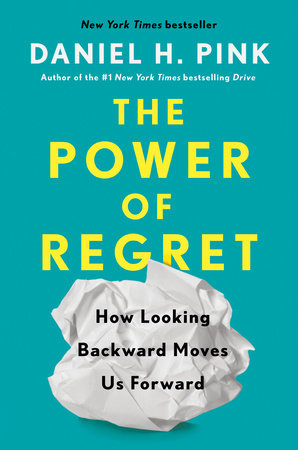
BR 283: The Power of Regret by Dan Pink

Category: 2 – BUY it! (All Categories are 1 – Read ASAP!, 2 – BUY it!, 3 – SHELF it, 4 – SOMEDAY it)

Comments: This is a classic Dan Pink book – well researched, extremely well structured, and chock full of thought provoking notes.

Insights that resonated: Dan recently shared a summary of the book in a few paragraphs in a short “graduation speech.” My cliff notes –

(1) Foundation regrets“The first of the big four regrets is what I call Foundation regrets. Foundation regrets emerge from small choices we make earlier in life that accumulate to negative consequences later in life.

We spend too much and save too little. We don’t eat right, sleep enough, or exercise
regularly. We apply only grudging effort on the job – or, yes, in the classroom”

“Foundation regrets sound like this: If only I’d done the work.”

(2) Boldness regrets“All regrets begin when we’re at a juncture. And with this category, the juncture presents a choice: Play it safe – or take the chance? And when we don’t take the chance – not all the time, but most of the time – we regret it.”

Boldness regrets sound like this: If only I’d taken the chance.

(3) Moral regrets“Once again, we’re at a juncture. We can take the high road
or we can take the low road. And when we choose what our conscience says is the wrong path, most of us – most of the time – regret it.

We hurt others. We break our word. We degrade what ought to be revered. And while at first the decision can feel fine – even exhilarating – before long it eats at us.”

“Moral regrets sound like this: If only I’d done the right thing.”

(4) Connection regrets“These are regrets about all the relationships in our lives. Partners. Parents. Children. Siblings. Cousins. Friends. Colleagues. Classmates.
A 45-year-old woman, from the District of Columbia, offered this: “My brother died
suddenly at forty-one. I regret not saying, ‘I love you,’ more.””

Connection regrets sound like this: If only I’d reached out.

(5) That brings us to the reverse image of a life well lived.

A decent foundation – enough stability so that life is not precarious. Boldness – a chance to learn and grow and do something meaningful during the vanishingly short time we’re alive. Morality – being good and decent and just. Connection – having people we love and who love us.

Or put differently.

Do the work.

Take the chance.

Do the right thing.

Reach out.

And ignore the rest.

3. SHELF it · Book Review Actions · Book Reviews · Business · Design · Psychology

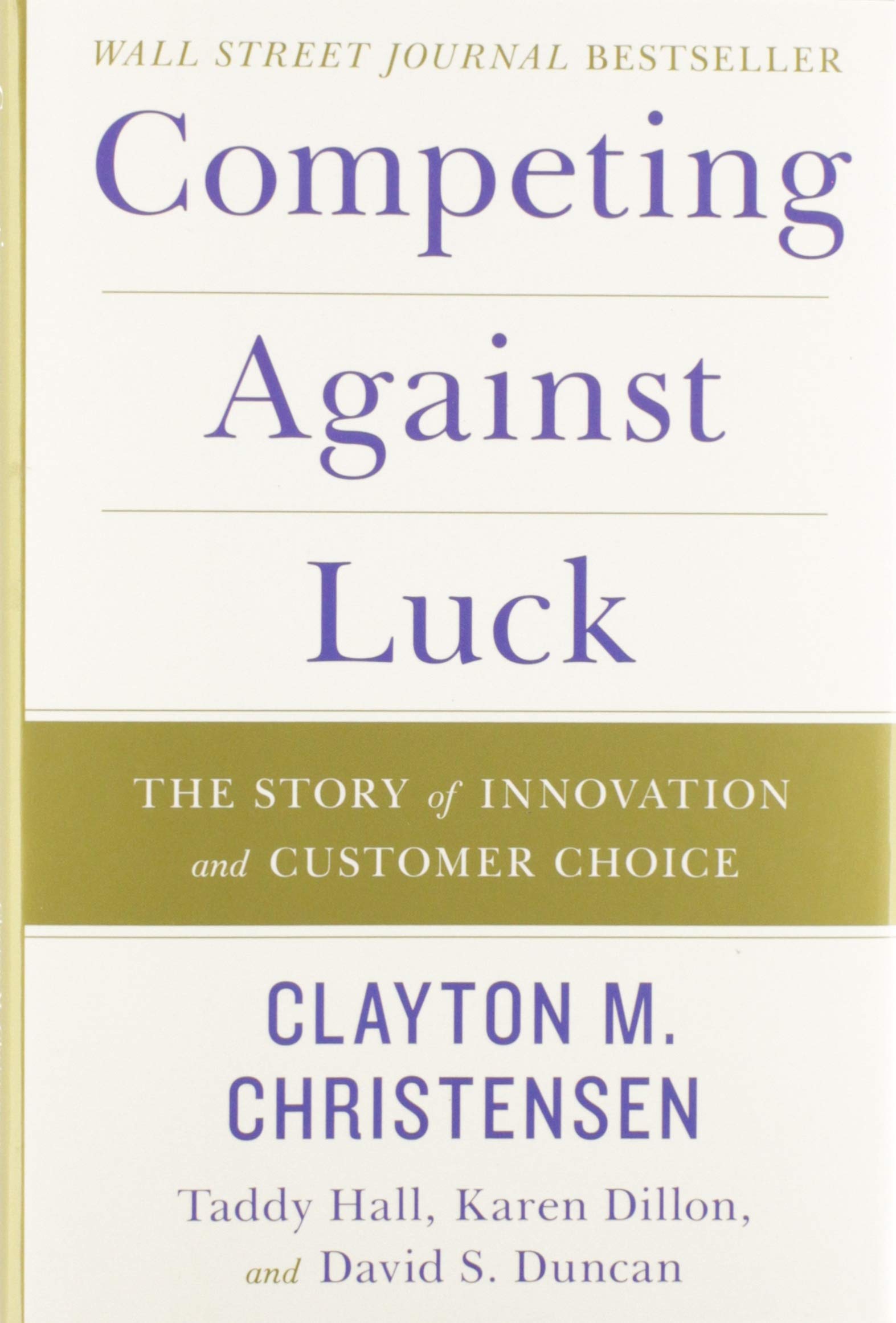
BR 280: Competing against Luck by Clay Christensen, Taddy Hall, Karen Dillon, David Duncan

Category: 3 – SHELF it (All Categories are 1 – Read ASAP!, 2 – BUY it!, 3 – SHELF it, 4 – SOMEDAY it)

Comments: Competing Against Luck is intended to be an introduction to the “Job to be done” framework. It was an interesting read – however, it was less sticky than I hoped.

Insights that resonated: 

How do you figure out the job to be done? It involves asking 5 questions –

  1. What progress is that person trying to achieve? (Functional, social, emotional)
  2. What are the circumstances of the struggle?
  3. What obstacles are getting in the way of the person making progress?
  4. Are consumers making do with imperfect solutions or cobbling together hacks?
  5. How would they define what quality means and what trade-offs are they willing to make?