2. BUY it! · Bio/Autobiographies · Book Review Actions · Book Reviews · Business · Management

BR 174: The Outsiders by William Thorndike

outsiders, ceo, management

Category: 2 – BUY it! (All Categories are 1 – Read ASAP!, 2 – BUY it!, 3 – SHELF it, 4 – SOMEDAY it)

Comments: This is a very good book on the border of priorities 2 and 3. I debated pushing it down to priority 3 as I find myself becoming a tougher rater over time. The more books I’ve read, the harder it is to find new insight that truly changes the way I think. This book does a great job bringing together a few really good ideas. However, playing devil’s advocate again, I wonder if a long blog post / research paper would have sufficed.

Top 3 Learnings:

1. Counter intuitive results require counter intuitive moves. Outsider CEO’s were most defined as they zigged when their opponents zagged.

2. CEO’s can spend their time (their most valuable resource) doing 3 things – investor relations, operations, or capital allocation. The outsider CEO’s spent most of their time on capital allocation, little on operations and almost none on investor relations. Nearly every one of them adopted some financial instrument that was under used – e.g. buy backs, mergers, acquisitions, etc.

3. They ran lean central teams and often hired strong COO’s who complemented their strengths.

Book notes here.

3. SHELF it · Book Review Actions · Book Reviews · Business · Leadership · Management · Technology

BR 172: How Google Works by Eric Schmidt, Jonathan Rosenberg

How Google Works, Eric Schmidt, Jonathan Rosenberg

Category: 3 – SHELF it (All Categories are 1 – Read ASAP!, 2 – BUY it!, 3 – SHELF it, 4 – SOMEDAY it)

Comments: Good book – especially if you are interested in technology. Lots of interesting points of view on why Google chose to operate the way they did. This is particularly applicable because many of the best known technology firms followed Google’s lead in terms of workplace environment.

I do think there’s an important causality issue in the book’s logic. Eric and Jonathan often make it sound that the way they built Google’s culture and norms resulted in Google’s success. I think it is the other way around – their extraordinary technical insight enabled them to build their unique culture and norms which, in turn, reinforced their technical superiority.

Top 3 Learnings:

1. Open plan officers are important for creative work as they result in “collisions” of people that result in ideas being passed around. They are also important as they keep cross functional teams working together. It is just vital that you find ways to have workspaces where introverts can go and focus/get alone time as necessary.

2. Why have perks? Make the office a place where people really want to come to work. The more people want to work from home in jobs that require teamwork and creativity, the more you have a problem.

3. Bill Campbell style 1:1s

Book notes here.

3. SHELF it · Book Review Actions · Book Reviews · Business · Management

BR 171: Reputation Rules by Daniel Diermeier

reputation rules, trust radar

Category: 3 – SHELF it (All Categories are 1 – Read ASAP!, 2 – BUY it!, 3 – SHELF it, 4 – SOMEDAY it)

Comments: Reputation rules was required reading for an interesting course on Crisis Management at school and is written by a former Professor. Good book with many interesting examples. However, if I played devil’s advocate, it did feel like one of those where a long blog post would have sufficed.

Top Learnings:

1. The trust radar was a valuable crisis tool and is one I think I will remember for a long time.  See this post for more.

2. It was very interesting to learn about corporate activist groups from a crisis management point of view.

Book notes here.

2. BUY it! · Book Review Actions · Book Reviews · Business · Entrepreneurship · Philosophy · Psychology · Self Improvement

BR 166: Essentialism by Greg McKeown

Category: 2 – BUY it! (All Categories are 1 – Read ASAP!, 2 – BUY it!, 3 – SHELF it, 4 – SOMEDAY it)

Comments: Good book overall. Greg’s concepts and thoughts definitely resonated and felt consistent. However, I felt that the book repeatedly prescribed ways to do things and hardly ever spoke about the psychology or the “why” behind things. In that sense, I felt it lacked the depth I’d have liked and often skated over the difficult stuff. And, I felt it was often a collection of lists without structure. (as a good illustration, I had to go back to the book notes to write my 3 top learnings..)

Top 3 Learnings:

1. A lovely story about Stephen Covey prioritizing his daughter above a friend who he ran into. The learning here was that we need to learn to say no to stuff we don’t prioritize so we can say yes to the stuff we do prioritize

2. Mission statements need to be concrete and inspirational (think of them as a 2×2)

3. Less is more. :)

Book notes here

3. SHELF it · Book Review Actions · Book Reviews · Business · Career · Skills

BR 165: Case in Point by Marc Cosentino

Category: 3 – SHELF it (All Categories are 1 – Read ASAP!, 2 – BUY it!, 3 – SHELF it, 4 – SOMEDAY it)

Comments and Learning: 

Top book if you are preparing for case interviews – I had case interviews in a couple of roles I interviewed for in my technology internship quest in the 1st year of my MBA – this book was very useful.

No learning blogged aside from – solve as many cases as possible and develop an approach that’ll help you tackle case interviews. :)

3. SHELF it · Book Review Actions · Book Reviews · Business · Career · Skills

BR 164: Case Interview Secrets by Victor Cheng

Category: 3 – SHELF it (All Categories are 1 – Read ASAP!, 2 – BUY it!, 3 – SHELF it, 4 – SOMEDAY it)

Comments and Learning: 

Top book if you are preparing for case interviews – I had case interviews in a couple of roles I interviewed for in my internship quest in the 1st year of my MBA – this book was very useful.

My favorite learning from the book was the importance of taking the first 2 minutes in a case and developing an approach/structure for the problem. If you structure a problem wrong or just don’t, there are few ways back in a case.

No learning blogged aside from – solve as many cases as possible and develop an approach that’ll help you tackle case interviews. :)

1. Read ASAP! · Business · Management

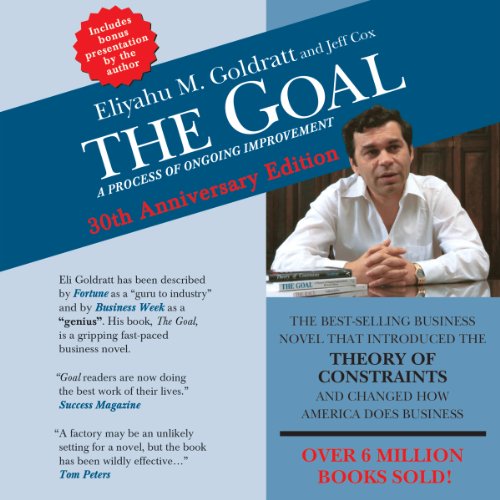
BR 159: The Goal by Eliyahu Goldratt

Priority: 1 – Read ASAP! (All Categories are 1) Read ASAP! 2) BUY it! 3) SHELF it 4) SOMEDAY it)

Comments: Outstanding book. I rated this a category 2 book as it is, at its heart, a book on operations management. It is, however, one of those books whose insights I’ve kept coming back to – both at work and in my life.

The other note – it is an excellent audio book as it is produced like an audio movie. Makes for a very interesting read.

Top 3 Learnings:

1. First, understand the goal and ONLY optimize with respect to the goal. Once you understand the goal, understand the bottlenecks. Imagine a plant’s bottleneck / constrained resource can produce 400 units. Having non bottleneck machines produce more than 400 only excess inventory. In fact, if market demand is 300, we are in our interest to produce around 300. The rest is waste.

2.  “Local efficiencies” are useless. Having one part of the plant product top class equipment while everyone is below average and late is useless. The big picture is what matters. Once again, understand the goal and only optimize for it. Beware metrics that result in optimizing parts of the picture at the expense of the whole (e.g. cost cutting on R&D that messes with future pipeline)

3. When trying to understand a problem, think of the Toyota 5 Why system. Ask why 5 times so you get to the route of the problem.

Book notes here.

Add on Mar 16, 2016: This book has had a huge impact on me in retrospect. Some very powerful life analogies here. 2 lessons I’ve repeated many a time –

1. Productivity is actions that us move toward the goal.

2. You can’t optimize sub-systems (point 2).

1. Read ASAP! · Book Review Actions · Book Reviews · Business · Entrepreneurship · Leadership · Management · Technology

BR 152: The Hard Thing about Hard Things by Ben Horowitz

Category: 1 – Read ASAP! (All Categories are 1 – Read ASAP!, 2 – BUY it!, 3 – SHELF it, 4 – SOMEDAY it)

Comments: If you are, even in the slightest, interested in running a company of your own someday, this book is an absolute must read. This is probably the closest any book will come to being a “CEO how-to” manual.

It is a book I will revisit from time to time.

Top 3 Learnings:

1. Leadership is about 3 things – the ability to articulate an idea so people follow you (The Steve Jobs attribute), the ability to be ambitious for the team and not for yourself /to have the right kind of ambition (the Bill Campbell attribute) and the ability to achieve the results you articulate (the Andy Grove attribute) – I’ve never heard leadership spelt out as clearly.

2. The purpose of an organization chart is to facilitate communication. The closer people are on an organization chart, the more they will communicate. (Such a simple idea but one I’d never understood.)]

3. A few money quotes –

‘The amount of communication required in a relationship is inversely proportional to the amount of trust there is.’
‘Managing by numbers is like painting by numbers. It is only for amateurs.’
‘The hero and the coward feel the same. They just do different things. People who watch you judge you on what you do not what you feel.’
‘Hire for strength, not for lack of weakness’
‘Embrace the struggle and remember – the hard things will always be hard things.’

Book notes here.

3. SHELF it · Book Review Actions · Book Reviews · Business · Money

BR 146: Liar’s Poker by Michael Lewis

Category: 3 – SHELF it (All Categories are 1 – Read ASAP!, 2 – BUY it!, 3 – SHELF it, 4 – SOMEDAY it)

Comments: Liar’s poker was a quick breezy listen about Michael Lewis’ 2 years at Salomon Brothers in the 1980s. He tells it as it is and walks away after 2 years at the end of which he’d made about 400,000 dollars just out of school.

The experience clearly had an impact on Lewis as he’s gone onto write about one Wall Street head fake after another calling for tougher action and more regulation on the industry. Interestingly, while he wrote this book intending to keep people away from investment banking, he revealed later that he received one thank you note too many from trader hopefuls who said his book really inspired him.

Not a book you get tons of specific insights from but definitely one that gives you insight into what still is a very sought after industry for its ability to make people rich.

3. SHELF it · Book Review Actions · Book Reviews · Business · Entrepreneurship · Technology

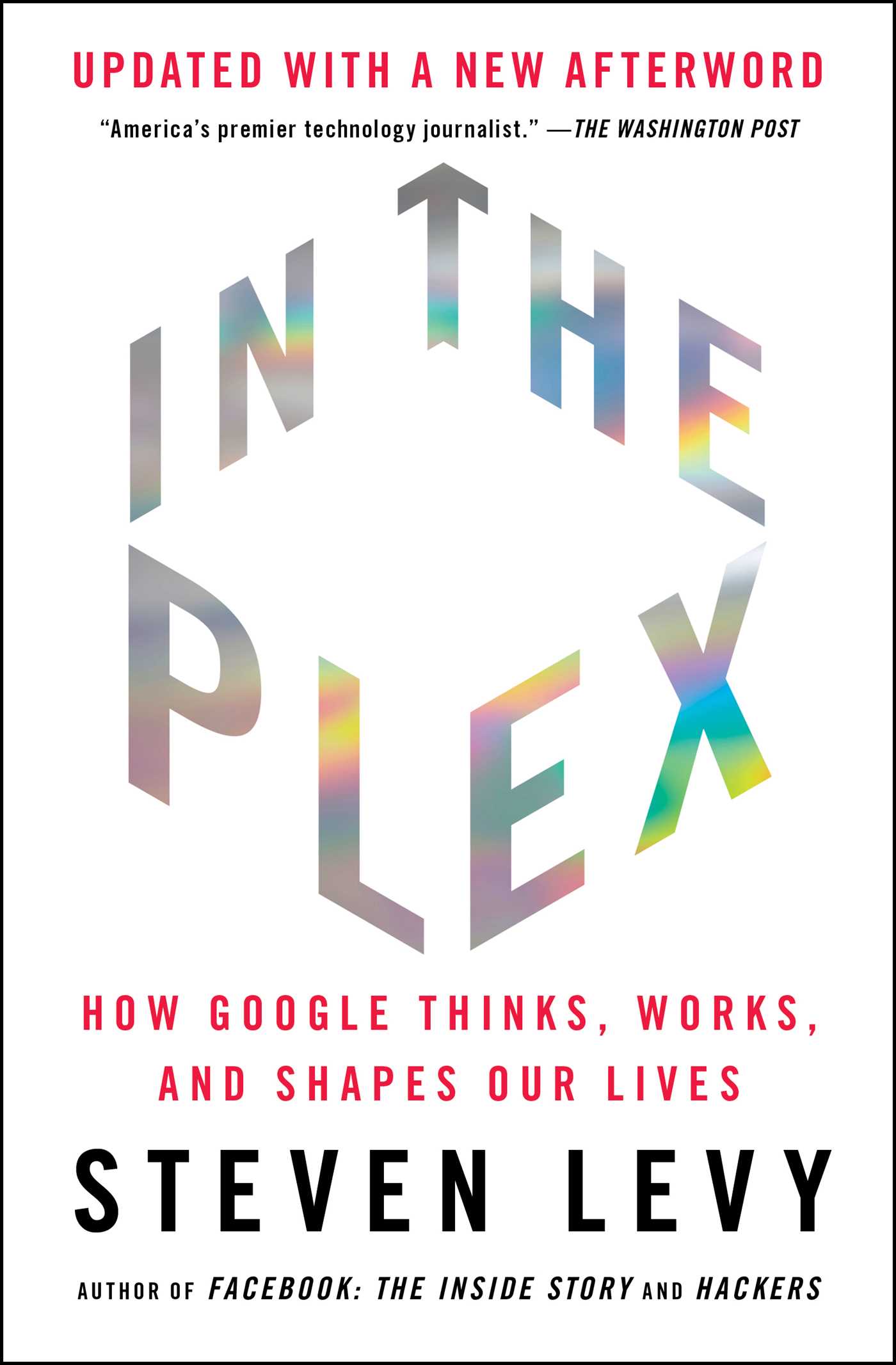
BR 145: In the Plex by Steven Levy

Category: 3 – SHELF it (All Categories are 1 – Read ASAP!, 2 – BUY it!, 3 – SHELF it, 4 – SOMEDAY it)

Comments:  I really enjoyed the book. I find Google, as a company, awe-inspiring and this book gave great insight into why Google functions the way it functions by giving an insight into the genius that is Larry Page. Sergey Brin is painted as the dependable supporting act. It is a great read if you are a technology enthusiast.

We can’t all be like Larry Page. But, what I found amazing about him is that he is a learning machine. He has clearly learnt how to learn and goes on accumulating expertise and understanding of a broad array of topics. Great entrepreneurs demonstrate that ability – I’ve seen the same trend in the books about Jobs and Bezos. They were/are learning machines.

Top 3 Learnings:

1. Larry Page is exceptionally smart. That’s one of those things that just strikes you when you read this book. He is probably as high IQ as it gets and just thinks on a whole different level. To really understand Google, you have to understand Larry Page. Google is Larry Page’s machine learning project – he wants to shove as much information into this machine and then make sure they use it make humanity smarter/better.

2. Both Sergey and Larry built Google by constantly asking “why not.” Google has practically reinvented the idea of an office by making it similar to a lovely university dorm. Larry refused to have customer service staff and instead suggesting replacing it with support forums where users helped each other. They did their IPO differently, they did email differently –  by consistently asking “why not.”

3. A bit tangential – people fantasize about college drop outs who go on to become billionaires. It is telling that the billionaires who are talked about are drop outs from Harvard college (Bill Gates, Mark Zuckerberg), or in this case, from the top computer science P.hD program in the world at Stanford university.