1. Read ASAP! · Book Review Actions · Book Reviews · Career · Money

BR 310: The Algebra of Wealth by Scott Galloway

Category: 1 – Read ASAP! (All Categories are 1 – Read ASAP!, 2 – BUY it!, 3 – SHELF it, 4 – SOMEDAY it)

Comments: I debated whether this was a category 1 or a category 2. I eventually went with category 1 because it had a lot of earned wisdom. Lots of great insight – a particularly good book for someone who is thinking about these early in their career. I wish I’d had the opportunity to read it in my 20s.

Insights that resonated: 

(1) Most people are going to get wealthy slowly as a function of their ability to deploy capital that compounds over time.

(2) Always watch your burn. A dollar saved is more valuable than a dollar earned (thanks to taxes). Being able to live simply goes a long way in our ability to accumulate wealth. And if there’s one personal finance habit that helps above all others, it is tracking our spending.

(3) To build a great career, don’t follow your passion. Follow your talent. Then work hard at it – being out of balance in your 20s and 30s often gives us balance in our 30s and 40s. Get into the office, do the work.

(4) Diversify. Start with ETFs that cover the stock market. In time, make sure you’re exposed to different kinds of risks. Scott advocates testing buying and holding individual stocks we have conviction in with <=20% of our portfolio. He is also a proponent of real estate investing if you can handle the overhead (property management, maintenance, etc.)

(5) Get off social media and anything that results in us comparing our wealth. Someone will always have the bigger boat.
3. SHELF it · Book Review Actions · Book Reviews · Money · Parenting

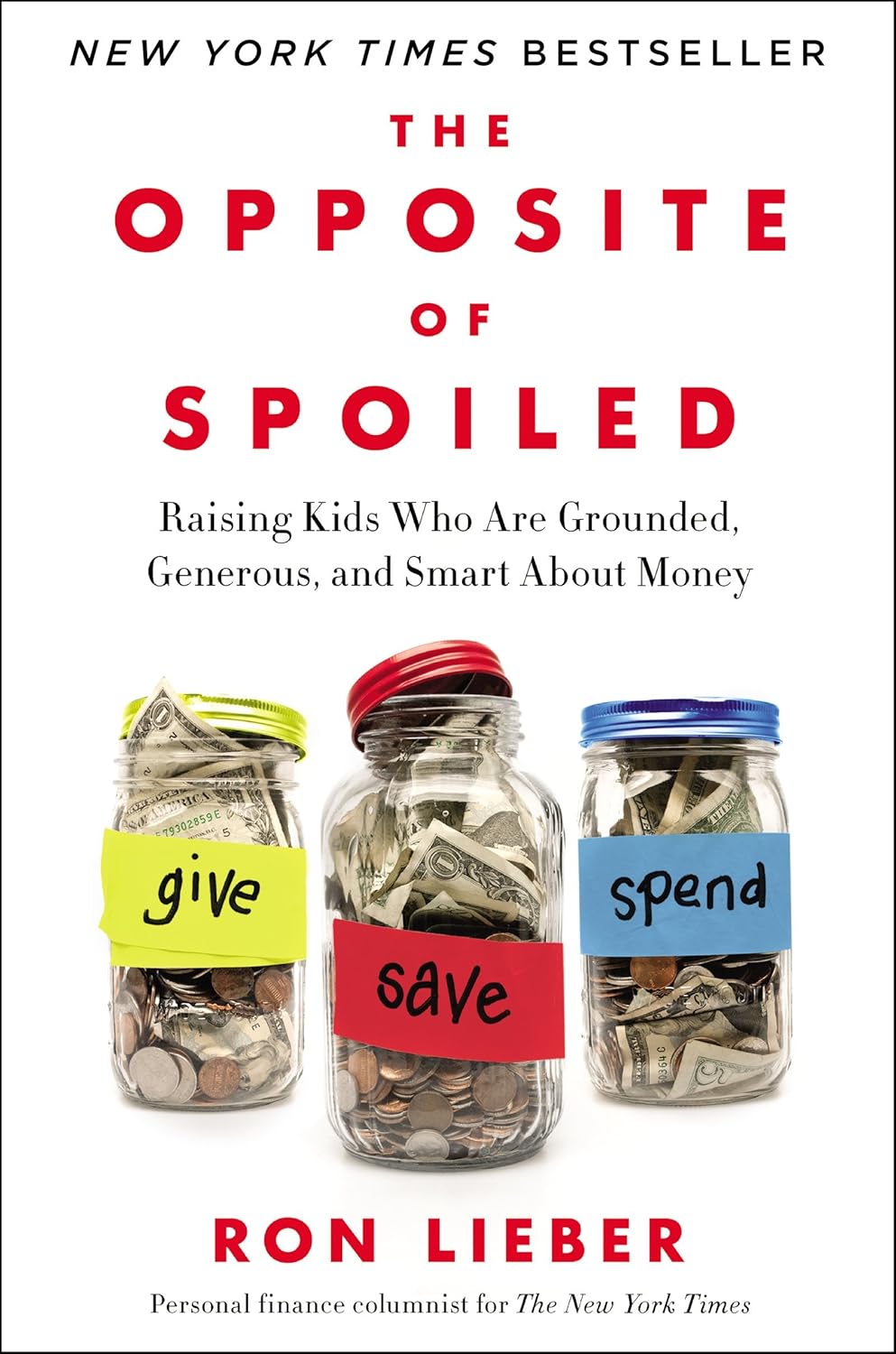
BR 307: The Opposite of Spoiled by Ron Lieber

Category: 3 – SHELF it (All Categories are 1 – Read ASAP!, 2 – BUY it!, 3 – SHELF it, 4 – SOMEDAY it)

Comments: A nice read.

Insights that resonated: I think the biggest insight from the book was to give kids a real experience with money by giving them an allowance and having them split it into “give,” “save,” and “spend” jars.

You can then get creative by introducing concepts like compound interest to them.

It isn’t something we’ve operationalized yet – but we definitely will.

3. SHELF it · Book Review Actions · Book Reviews · Money

BR 301: Mindful Investing by Jonathan DeYoe

Category: 3 – SHELF it (All Categories are 1 – Read ASAP!, 2 – BUY it!, 3 – SHELF it, 4 – SOMEDAY it)

Comments: Jonathan DeYoe reached out after I shared a personal finance post on my blog and offered to send his book over. I love reading personal finance and investing books from time to time. They’re good reminders of the importance of sticking to the fundamentals. His book was definitely one of those.

Insights that resonated: Mindful investing is:

1. Mindfully looking at what you really need to make you happy (both now and in the long term), then making an investment plan to match your needs.

2. Once you’ve done that, avoiding the noise.

He shares a key concept in Taoist philosophy – “wu-wei” or intentional non-actiohn. Doing without doing.

The key is to do the planning part – determine the amount of money you’ll need in the future, save, and invest/rebalance regularly in a simple diversified portfolio. Then free yourself from market timing and investment selection judgements.

Make a plan, then wu-wei.

1. Read ASAP! · Book Review Actions · Book Reviews · Business · Money · Technology

BR 276: On the clock by Emily Guendelsberger

Category: 1 – Read ASAP! (All Categories are 1 – Read ASAP!, 2 – BUY it!, 3 – SHELF it, 4 – SOMEDAY it)

Comments: Emily G spent 2 months each in an Amazon warehouse, an AT&T/Convergys call center, and a McDonalds and compiled her experiences and observations in a fantastic book.

Insights that resonated: The one idea that I kept coming back to was a recognition of the privilege in my life. I get to get a steady paycheck solving puzzles that are sometimes challenge, occasionally difficult, but never hard. However, the average hourly worker’s life is the exact opposite – an unsteady paycheck and a hard job.

There are many memorable anecdotes that will stay with me – customers throwing coffee and sauce at McDonalds, getting hourly pay deducted for a bathroom break at Convergys, chugging free pain medication at Amazon, Amazon colleagues doing a DIY root canal at home to avoid missing work and paying a dentist, among others.

It made me ponder the effects of global trade and technology while also considering the possibility of Universal Basic Income.

2. BUY it! · Book Review Actions · Book Reviews · History · Money

BR 269: Debt by David Graeber

Category: 2 – BUY it! (All Categories are 1 – Read ASAP!, 2 – BUY it!, 3 – SHELF it, 4 – SOMEDAY it)

Comments: There are a few special books that change our perspective by telling us the story of our past. “A Splendid Exchange” and “Guns, Germs, and Steel” do so from the lens of trade and conquest. “The Accidental Superpower” views the past from the lens of changing superpowers. “Sapiens” does so from the lens of human evolution. And, “Debt” does so from the lens of… well.. debt.

With every one of these books, we may not agree with everything the author says. That’s expected when you’re attempting to synthesize thousands of years of human history. But, these books are worth reading because understanding what came before us helps put into context what we’re experiencing today.

And, every once in a while, they also helps provide clues about what might lie ahead. History doesn’t repeat but it often rhymes.

Insights that resonated: 

1. The notion that money began because of barter is a myth. Barter is simply a logical sounding story made up by economists. To understand money, we need to look at credit/debt.

2. It is fascinating how there were similar arcs of progress in different places around the world. As different as these people and places were, there were still strong similarities in the way civilization progressed.

3. While luck plays a massive role in our lives (determines ~70% of our outcomes by my estimation) today, that role was even arguably larger (>90%) in the past. If you were born in the wrong family, you were stuck, screwed, or likely to die a brutal death.

2. BUY it! · Book Review Actions · Book Reviews · Money · Psychology

BR 263: Psychology of Money by Morgan Housel

Category: 2 – BUY it! (All Categories are 1 – Read ASAP!, 2 – BUY it!, 3 – SHELF it, 4 – SOMEDAY it)

Comments: This is an interesting book because it isn’t about how to invest or how to think about money. Instead, I describe it as a book that is about how to think about thinking about money. It is a collection of stories and anecdotes that you’ve likely heard of before and that provide food for thought. And, it can either be a light heavy read depending on how you’re feeling.

I walked away with a list of questions that I intend to work through in the coming days. It made me think. And, for that I’m grateful.

Insights that resonated:

1. Our savings = Our earnings – Cost of essentials – Cost of our ego (all expenses related to looking good)

2. Manage your money in a way that helps you sleep well at night. 

3. Luck and risk in complex systems explain outcomes better than deliberate action. Respect them. Then do what you control. 

4. The key with compounding is to not interrupt it. 99% of Warren Buffett’s net worth came after his 50th birthday, and 97% came after he turned 65.

5. Luck and risk in complex systems explain outcomes better than deliberate action. Respect them. Then do what you control. 

3. SHELF it · Money

BR 235: The Ivy Portfolio by Meb Faber

Category: 3 – SHELF it (All Categories are 1 – Read ASAP!, 2 – BUY it!, 3 – SHELF it, 4 – SOMEDAY it)

Comments: Interesting compilation of how endowment managers of the best Ivy league endowments manage their money. Very applicable to personal investing and offers a sliding scale of actions depending on how actively you want to manage your money.

Top 3 Lessons:

  1. Ivy portfolio is 20% each for
    • us stocks
    • International stocks (VWO has emerging stocks or GWX, EWX)
    • Bonds (consider TIPS)
    • Commodities – DBC, GSG (international) – could also do DBA, DBB, DBE, DBP
    • Real estate – VNQ, RWX (foreign real estate), IGF (infrastructure)
  2. If you really want to buy individual stocks, all institutional investors disclose their individual stock holdings. Why would you not follow them?
2. BUY it! · Book Review Actions · Book Reviews · Money

BR 225: Simple wealth, Inevitable wealth by Nick Murray

Category: 2 – BUY it!* (All Categories are 1 – Read ASAP!, 2 – BUY it!, 3 – SHELF it, 4 – SOMEDAY it)

Comments: I am a fan of personal finance and investing books and enjoy reading one every year or so. For the most part, they serve as a nice reminder to me to be thoughtful about saving and investing. This book was particularly interesting because Nick Murray makes a strong case for working with a financial advisor. This is contrary to nearly every other famous investing books. Nick is biased by his own experience as a financial advisor and author of books for financial advisors of course. But, he is upfront about those biases. While it didn’t result in me engaging in an advisor, it inspired me to speak to one. While it was definitely not the right time, I might still end up taking his advice some day in the future. He also hammers home the point that ownership (via stocks) is the only route to wealth.

Top 3 Lessons:

  1. Most wealth is lost not by bad investments but by bad behavior. Fear has a greater grasp on human action than the impressive weight of historical evidence. And, there’s a financial advisor out there for you who is going to be worth every cent you pay (typically 1% of your investments) in terms of adding to your gains, avoiding weaknesses and saving time.
  2. Stocks are the only strategy for long term wealth. Once you adjust for inflation and taxes, bond return is near zero. The real long term return of equities is so much greater than that of bonds that holding bonds is irrational for the true wealth seeker – people fatally underestimate the risk of not holding stocks
  3. Ownership is the only route to wealth. The great long term financial risk isn’t the loss of principal but the erosion of purchasing power = money. Stocks increase in value and raise dividends at a much greater rate than inflation saps our purchasing power.
2. BUY it! · Book Review Actions · Book Reviews · Money

BR 188: The Only Investment Guide You’ll Ever Need by Andrew Tobias

Category: 2 – BUY it! (All Categories are 1 – Read ASAP!, 2 – BUY it!, 3 – SHELF it, 4 – SOMEDAY it) Comments: The Only Investment Guide You’ll Ever Need was a recommendation on Seth’s blog. I picked it up at a time when I needed a bit of a refresh on all things investments since I’d taken all money off indexes to pay for graduate school. It was nice to “get back” with this book and, as with all Seth recommendations, this didn’t disappoint. It definitely lives up to its name as the “only” investment guide you’ll ever need. It is witty, smart and worth following. If this topic interests you, do check out a learnographic I co-created here. Top 3 Learnings: 1. A penny saved is a lot more valuable than a penny earned. The quote from Benjamin Franklin was from a time when there were no taxes. Now that we live with taxes, it actually takes a lot more than a penny earned to save a penny. So, spend less than you earn, save and watch it grow. This is a lesson that has stuck with me since the book. 2. When there are too many borrowers, governments raise interest rates. This means bond prices fall. When there are less borrowers, bond prices go up. High interest rates tend to affect stocks since they discourage people from investing in risky stocks. They also affect business’ cost of borrowing. 3. Keep short term money somewhere safe and convenient. Then, invest long term money in stock indexes where you must buy low, buy low, buy low. This is opposite what everyone else does. A simple vanguard index will outperform everything else in the long run. I would still recommend reading 2-3 investment guides before you zero in on your investing strategy. That is not because the advice in the only investment guide is any different. However, if you haven’t been exposed to this world before, it is reassuring to see the same principles at work everywhere. Book notes here.
3. SHELF it · Book Review Actions · Book Reviews · Money

BR 153: Flash Boys by Michael Lewis

Category: 3 – SHELF it (All Categories are 1 – Read ASAP!, 2 – BUY it!, 3 – SHELF it, 4 – SOMEDAY it)

Comments:  If you have any interest whatsoever on the financial markets, this book is a must read. If not, well, put it on your shelf. Michael Lewis’ books are like art – you’ll never tire of flipping the pages. He makes  a heavy financial book feel like a fascinating novel.

Top 3 Learnings:

1. Every time a new regulation is put in place, it creates an unforeseen set if market conditions that inevitably results in arbitrage by those looking to game the financial system. This sort of quick money scheme repeats itself – the housing bubble in the 80s, the credit default swaps in early 2000s and then high frequency trading in the late 2000s and perhaps now.

2. Such arbitrage causes billions of dollars to move from the pockets of investors to middlemen.

3. The behavior of the big Wall Streets bank is shocking. That’s not to say the people in these banks are bad. Somehow, the incentives and existing cultures result in horrible short term decision making. (I can’t help but wonder if the system of reporting earnings every quarter does more harm than good. It seems to drive short term thinking everywhere!