3. SHELF it · Book Review Actions · Book Reviews · Business · Leadership

BR 297: The Song of Significance by Seth Godin

Category: 3 – SHELF it (All Categories are 1 – Read ASAP!, 2 – BUY it!, 3 – SHELF it, 4 – SOMEDAY it)

Comments: Seth’s blog is my favorite blog – my first read every time it shows up on my feed. I love seeing Seth’s books on my shelf as I pick them up when I need inspiration. They always deliver. Seth’s voice and message is consistent and uplifting.

Insight(s) that resonated: 

(1) Where does your team/company fit in this 2 x 2?

(2) Culture beats strategy for breakfast. One of my favorite Seth posts is a definition of culture as “this is what we do here.” This book contained many reminders of that idea.

3. SHELF it · Business · Leadership · Management · Technology

BR 296: Scaling People by Claire Hughes Johnson

Category: 3 – SHELF it (All Categories are 1 – Read ASAP!, 2 – BUY it!, 3 – SHELF it, 4 – SOMEDAY it)

Comments: I appreciate that Claire Hughes Johnson tackled a topic not many would want to tackle – working through the details of the ins and outs of designing the operations at Stripe and sharing her approach to being a Chief Operations Officer. The book is thoughtful and detailed.

Insight(s) that resonated: 

(1) Good management is often about saying the things you think you cannot say.

(2) If your operations are not evolving as you grow, you’ve probably got the wrong systems.

1. Read ASAP! · Book Review Actions · Business · Leadership

BR 293: Unreasonable Hospitality by Will Guidara

Category: 1 – Read ASAP! (All Categories are 1 – Read ASAP!, 2 – BUY it!, 3 – SHELF it, 4 – SOMEDAY it)

Comments: This may be one of my favorite business books of all time. An early contender for book of the year. I think it is the sheer number of insightful ideas about leadership and creating memorable experiences for others that sets this book apart. I tend to be biased toward books that share frameworks vs. lists of ideas. This is a clear exception to the rule. While there is a loose framework (“unreasonable hospitality”), Will’s use of short stories and anecdotes to make his point and deliver an incredible amount of wisdom per page make this book special.

Insights that resonated: 

(1) “Language creates culture.” The book had many references to the unique language they used. “Make the charitable assumption,” “be the swan,” “constant, gentle pressure” etc. A great reminder about the importance of language in shaping culture or how we do things here.

(2) This speech from a GM at USG was on point – “I’m excited to be here; I believe in and love this restaurant with all my heart. I’m also clear about what my job is, which is to what’s best for the restaurant, not to do what’s best for any of you. More often than not, what’s best for the restaurant will include doing what’s best for you. But the only way I can take care of all of you as individuals is by always putting the restaurant first.”

(3) Two things happen when the best leaders walk into a room. The people who work for them straighten a little, making sure that everything’s perfect – and they smile, too. That’s how we were with Floyd.” | Will Guidara on working with the late Indian chef Floyd Cardoz in “Unreasonable”

There were so many great quotes from the book. A true pleasure to read.

3. SHELF it · Business · Leadership · Management · Technology

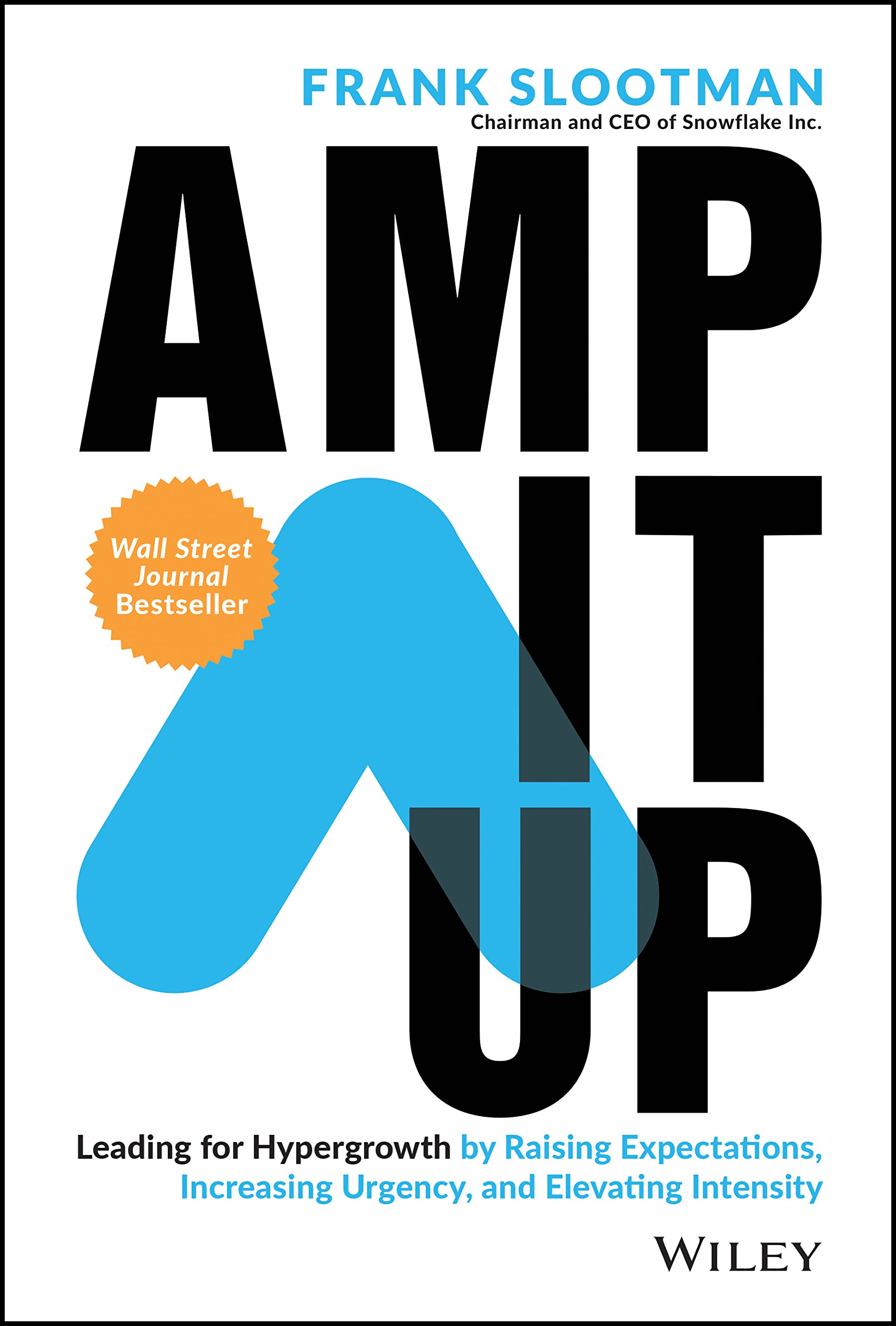
BR 286: Amp It Up by Frank Slootman

Category: 3 – SHELF it (All Categories are 1 – Read ASAP!, 2 – BUY it!, 3 – SHELF it, 4 – SOMEDAY it)

Comments: An interesting insight into the psychology of a 3 x successful tech CEO – Kevin Slootman scaled Datadog, ServiceNow, and Snowflake.

Insights that resonated: 

(1) “Years ago, I used to hesitate and wait situations out, often trying to fix underperforming people or products instead of pulling the plug. Back then I was seen as a much more reasonable and thoughtful leader — but that didn’t mean I was right. As I got more experience, I realized that I was often just wasting everybody’s time. If we knew that something or someone wasn’t working, why wait? As the saying goes, when there is doubt, there is no doubt.

(2) There’s a lot of upside to be unlocked by just being operationally excellent. Build good strategy and then spend disproportionate amount of energy creating a great operational cadence that helps your team/organization execute well.

3. SHELF it · Book Review Actions · Book Reviews · Business · Leadership · Management

BR 262: Team of Teams by Stanley McChrystal

Category: 3 – SHELF it (All Categories are 1 – Read ASAP!, 2 – BUY it!, 3 – SHELF it, 4 – SOMEDAY it)

Comments: I enjoyed reading this book. General McChrystal starts out with a lofty aim – to prove that he had a better approach to management than the traditional hierarchical org chart. I’ve read a few books that have attempted to propose better alternatives. This one sounded the most promising based on his experiences leading the Special Ops force against Al Qaeda in Iraq.

This would be a category 2 book (“Buy it!”) if you’re interested in management and/or the military.

Insights that resonated:

1. Focus on leverage instead of efficiency.

2. My summary of what I took away below –

I read “Team of Teams” by Gen. Stanley McChrystal and co. recently. The book makes the case that rigid organization structures – the legacy of the assembly line – need to be replaced by a more flexible model – a “Team of Teams.”

The book makes the case that rigid organization structures may have worked in a world where we dealt with complicated problems. But, they don’t work in today’s world characterized by complex interactions and rapid technological changes. And, it is inspired by the experiences of Gen. Stanley McChrystal’s experiences leading the Joint Special Operations Command against Al Qaeda in Iraq.

I was skeptical as this is a topic many have attempted to tackle with limited success. But, the book came highly recommended and I think it justified the recommendation. I was positively surprised at the clarity of thought and found it applicable.

The book makes 3 recommendations to move from rigid organization structures to to a “Team of Teams” –

1) Shared consciousness: Replace attempts at blocking information based on access and seniority and embrace broad and open sharing of as much information as possible. The more shared the context, the better everyone on the ground will be able to operate.

2) Decentralize decision making: Once you’ve provided the context, enable folks on the ground to make decisions and strategic calls. They likely have more information than their leaders and any attempt at gaining approval will slow people down.

3) Gardener leaders instead of chess players: Rigid organization structures invoke the image of leadership as skilled chess players. They concoct amazing strategy and the pawns on the ground follow orders. In a team of teams, leaders act more like gardeners – tending to the system and organizational culture – and enable teams to be quick and decisive.

Management systems are hard to change. The assembly line model, as an example, has stuck around for more than a century. But, the book does a good job explaining that the days of celebrating efficiency are over.

We need to spend more time thinking about effectiveness and leverage.

3. SHELF it · Book Review Actions · Book Reviews · Business · Leadership · Management

BR 260: What You Do is Who You Are by Ben Horowitz

Category: 3 – SHELF it (All Categories are 1 – Read ASAP!, 2 – BUY it!, 3 – SHELF it, 4 – SOMEDAY it)

Comments: There’s a lot to like about Ben Horowitz’s book on culture. His first book was just a tough act to follow.

Insights that resonated:

1. Culture – what you do is who you are.

2. Choose virtues instead of values -> Values are what we believe. Virtues are beliefs that we pursue or embody.

3. The amount of communication required in a relationship is inversely proportional to the amount of trust in it.

3. SHELF it · Book Review Actions · Book Reviews · Business · Leadership · Management · Novel Concepts and Interesting Research · Psychology · Skills

BR 259: The Culture Code by Daniel Coyle

Category: 3 – SHELF it (All Categories are 1 – Read ASAP!, 2 – BUY it!, 3 – SHELF it, 4 – SOMEDAY it)

Comments: I think this book is a good place to start if it is one of the first books you read about leadership and culture. Dan Coyle pieces together many wise notes – the importance of vulnerability, psychological safety, sharing appreciation, etc. – with a collection of good stories. It just didn’t resonate deeply with me at the time.

Insights that resonated: Trust in a team is proportional to psychological safety.

2. BUY it! · Book Review Actions · Book Reviews · Entrepreneurship · Leadership · Self Improvement

BR 258: Reboot by Jerry Colonna

Category: 2 – BUY it! (All Categories are 1 – Read ASAP!, 2 – BUY it!, 3 – SHELF it, 4 – SOMEDAY it)

Comments: This isn’t a “how to” lead book. It is a “here’s what leading technology companies looks like” from the perspective of a CEO coach. This book will resonate a lot more with you if you have an interest in tech start-ups. For everyone else, it may be a category 3 (“shelf it” for later book). I still believe it is one of those that you have to include on your bookshelf because I believe the central premise of the book is important – better humans make better leaders.

Insights that resonated:

1. Better humans make better leaders.

2. Heartbreak is universal. True grit is not only having your heart broken – but it is also managing to keep that heart open despite the losses.

3. What if being lost is part of the path? What if we are supposed to tack across the surface of the lake, sailing into the wind instead of wishing it was only at our backs? What if feeling lost, directionless, and uncertain of the progress is an indicator of growth? What if it means you’re exactly where you need to be, on the pathless path?

4. I took a few writing courses in college. The extraordinary poet Marie Ponsot would talk about the crow sitting on your shoulder saying things like: “That sucks,” ”How could you write that?” and “Are you kidding me?”

Diminutive, chain-smoking Marie would jut her tobacco-stained finger into the air, punctuating every word: Shoot. The. Damn. Crow.

5. One day, the Tibetan teacher Milarepa left his cave to gather firewood. When he returned, he found that his cave had been taken over by demons. There were demons everywhere!

His first thought upon seeing them was, “I have got to get rid of them!” He lunges toward them, chasing after them, trying forcefully to get them out of his cave. But the demons are completely unfazed. In fact, the more he chases them, the more comfortable and settled-in they seem to be.

Realizing that his efforts to run them out have failed miserably, Milarepa opts for a new approach and decides to teach them the dharma. If chasing them out won’t work, then maybe hearing the teachings will change their minds and get them to go. So he takes his seat and begins teaching about existence and nonexistence, compassion and kindness, the nature of impermanence.

After a while he looks around and realizes all the demons are still there. They simply stare at him with their huge bulging eyes; not a single one is leaving.

At this point Milarepa lets out a deep breath of surrender, knowing now that these demons will not be manipulated into leaving and that maybe he has something to learn from them. He looks deeply into the eyes of each demon and bows, saying, “It looks like we’re going to be here together. I open myself to whatever you have to teach me.”

In that moment all the demons but one disappear. One huge and especially fierce demon, with flaring nostrils and dripping fangs, is still there.

So Milarepa lets go even further. Stepping over to the largest demon, he offers himself completely, holding nothing back. “Eat me if you wish.” He places his head in the demon’s mouth, and at that moment the largest demon bows low and dissolves into space.


When dealing with the toughest challenges – the kind that involves the demons inside of us – brute force turns out to be a blunt instrument. Acceptance, kindness, and a willingness to open our hearts and minds to the learning ahead of us enable us to make the progress we seek.

1. Read ASAP! · Bio/Autobiographies · Book Review Actions · Book Reviews · Leadership · Management

BR 254: The Ride of a Lifetime by Bob Iger

Category: 1 – Read ASAP! (All Categories are 1 – Read ASAP!, 2 – BUY it!, 3 – SHELF it, 4 – SOMEDAY it)

Comments: This book is to corporate leaders what “Shoe Dog” is to sports entrepreneurs and “The Hard Things About Hard Things” is to tech entrepreneurs. Surprisingly candid, incisive, and insightful. A phenomenal read – the sort of book that should be mandatory reading in every graduate school of business.

Top 3(+) Lessons: 

1. There’s a wonderful story about how Bob got Roy Disney to waive off a lawsuit against him early in the book. The lawsuit was a culmination of years of perceived slights and pent up frustration against the Disney board and leadership. Bob gave Roy the title of Chairman Emeritus, a small consulting fee, and an office at Disney. While folks criticized Bob for bending over to Roy’s demands, Bob shared that most people just want a bit of respect. And, in difficult situations, it is so important to not let our ego get in the way of that happening.

2. I love how straightforward Bob is through the course of the book. There is no false humility. He believed he deserved to be CEO, hated that he was made to go through the ringer for it, and made it count when he got the chance.

3. That said, he also demonstrated a lot of patience as he went through a series of changes and acquisitions before getting the job. He was 54 when he finally became CEO.. and, boy, did he make it count.

4. “Avoid getting into the business of manufacturing trombone oil. You may become the greatest manufacturer of trombone oil in the world, but in the end, the world only consumes a few quarts of trombone oil a year.”

5. There was an incredible anecdote about how he pulled the plug on the Twitter acquisition on the sunday before the deal was announced. “It just didn’t feel right” – he’d earned the right to trust his gut by then.

6. When faced with expected internal resistance about Disney+, he convinced the Board to change all executive bonus agreements to a rating decided by him on how much they were contributing to the shift to streaming. Another brave move.


2. BUY it! · Career · Leadership · Management · Self Improvement

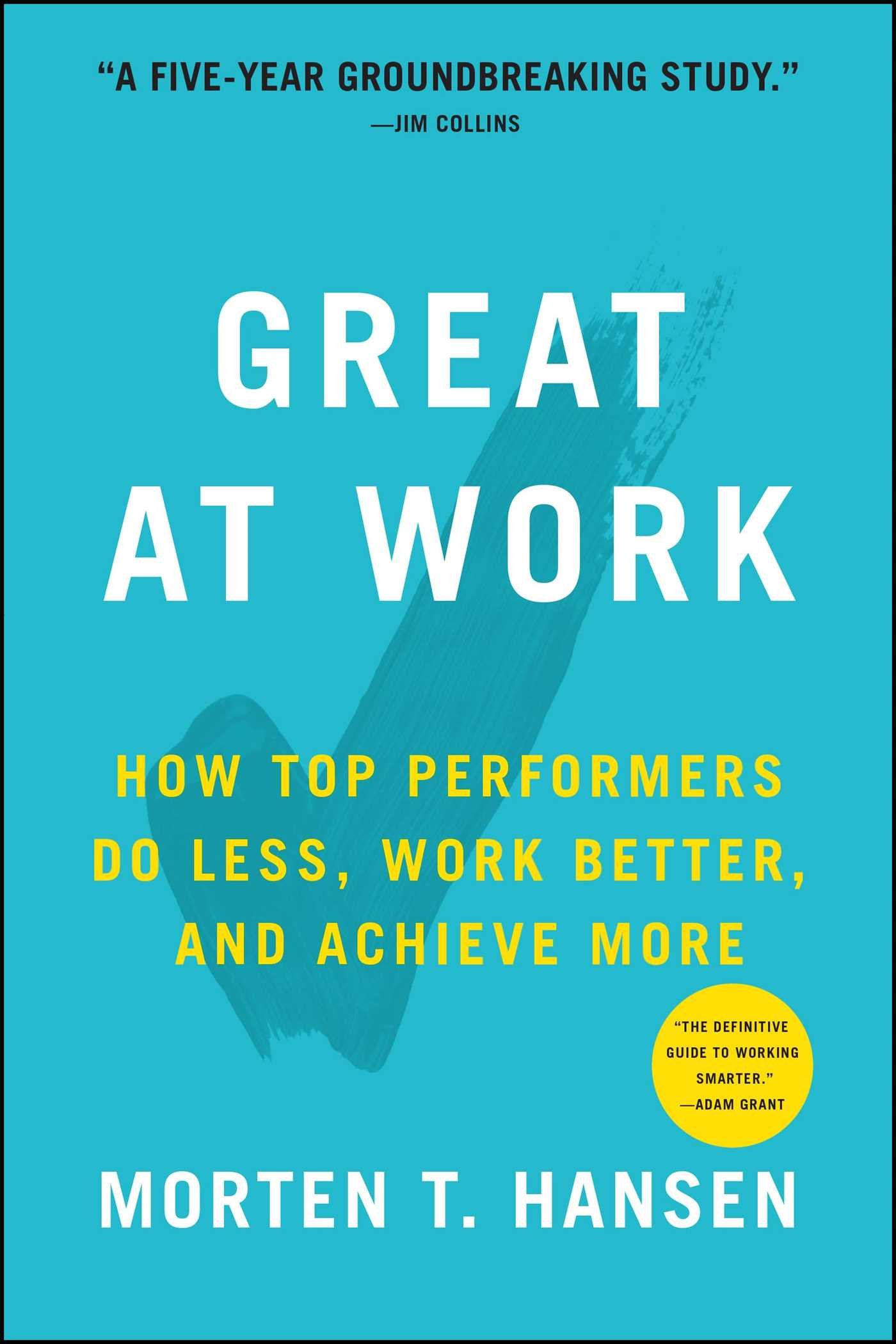
BR 237: Great at Work by Morten Hansen

Category: 2 – BUY it! (All Categories are 1 – Read ASAP!, 2 – BUY it!, 3 – SHELF it, 4 – SOMEDAY it)

Comments: Morten Hansen kicks this book off sharing that he thinks of this book as the work accompaniment of the 7 Habits of Highly Effective People by Stephen Covey (he also has 7 work principles). As someone who thinks of the 7 Habits as the best book I’ve read, this is a bold claim. But, and here’s the best part, his book lives up. I found it insightful, useful, and applicable. This book was part of my end-of-year reflection and will be a big part of my “get better” themes for 2019. And, it is a book I wish I had when I started my career.

First 3 principles:

  1. “Do less, then obsess.” In sharing the difference between the South pole expeditions of Robert Scott and Ronald Amundsen, Morten Hansen makes an interesting point on focus. Amundsen focused completely on one form of transportation – dogs – while Robert Scott struggled with five.
  2. “Redesign your work for value.” Cutting priorities isn’t enough. We need to obsess about value. Value = Benefits to others x effectiveness x efficiency.
  3. “Passion + Purpose.” Purpose is when you make valuable contributions to others or society that you find meaningful and doesn’t do harm. Purpose asks what can I contribute while passion asks the opposite. Match both.

Every principle resonated.