1. Read ASAP! · Book Review Actions · Book Reviews · Leadership · Parenting · Philosophy · Psychology · Relationships · Self Improvement

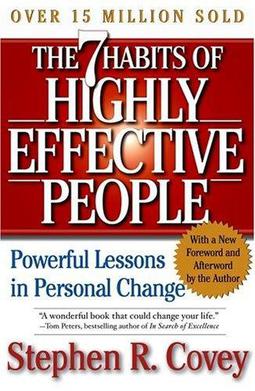
BR 199: The 7 Habits of Highly Effective People by Stephen Covey

Category: 1 – Read ASAP! (All Categories are 1 – Read ASAP!, 2 – BUY it!, 3 – SHELF it, 4 – SOMEDAY it)

Comments: I rarely re-read books but decided to re-read this during my end-of-year break as I’ve come to appreciate how wise this book is. It delivered, again. I’d spent most of my first reading in the first half/personal victories portion of the book. This time, I spent more time in the public victories. So much to learn, do and build.

Top 3 Learnings:
1. To know and not to do is not to learn. Beautifully drove home the point that I haven’t “learned” nearly as much I say I have.

2. Seek to understand and then to be understood. In the spirit of knowing and not doing, this has become an important part of “engagement” theme this year. I am still too impatient too often.

3. Seeking win-win requires a combination of courage and consideration.

Stephen Covey’s masterpiece is so good that it makes the “Read ASAP” list twice. :)

2. BUY it! · Book Review Actions · Book Reviews · Psychology

BR 197: Daring Greatly by Brene Brown

Category: 2 – BUY it! (All Categories are 1 – Read ASAP!, 2 – BUY it!, 3 – SHELF it, 4 – SOMEDAY it) Comments: This is an important book. If you are interested in understanding topics like shame, vulnerability and insecurity, Brene Brown does a fantastic job putting her research and thinking together. Top 3 learnings: 1. Perfection doesn’t exist with parenting. Labeling good or bad parenting isn’t helpful. Are you engaged? Then make mistakes and have fun! 2. Women and men. Women feel shame due to a plethora of reasons – most dominant of those is their appearance and their ability to be mothers while being capable. Hence the whole pressure to have it all. 3. Men, on the other hand, are shamed by the idea of being a “pussy”. Being weak is seen as shameful. (So true) this is especially the case with the women in their lives who want them to man up more than they want them to be vulnerable. So, men keep silent. And when they are provoked, they either get pissed off or shut down. Book notes here.
3. SHELF it · Book Review Actions · Book Reviews · Business · Leadership · Management · Philosophy · Psychology · Relationships

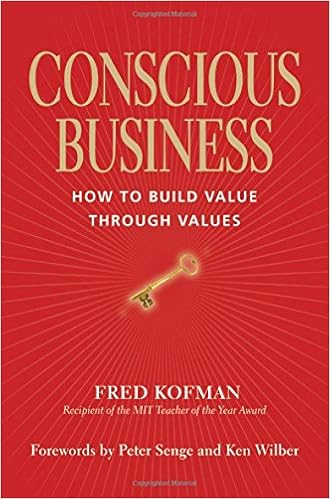
BR 189: Conscious Business by Fred Kofman

conscious business, fred kofman

Category: 3 – SHELF it (All Categories are 1 – Read ASAP!, 2 – BUY it!, 3 – SHELF it, 4 – SOMEDAY it)

Comments: Conscious Business is an all star business book and deservedly so. It is one of those books that can fundamentally change your perspective. I did find a lot of overlap with the 7 Habits of Highly Effective People.

Top 3 learnings:

1. Consciousness is our ability to be aware and to choose. I found this definition very powerful.

2. Kofman shared the steps to drive people crazy. I found this similar to the steps to creating a cult in Robert Greene’s book on Power. Essentially, it involves being very inconsistent and pretending to be open while not being so. The inconsistency drives people nuts. Sadly, such behavior is a common cause for schizophrenia.

3. Don’t question the emotion. Instead, question the underlying beliefs that lead to the emotion. For example, if Fred’s son believes that there are monsters in the basement, there is no point expecting him not to be scared. After all, we would be scared if we thought so too.

Book notes here.

3. SHELF it · Book Review Actions · Book Reviews · Entrepreneurship · Psychology

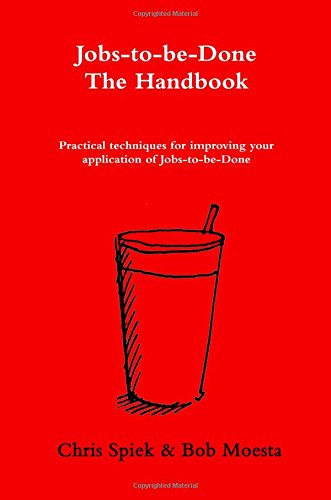
BR 185: The Jobs To Be Done Handbook by Bob Moesta and Chris Spiek

Jobs to be done, handbook, bob moesta, jtbd

Category: 3 – SHELF it (All Categories are 1 – Read ASAP!, 2 – BUY it!, 3 – SHELF it, 4 – SOMEDAY it)

Comments: Practical how-to guide on conducting “jobs to be done” interviews. I had attended a Bob Moesta presentation in person once and this book just felt like the extended version of that. Lots of tips and tricks.

Top 3 Learnings:

1. With jobs to be done, it is all about finding the “why” behind customer decisions and then figuring out ways to meet the unmet need

2. To hire a product, you must fire another product. Every customer has only so much space in their lives to use products. So, if you are trying to get them to change behavior, they will need to let go of a product that isn’t doing the job so well.

3. Good jobs to be done interviewing does not connect the dots for the interviewee. Be ignorant, make no assumptions and keep asking them questions. Again, in the live presentation, Bob Moesta conducted a demo interviewed and showcased this beautifully – that will stay with me. :)

Book notes here.

3. SHELF it · Book Review Actions · Book Reviews · Leadership · Psychology · Self Improvement

BR 184: Persuadable by Al Pitampalli

persuadable, al pitampalli

Category: 3 – SHELF it (All Categories are 1 – Read ASAP!, 2 – BUY it!, 3 – SHELF it, 4 – SOMEDAY it)

Comments: A really good book. I didn’t find it as new simply because it involves broadening Jeff Bezos’ philosophy about people who are right a lot continually changing their mind. In Persuadable, Al helps us understand how to think about being persuadable and shares a compelling rationale for being so.

Top 3 Learnings:

1. Two of my favorite business tales – Jeff Bezos on being right a lot  and Ray Dalio’s investment approach.

In 1981, Dalio was sure US was on the brink of a recession because he felt the government was too leveraged. He began publicizing it. But, to Dalio’s surprise, the stock market surged and led to a tremendous embarrassment and loss of fortune.

So kept detailed records of every trade he made and began noting what happened with every investment – learning from both his success and painful losses. Pain + success = progress. Kept finding “rules” for the market and kept improving it.

2. Thanks to Ralph Waldo Emerson’s writings which normally emphasize leadership bravado and single-mindedness, we focus a lot on consistency. So much so that whole political campaigns are won the moment a candidate switches views on a topic. While the rationale for this is because political candidates are often guilty of changing views based on when it suits them, we also end up punishing those who’re changing it because of better data.

Abraham Lincoln, for example, was a notorious flip flopper who changed his views on the civil rights movement as new data presented itself. even black scholar and activist W E B De Buy? who was often critical of Lincoln admired his always critical and flexible brand of leadership.

3. The overall point of the book is to view our approach to life and business as an evolving thesis. Seek new information, keep improving the thesis and get better.

Book notes here
3. SHELF it · Book Review Actions · Book Reviews · Entrepreneurship · Psychology · Self Improvement

BR 182: The One Thing by Gary Keller and Jay Papasan

One thing

Category: 3 – SHELF it (All Categories are 1 – Read ASAP!, 2 – BUY it!, 3 – SHELF it, 4 – SOMEDAY it)

Comments: The One Thing was a pleasant read. It felt like a “starter” self help book. Lots of interesting ideas packaged in a “how to,” without much focus on “why.”

Top 3 Learnings: Just one learning – of course.

At any given time, it will feel like you have many things you need to make progress on.

Take a step back and ask yourself – what is the ONE thing you need to focus on?

Then, make progress on that.

(No other book notes :))

2. BUY it! · Book Review Actions · Book Reviews · Psychology · Self Improvement · Skills · Sports

BR 181: Peak by Anders Ericsson and Robert Pool

Anders Ericsson, peak, performance

Category: 2 – BUY it! (All Categories are 1 – Read ASAP!, 2 – BUY it!, 3 – SHELF it, 4 – SOMEDAY it)

Comments: Peak is the culmination of the life’s work of a legendary researcher – Prof Anders Ericsson. Prof Ericsson has single handedly changed our understanding of performance and expertise. It is a lovely read – well written and flows beautifully. The only reason I have it as a category 2 is because author Geoff Colvin did a good job of bringing Prof Ericsson’s research to the mainstream with “Talent is Overrated.”

Top 3 Learnings:

1. There is absolutely no evidence for innate talent beyond a few physical advantages in certain sports. The dark side of this is denying kids the opportunity to get good with very little evidence (think Outliers).

While the average IQ of scientists is higher than the average person, there is no correlation between IQ and scientific productivity. Richard Feynman, one of the most brilliant physicists of all time wouldn’t make it to MENSA with his 126 IQ. Researchers have suggested that the minimum requirements for performing capably as a scientist are around 110 – beyond which there is little or no additional benefit. It is unclear if this requirement is one to succeed as a scientist or to do the writing and admission tests required to get a PhD.

Similarly, for some sports, one could speculate about some minimum talent requirements – e.g. some basic physical traits such as height and body size. Beyond that, however, practice trumps everything else.

We might be born with preference for music over sports, for example. But, that counts for little if we don’t practice it.

2. Our body literally changes with deliberate practice. The key difference between deliberate practice and purposeful practice is a teacher. Having a teacher who has been through what we’ve been through changes everything.

3. The focus when we perform deliberate practice is not on knowledge, but on skills. That will be key in making deliberate practice applicable in education.

Book notes here

3. SHELF it · Book Review Actions · Book Reviews · Psychology · Self Improvement

BR 180: The Willpower Instinct by Kelly McGonigal

willpower

Category: 3 – SHELF it (All Categories are 1 – Read ASAP!, 2 – BUY it!, 3 – SHELF it, 4 – SOMEDAY it)

Comments: A super practical and applicable guide to willpower.

Top 3 Learnings:

1. There is no point beating yourself up for a willpower failure. We do better when we learn to be kind to ourselves.

2. Pay attention to your thoughts and accept them. Just remember that you don’t have to act on them. Resisting thoughts is a bad idea.

3. The best long term solution to willpower is mindfulness when you feel cravings. That’s how you learn to conquer them.

Book notes here.

3. SHELF it · Book Review Actions · Book Reviews · Business · Entrepreneurship · History · Novel Concepts and Interesting Research · Psychology

BR 179: David and Goliath by Malcolm Gladwell

Category: 3 – SHELF it (All Categories are 1 – Read ASAP!, 2 – BUY it!, 3 – SHELF it, 4 – SOMEDAY it) Comments: Malcolm Gladwell is a masterful writer and weaves together many stories into a compelling book that asks us to rethink our traditional ideas of what constitutes an advantage. Top 3 Learnings: 1. You may be better off being a big fish in a small pond. More people get discouraged and depressed being average at a top institution. 2. David and Goliath was a mismatched battle. As a slinger, Goliath actually stood no chance. 3. There is such a thing as a desired level of adversity. That’s how character is built. Book notes here.
2. BUY it! · Book Review Actions · Book Reviews · Career · Psychology · Self Improvement · Skills

BR 177: Deep Work by Cal Newport

deep work

Category: 2 – BUY it! (All Categories are 1 – Read ASAP!, 2 – BUY it!, 3 – SHELF it, 4 – SOMEDAY it)

Comments: I love Cal Newport’s thought process and approach to excellence and the idea of optimizing life for “deep work” is one that has stuck with me.

This book approaches the “Deep Work” idea exhaustively. I’ve put this as a priority 2 book simply because it is important you ease into this as this is more a “how to” book and requires the context before you buy into the hows and whats. The first step would be to read “So Good They Can’t Ignore You” by Cal Newport and then read this.

Top 3 Learnings:

1. The quality of your life is likely directly proportional to the amount of time you spend in deep work. A deep life is a good life.

2. Attention residue is the biggest problem with small distraction. Our brain takes time to switch between tasks and this task switching drains us.

3. A deep work approach to life requires you to make hard choices on what you spend time on. The point isn’t so much about whether something you spend time on gives you benefit. It is understanding everything we give up. Understanding trade-offs are critical.

Book notes here.