1. Read ASAP! · Book Review Actions · Book Reviews · Career · Leadership · Parenting · Psychology · Self Improvement

BR 218: Mindset by Carol Dweck

Category: 1 – Read ASAP! (All Categories are 1 – Read ASAP!, 2 – BUY it!, 3 – SHELF it, 4 – SOMEDAY it)

Comments: This is a seminal work. The concept underlying this is the same as in Marilee Adams’ book – Change Your Questions, Change Your Life. However, this makes the case for a growth mindset by adding a ton of well researched examples and a lot of scientific rigor.

Mindset is central to how we approach things. And, we always have a choice between fixed mindsets and growth mindsets.

The belief that people/adults cannot change wreaks a lot of havoc in the world. Here’s hoping more folks read this book.

Top 3 Learnings:

1. Companies are better off reminding manager’s about Growth mindset first before doing any kind of training.

2. The best environments combine challenge and nurture. They involve high standards in an environment of trust.

3. Praise children for effort, not ability. When a child does something fast and perfect, Carol says – “sorry that was so easy and a waste of your time.”

2. BUY it! · Book Review Actions · Book Reviews · Psychology · Self Improvement

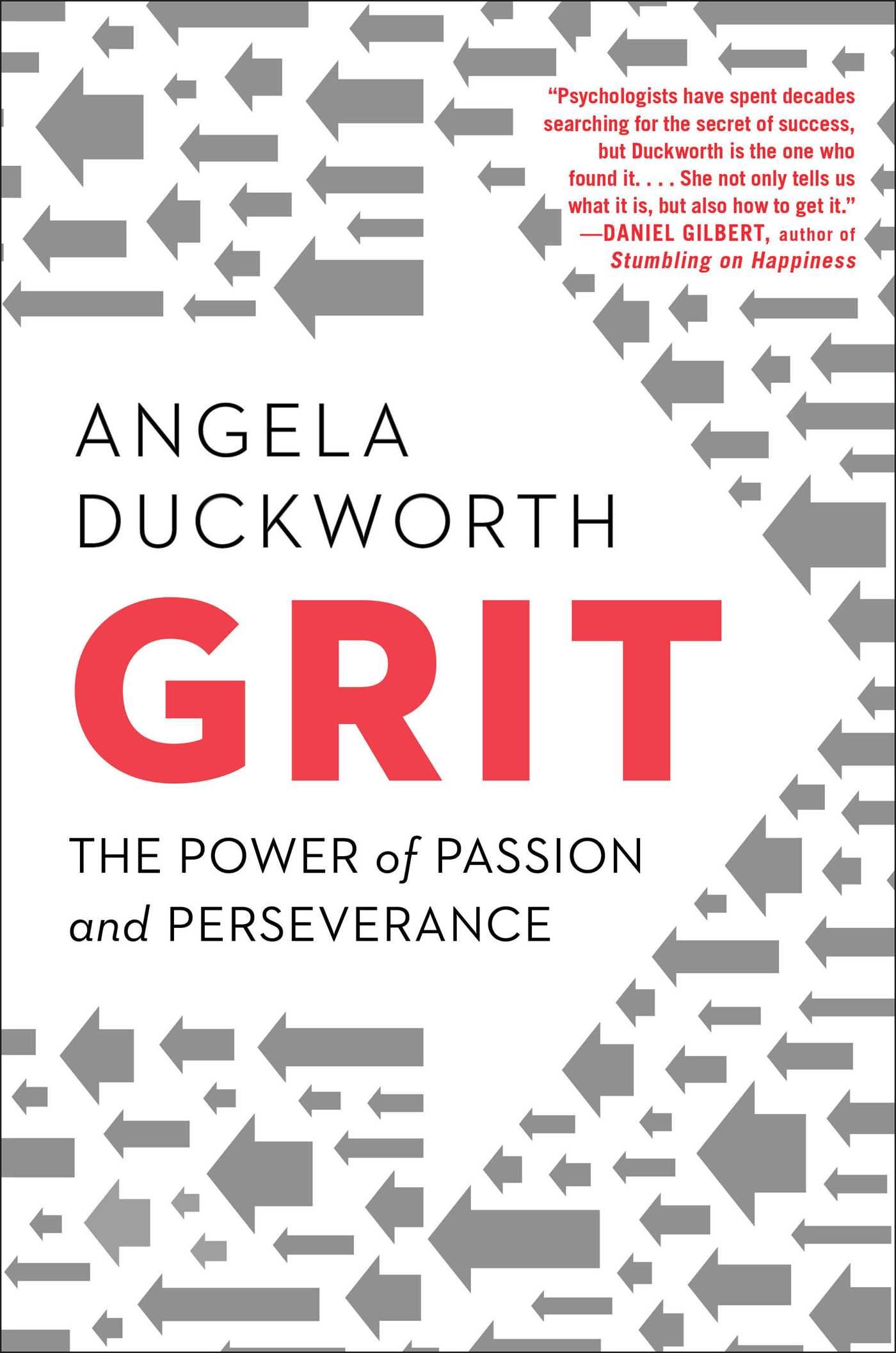
BR 217: Grit by Angela Duckworth


Category: 2 – BUY it!* (All Categories are 1 – Read ASAP!, 2 – BUY it!, 3 – SHELF it, 4 – SOMEDAY it)

Comments: Solid book. Angela Duckworth has clearly done a lot of interesting research and worked with the who’s who in the psychology world. There are moments in the book when grit is over sold – but, I think that comes with the territory of writing a book on the subject.

My view is that grit is a second order virtue. It follows a growth mindset. So, I’d recommend Mindset by Carol Dweck above most psychology books as a result. :)

Top 3 Learnings: 

1. Skill = Talent x effort, Success = Skill x effort

Grit is passion + perseverance.

2. Grit based parenting is combination of high standards and consistent support (clinically – authoritative but can be confused with authoritarian)

3. Jeff Canada – famous for improving outcomes for kids in poverty in New York – did so with a comprehensive approach including summer and after school programs that was based on research. But, he also added one thing that wasn’t based on the research-extracurricular activities. He said he did this because “he liked kids.” He treated kids in his school just like he treated his own. He enjoyed watching them learn and grow. This extra curricular difference illustrates why low income kids have a difficult time catching up. Poorer schools cut these critical programs.

3. SHELF it · Book Review Actions · Book Reviews · Entrepreneurship · Skills · Technology

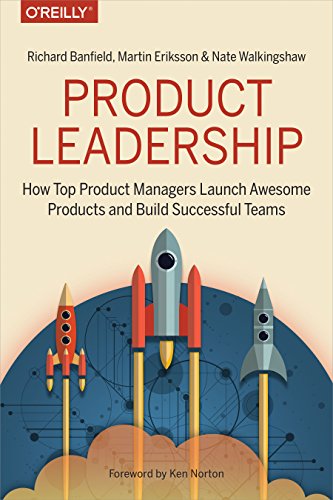
BR 216: Product Leadership by Richard Banfield, Martin Ericsson, Nate Walkingshaw

Category: 3 – SHELF it (All Categories are 1 – Read ASAP!, 2 – BUY it!, 3 – SHELF it, 4 – SOMEDAY it)

Comments: There are few good books written on technology product management. So, I’d still recommend folks in product management to read it. However, the biggest challenge I had with this book was that it felt like a collection of quotes from various PMs around the world. I wish there had been more of a central thesis or hypothesis laid out.

Top 3 Learnings: 

1.  Product Management is the intersection between business, user experience, and technology.

Business: Primarily focused on optimizing a product to achieve business goals while maximizing return on investment
Ux: Voice of the customer and must be passionate about the customer and their problems.
Tech: Understand the stack and the level of effort involved.

2. The best roadmap is a strategic communication artifact that is focused on the big picture and conveys the path you’ll take to fulfill your product vision. Split roadmap into themes based on customer problems

3. The product leader as CEO idea is misleading. A better analogy would be the product leader as the captain of a sports team, a conductor of an orchestra, or a university professor guiding their class. Like the professor, conductor, or team captain, the product leader is an individual who succeeds only by bringing the whole team along with them, working toward a common goal.

1. Read ASAP! · Book Review Actions · Book Reviews · History · Politics

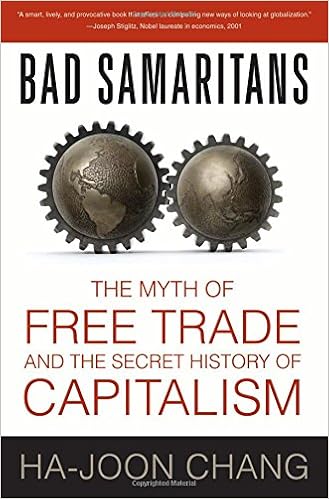
BR 215: The Bad Samaritans by Ha-Joon Chang

Category: 1 – Read ASAP! (All Categories are 1 – Read ASAP!, 2 – BUY it!, 3 – SHELF it, 4 – SOMEDAY it)

Comments: A perspective changer. I was aware of the IMF, The World Bank and the World Trade Organization thanks to social science classes in middle school. But this was a compelling take on how their help can cause hurt.

Top 3 Learnings:

1. Every developed country rose to power thanks to protecting infant industries via imposing tariffs or protecting patents. But, they’ve sold the idea of free markets to the world so it is impossible for countries developing right now to do it. The US was the most protectionist country in the world until the Second World War and grew the fastest. Britain and the US had tariffs as high as 50%.

2. This is particularly because the IMF, World Bank and WTO (i.e. the bad samaritans) are run by developed countries and only offer aid in exchange for policies that suit developed countries. It is very hard for poor countries to out-negotiate the rich countries in Geneva given paucity of resources.

3. In the first few years after 1900, multiple books described the Japanese as lazy, care free and emotional people. Similarly in the 1800s, the British and French described Germans the same way.
Economic development often creates the culture it needs. Hard work, time keeping, frugality often follow economic development.

3. SHELF it · Book Review Actions · Book Reviews · Business · Career · Psychology · Self Improvement

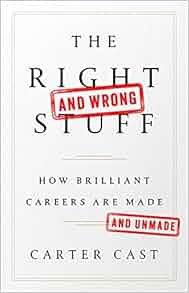
BR 214: The Right and Wrong Stuff by Carter Cast

Category: 3 – SHELF it! (All Categories are 1 – Read ASAP!, 2 – BUY it!, 3 – SHELF it, 4 – SOMEDAY it)

Comments: I think this is an important book and one everyone should have on their bookshelves. We all think about and talk about careers. We also talk about folks who are successful and folks who aren’t (or those who have derailed). This book brings together a lot of wisdom around what makes and breaks careers and packages it nicely. And it is written by one of my favorite Professors and a good (wise) friend.

Top 3 Learnings:

  1. Brilliant careers derail due to a variety of reasons. But, the biggest among them is a lack of self awareness that blinds a person to their tendency to overdo their strengths.
  2. 3 strengths/traits that accompany great careers – initiative, the ability to build positive relationships and a combination of perseverance and drive.
  3. The right stuff formula: (Job Skills + Industry Knowledge + Operational ability) x (3 Distinctive strengths/Derailers). This is a nice summary. Start with hard skills, industry knowledge and the ability to get stuff done. These are table stakes. Differentiate based on everything else.
3. SHELF it · Book Review Actions · Book Reviews · Philosophy · Psychology · Self Improvement

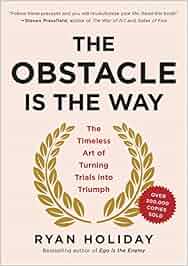
BR 213: The Obstacle is the Way by Ryan Holiday

Category: 3 – SHELF it (All Categories are 1 – Read ASAP!, 2 – BUY it!, 3 – SHELF it, 4 – SOMEDAY it)

Comments: The Obstacle is the Way is a book that reads almost as a beginner’s guide to stoic philosophy. If someone were to write a book about the poem “If” by Rudyard Kipling, I’d expect this to be that book. A nice, positive read.

Top 3 Learnings:

  1. Courage is taking action.
  2. Out of 280 successful victories analyzed by historians, only 6 were a result of direct assault. In many of these, disadvantages were turned into advantages. :)
  3. Perception is how we see and understand what occurs around us—and what we decide those events will mean. Our perceptions can be a source of strength or of great weakness.
1. Read ASAP! · Book Review Actions · Book Reviews · History · Novel Concepts and Interesting Research

BR 212: Sapiens by Yuval Noah Harari

Category: 1 – Read ASAP! (All Categories are 1 – Read ASAP!, 2 – BUY it!, 3 – SHELF it, 4 – SOMEDAY it)

Comments: A game changing book. It is long, dense and takes a while to get through. But, my oh my, it is worth it. I love books that look at all of human history through various lenses. This one tells the story of Homo Sapiens from Yuval Harari’s perspective and beautifully weaves in all that is ugly, beautiful and miraculous all at once. Fascinating.

Top 3 Learnings:

1. Fiction. Thanks to language, we were able to speak about abstract concepts and/or fiction. It is one of the unique aspects of our language and mental ability. This enables us to create myths and stories (religion, nationalism) that enables us to cooperate flexibly in large groups. These creative myths and stories dominate our life today – countries, religions and businesses are all myths that we buy into. And, it is this fiction that enables us to cooperate with each other.

Human to ape, we don’t differ by much. However, in groups, the difference is massive thanks to this ability to believe. “In 2011, The UN asked Libya to adhere to human rights. Of course, the UN, Libya and Human rights are all fictional.” :)

2. Agricultural revolution. The agricultural revolution is the world’s greatest fraud story. We didn’t domesticate plants. Wheat, Maize and Rice domesticated us. Domesticated comes from the Latin word domus which means at home. It is humans who stayed at home. And, not just ate – began eating a diet that wasn’t anywhere as nutritious since it lacked variety, had to work very hard to keep these plants happy and suffer if pests or the weather attached them. But, it helped us with one metric – multiplication. More people could be supported by agriculture under much worse conditions.

3. Industrial revolution and energy. The industrial revolution has really been about our ability to convert energy into forms we can use. Steam engine then oil enabled us to mass produce and ship raw materials around the world. The prime example of this is farming – especially animal farming. We mass produce animals like never before, subjecting them to horrible conditions that deprive them of all emotion or sensory stimulation. Like slavery, such cruelty is borne, not out of hate, but out of indifference.
1. Read ASAP! · Bio/Autobiographies · Book Review Actions · Book Reviews · Philosophy

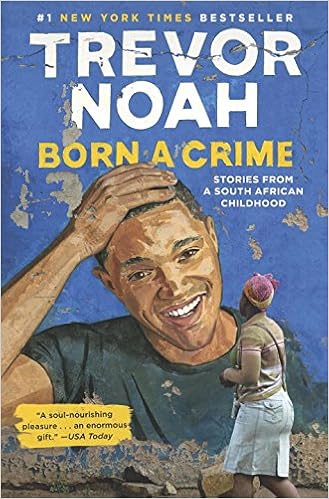
BR 211: Born a Crime by Trevor Noah

Category: 1 – Read ASAP! (All Categories are 1 – Read ASAP!, 2 – BUY it!, 3 – SHELF it, 4 – SOMEDAY it)

Comments: Wonderful book. Trevor Noah has a fascinating story to tell and tells it artfully. It is a classic stand up comedian’s book in many ways – he tells his stories and follows them up with piercing insight into the human condition. The book gave me insight into life in the ghetto in a way no book, movie or video ever managed.

Top 3 Learnings: Instead of 3 learnings, I’ll share 3 of my favorite quotes from the book (it was hard picking just 3) –

  1. “People thought my mom was crazy. Ice rinks and drive-ins and suburbs, these things were izinto zabelungu — the things of white people. So many people had internalized the logic of apartheid and made it their own. Why teach a black child white things? Neighbors and relatives used to pester my mom: ‘Why do this? Why show him the world when he’s never going to leave the ghetto?’
    ‘Because,’ she would say, ‘even if he never leaves the ghetto, he will know that the ghetto is not the world. If that is all I accomplish, I’ve done enough.”
  2. “It’s easy to be judgmental about crime when you live in a world wealthy enough to be removed from it. But the hood taught me that everyone has different notions of right and wrong, different definitions of what constitutes crime, and what level of crime they’re willing to participate in. If a crackhead comes through and he’s got a crate of Corn Flakes boxes he’s stolen out of the back of a supermarket, the poor mom isn’t thinking, ‘I’m aiding and abetting a criminal by buying these Corn Flakes.’ No. She’s thinking, ‘My family needs food and this guy has Corn Flakes’, and she buys the Corn Flakes.”
  3. “When you shit, as you first sit down, you’re not fully in the experience yet. You are not yet a shitting person. You’re transitioning from a person about to shit to a person who is shitting. You don’t whip out your smartphone or a newspaper right away. It takes a minute to get the first shit out of the way and get in the zone and get comfortable. Once you reach that moment, that’s when it gets really nice. It’s a powerful experience, shitting. There’s something magical about it, profound even. I think God made humans shit in the way we do because it brings us back down to earth and gives us humility. I don’t care who you are, we all shit the same. Beyoncé shits. The pope shits. The Queen of England shits. When we shit we forget our airs and our graces, we forget how famous or how rich we are. All of that goes away.”
3. SHELF it · Book Review Actions · Book Reviews · Business · Creativity · Entrepreneurship · Novel Concepts and Interesting Research · Psychology

BR 210: Hunch by Bernadette Jiwa

Category: 3 – SHELF it (All Categories are 1 – Read ASAP!, 2 – BUY it!, 3 – SHELF it, 4 – SOMEDAY it)

Comments: This is a really easy and fun read. Bernadette Jiwa makes the case that we all have it in us to be insightful. We just have to learn to notice more. It’s one of those positive books that you could just pick up and read on a Sunday afternoon and walk out feeling optimistic and better.

Top 3 Learnings: 

  1. Don’t underestimate the power of the hunch in today’s data driven world. Noticing is the key to finding breakthrough ideas in everyday experiences.
  2. Cultivate curiosity, empathy and imagination to be in touch with your hunches.
  3. Empathy is feeling with someone. Sympathy is feeling for someone.
1. Read ASAP! · Book Review Actions · Book Reviews · Business · History · Technology

BR 209: The Master Switch by Tim Wu

Category: 1 – Read ASAP! (All Categories are 1 – Read ASAP!, 2 – BUY it!, 3 – SHELF it, 4 – SOMEDAY it)

Comments: I debated about whether this should be category 1 or 2. On the one hand, this book is very focused on the history of information empires in the United States. But, on the other, information empires are THE dominant corporations in today’s world. So, this book become a must read. :)

Top 3 Learnings:

  1. Every information industry (phone, radio, film, tv, internet) has seen a struggle between open versus closed / decentralized versus centralized. Every one of these started out with hackers and hobbyists and then became the home of large monopolies.
  2. What we think is a by product of what we read and who listen to. Free speech and a marketplace of ideas are not as dependent on the values of a place as much as the structure of the information infrastructure.
  3. This isn’t as much a learning as much as a note that I remember so many stories from the book. The story of the creation of hollywood, the rise, fall and rise of AT&T, CBS, etc., still give me goosebumps. A hat tip to Tim Wu for a wonderfully written book.