1. Read ASAP! · Book Review Actions · Book Reviews · Health · Self Improvement

BR 313: Built to Move by Kelly Starrett and Juliet Starrett

Category: 1 – Read ASAP! (All Categories are 1 – Read ASAP!, 2 – BUY it!, 3 – SHELF it, 4 – SOMEDAY it)

Comments: Built to Move by Kelly and Juliet Starrett is built on a simple thesis – our body is built to move and the quality of our lives are dependent on making sure we’re allowing our body to do what it does best – move. They focus on 10 habits based on 10 vital signs –

  1. Getting up and down off the floor
  2. Breathe easy
  3. Extend your hips
  4. Walk
  5. Future-proof your neck and shoulders
  6. Eat healthy
  7. Squat
  8. Find your Balance
  9. Create a movement-rich environment
  10. Sleep

Each chapter has an assessment and a physical practice. And the book has had a life changing impact in the sense that I’ve adopted those physical practices as part of my week.

Insights that resonated:

(1) Don’t ice injuries. Ice makes it worse. More here

(2) There’s a great argument that our brains exist to help us move. More here with the story of the sea squirt.

(3) Changes I’ve made in my life

First, I’ve added 10-12 minutes to my morning workout routine to focus on the exercises laid out in the book. Specifically,

  • Mondays: Floor exercises – Sit and rise, various floor sitting stretches
  • Tuesdays: Hamstrings – mobilization, lockout, hip openers
  • Wednesday: Hips – extension, isometric, split squat
  • Thursday: Neck + shoulders (and some balance) – Airport scanner, rotations, wall hang

These workouts are all described in the book. While I carry the list with me on my phone, I keep the book near my workout mat so I can use it like a mobility manual of sorts.

Second, I’ve adopted a few of the small tweaks from the book – e.g., eating while sitting on the floor, balancing on one leg while I brush, and so on. These are easy and fun.

Third, a key part of building a movement rich environment is not sitting for more than 6 hours per day. I was definitely exceeding this regularly. Since the start of the year, I’ve made changes to ensure this happens – including defaulting to a standing desk and standing during meetings.

Fourth, thanks to both Built to Move and Good Energy, I’ve increased how much I walk and have lifted my daily average to 10,000+ per day. This has meant making tweaks too – e.g., parking 1000 steps away from the building where I work.

My final reflection – my lifestyle has changed dramatically in the past 15 months or so. It started with some significant changes after reading Peter Attia’s Outlive, accelerated significantly with Casey Means’ Good Energy, and then leveled up further with the Starrett’s Built to Move. These 3 books combined have changed my life.

In retrospect, I think “Good Energy” and “Built to Move” are the 101 books that I can’t recommend enough to anyone interested in these topics. They lay out the basics and lay out the path for a significantly healthier lifestyle. “Outlive” is the 201 book once you’ve made those changes.

Either way, I’m grateful to these authors for creating these books – they really are the user manual for my body that I didn’t know existed.
1. Read ASAP! · Book Review Actions · Book Reviews · Health · Novel Concepts and Interesting Research

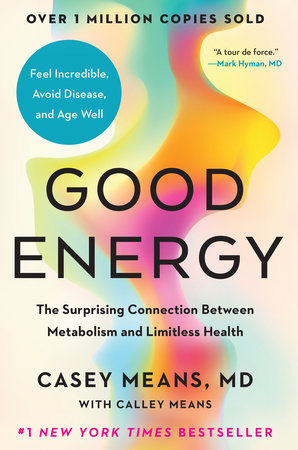
BR 312: Good Energy by Casey Means

Category: 1 – Read ASAP! (All Categories are 1 – Read ASAP!, 2 – BUY it!, 3 – SHELF it, 4 – SOMEDAY it)

Comments: When I reflect on books that have had the most profound impact on my life, this book is likely #2 on the list after Stephen Covey’s 7 Habits.

Insights that resonated:

(1) The conventional medical system is good at dealing with any acute issue that requires urgent attention. For anything chronic, it is useless.

(2) It is useless because it focuses on treating symptoms in silos rather than understanding the body as a whole. Dr Means makes the case that most chronic issues have the same underlying cause – metabolic dysfunction. When our metabolism works well, our cells are able to process all the energy we ingest and produce “Good Energy.” When it doesn’t, it leads to “Bad Energy” and this shows up with all sorts of chronic ailments and longer-term issues like diabetes.

(3) To clean up our act, we need to do 3 things.

First, we need to eat stuff that results in good energy. In simple terms, this means staying away from anything processed and eating a diverse collection of foods.

Second, it means respecting our biological clock. Sleeping well, respecting our circadian rhythms by getting enough sunlight and eating timely meals so our digestive system has time to do its work.

Third, it means doing things that modern lifestyles have taken away – movement, exposure to varying temperatures, and non-toxic living. Our bodies do better when they’re exposed to varying temperatures and, of course, the less toxins/more organic materials we use, the better.

While this is the high-level summary, I think Casey Means’ book excels in the detail. For all fellow fans of Peter Attia’s Outlive, I think this book is a great complement that outdoes Outlive in a few respects.

The single biggest takeaway from Outlive is the importance of exercise. Specifically, focusing on stability/mobility, then more time in Zone 2, then improving our grip strength, and growing our V02 Max by working out at high intensity. This takeaway alone has had a profound impact on my life.

Next, it emphasized the importance of protein and sleep. Those changed how I approached things too.

My only gripe with the book was that Peter Attia often recommended expensive scans and rushed to treatment (e.g., strong recommendations for statins) the moment he saw a symptom trending in the wrong direction.

Casey Means, on the other hand, takes an approach that feels closer to first principles. She focuses on lifestyle changes first. That resonated.

Since reading this book, I’ve been on a mission to “clean up my act.” Here are a few changes I’m working on:

(1) Sleep: I haven’t needed any convincing on the importance of sleep and generally sleep 7-8 hours daily, and longer on weekends. However, I still did a 6 hour day once every 2 weeks. I’ve been doing a better job at holding the line at 7 hours minimum.

(2) Movement: Casey Means did a good job explaining the importance of movement throughout the day. One small change has been targeting 7000 steps every day. I notice I don’t hit this when I’m working from home – so there’s more work to do here.

I’ve been more religious about the morning run once the sun rises to get light. And I’m working on adding 20 push ups every day.

(3) Nutrition: My morning protein shake used to have spinach and fruits. I incorporated seeds (Flax, hemp, chia) recently. I’ve added a scoop each of plant protein and whey as well.

I’ve become more disciplined about salad, nuts, and such during the day. And I’ve switched from white rice to (traditional) red rice and have reduced quantities over time. I’ve grown up as a rice eater – so this is a big change.

(4) Meal timing: The next big change is eating closer to 2 hours before bed. This is a no-brainer move – and way better than my previous average of 15 minutes. The other related change is going for a 15 minute walk after dinner most days to aid digestion.

(5) Next on the roadmap: I plan to go back to trying a CGM/continuous glucose monitor in the new year. I’d first tried one a few years ago and didn’t make the most of it. I know better now and I’m excited to try it and then follow it up with a few blood tests to see if these changes are taking effect.

(6) What I don’t intend to do: It is also worth calling out what I don’t intend to do. First on that list is cold water/ice baths. I’m all for naturally exposing my body to varying temperatures. But this feels like punishment I’d love to avoid unless absolutely necessary.

Second, Casey Means is a proponent of removing all grain/rice altogether from my diet. One idea I’ve applied as I’ve made changes is to ensure I’m ensuring there is a feeling of joy vs. punishment. I love rice. I’ve come to realize I can eat a lot less of it and I can also switch to low glycemic index/more nutritious varieties easily. I plan to do that.

One of the central tenets of this blog is “to learn and not to do is not to learn.” Outside of shaping my synthesis on diet and metabolism, the number of changes I’m working on is testament to how it has inspired a profound learning experience. It is among the most impactful I’ve ever read.

And for that, I’m grateful.

1. Read ASAP! · Book Review Actions · Book Reviews · Health · Novel Concepts and Interesting Research · Self Improvement

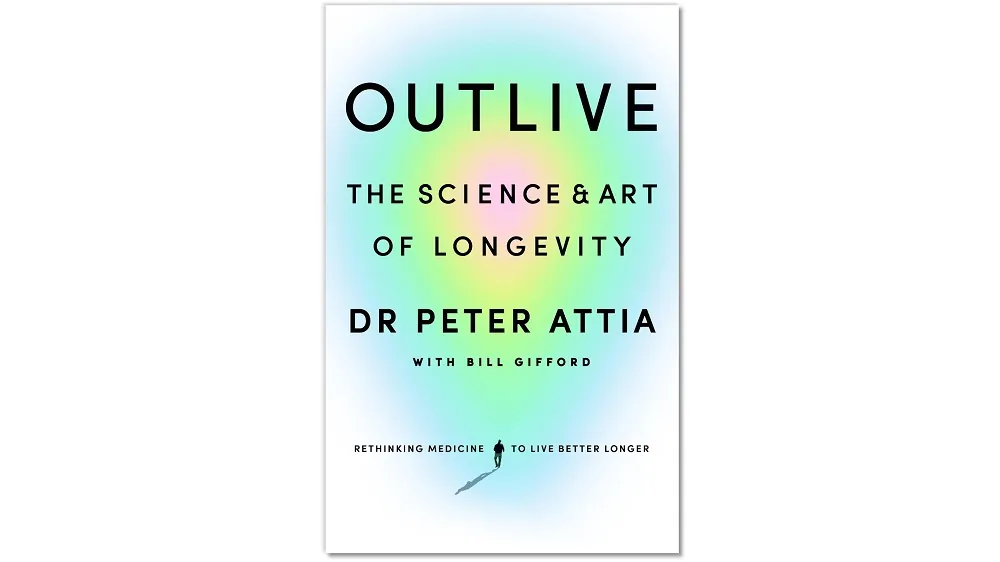
BR 300: Outlive by Peter Attia

Category: 1 – Read ASAP! (All Categories are 1 – Read ASAP!, 2 – BUY it!, 3 – SHELF it, 4 – SOMEDAY it)

Comments: I love that this is book #300 on this blog. It is likely it’ll be among the most impactful books I’ve read in a long time. I saw a review for the book on Amazon that said – “This is a user manual for the body that should be given free at birth.” That may be the best description I’ve come across.

It is a must read.

Insights that resonated: It is hard to distill what I’ve taken away in a couple of paragraphs. The book is a tour de force. There’s very little that is hand wavy. For instance, his case for medicine 3.0 is logical. The combination of scientific method and randomized control trials have made it possible for us to live longer. But, living longer does not equate to a high quality of life. That requires us to take control of our health.

The logic here is simple. He asks an innocent question – what would you like to be able to when you are a centenarian? Would you like to be able to walk unassisted? What about climbing stairs? And what about picking up a child?

Every one of these can be quantified in terms of the fitness levels required when you’re 90. And assuming normal muscle and strength degeneration, you can work backward into the level of fitness you need to have at this time.

The book ends with a powerful end note about Dr. Attia’s own struggles with depression. All in all, it manages to be insightful, powerful, and inspiring.

While I’m still thinking through all the changes I need to make, I’ve been making a few changes already. The biggest area is around freeing up time.

We’re working parents with two young kids who choose to not have any help at home. So, there isn’t much free time lying around. My first significant cut has been watching football/soccer and, perhaps more importantly, abstaining from catching up on news. This may not seem like much – but it is a big long-standing habit change for me. Timing matters – Manchester United’s sad start to the season has made it easier too.

The second is using the free time from a change like the one above to exercise longer every morning and evolve the mix of exercises. I’m still working through the changes here.

The third is around my diet. My ~2.5 years of intermittent fasting is coming to an end. Dr. Attia has made a compelling case for a protein shake and fruit breakfast. So that’s a big change too.

And, finally, I do intend to get to a collection of tests Dr. Attia recommends to get a sense of my risk factors.

I’ll be working on the insights from the book for a long time.