1. Read ASAP! · Book Review Actions · Book Reviews · Business · History · Technology

BR 209: The Master Switch by Tim Wu

Category: 1 – Read ASAP! (All Categories are 1 – Read ASAP!, 2 – BUY it!, 3 – SHELF it, 4 – SOMEDAY it)

Comments: I debated about whether this should be category 1 or 2. On the one hand, this book is very focused on the history of information empires in the United States. But, on the other, information empires are THE dominant corporations in today’s world. So, this book become a must read. :)

Top 3 Learnings:

  1. Every information industry (phone, radio, film, tv, internet) has seen a struggle between open versus closed / decentralized versus centralized. Every one of these started out with hackers and hobbyists and then became the home of large monopolies.
  2. What we think is a by product of what we read and who listen to. Free speech and a marketplace of ideas are not as dependent on the values of a place as much as the structure of the information infrastructure.
  3. This isn’t as much a learning as much as a note that I remember so many stories from the book. The story of the creation of hollywood, the rise, fall and rise of AT&T, CBS, etc., still give me goosebumps. A hat tip to Tim Wu for a wonderfully written book.
1. Read ASAP! · History · Novel Concepts and Interesting Research · Technology

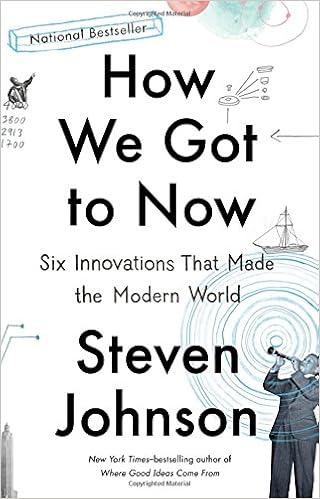
BR 204: How we got to now by Steven Johnson

Category: 1 – Read ASAP! (All Categories are 1 – Read ASAP!, 2 – BUY it!, 3 – SHELF it, 4 – SOMEDAY it)

Comments: This is a book that takes 6 parts of modern life and shows you how they were fundamental in making modern life what it is. It changed how I saw the world.

Top 3 Learnings:

1. Most innovations occur in the adjacent possible. Few make seemingly impossible leaps. The popular theory is the genius theory of innovation. But, there are plenty of high IQ individuals. If there is a common thread, it is that they worked at the intersection of multiple fields. Ada Lovelace could see the future of computers as she lived at the edge of science and art. Staying within the boundaries of your discipline can enable incremental improvements – which are critical to progress. But, to make leaps, we have to travel across borders – sometimes geographical to be in a different environment and sometimes conceptual. These time travelers often have hobbies and interests in varied fields. This is one of the reason “garages” have such a symbolic role in innovation as these are peripheral spaces.

2. The power of accurate measurement of time is that measuring time is key to measuring space. Every time we glance down at our phone to find our location, we’re triangulating between at least 3 of 24 atomic clocks that tell us our location based on the measurement. And, these clocks have been made possible by scientific advances that led us from astronomy (sundials) to dynamics (pendulums) to electromagnetics (quartz) to atomic physics (atomic clocks)

3. Thomas Edison didn’t invent the light bulb. Instead, he invented something more powerful – a process of innovation. He brought together diverse teams, built the first global supply chain, mastered the art of public relations and product launches, embraced experimentation and incentivized his teams with stock options. This is a model that continues today.

Book notes here.

1. Read ASAP! · Book Review Actions · Book Reviews · Leadership · Parenting · Philosophy · Psychology · Relationships · Self Improvement

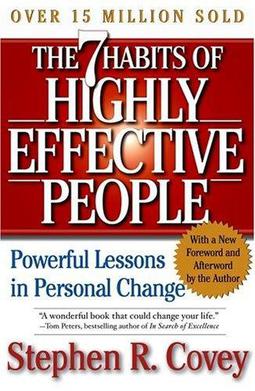
BR 199: The 7 Habits of Highly Effective People by Stephen Covey

Category: 1 – Read ASAP! (All Categories are 1 – Read ASAP!, 2 – BUY it!, 3 – SHELF it, 4 – SOMEDAY it)

Comments: I rarely re-read books but decided to re-read this during my end-of-year break as I’ve come to appreciate how wise this book is. It delivered, again. I’d spent most of my first reading in the first half/personal victories portion of the book. This time, I spent more time in the public victories. So much to learn, do and build.

Top 3 Learnings:
1. To know and not to do is not to learn. Beautifully drove home the point that I haven’t “learned” nearly as much I say I have.

2. Seek to understand and then to be understood. In the spirit of knowing and not doing, this has become an important part of “engagement” theme this year. I am still too impatient too often.

3. Seeking win-win requires a combination of courage and consideration.

Stephen Covey’s masterpiece is so good that it makes the “Read ASAP” list twice. :)

1. Read ASAP! · Bio/Autobiographies · Book Review Actions · Book Reviews · Business · Entrepreneurship · Sports

BR 195: Shoe Dog by Phil Knight

Category: 1 – Read ASAP! (All Categories are 1 – Read ASAP!, 2 – BUY it!, 3 – SHELF it, 4 – SOMEDAY it)

Comments: First, I hope you get the audible version. The narrator makes a special book feel extra special. In some ways, that’s what this book is all about – feelings. It is about the feelings that go into building something special. Nike founder Phil Knight takes us on a wonderful adventure. In doing so, he shares things he did well and things he wished he hadn’t done. For example, he does a couple of downright wrong stuff (ethically). But, somehow you forgive him. You forgive him because of his authenticity and because you feel you might have done the same in that situation.

This is a book about Nike. But, really, it is a book about spirit, care and the joy of the pursuit. Very heartfelt and beautifully written.

Top 3 learnings:

1. Businesses are about money just as a body is about blood. You need it to operate but life is so much more than that. And, business IS personal.

2. You measure yourself by the number of people who measure themselves by you.

3. The art of competing is forgetting that competition exists.

Book notes here.

1. Read ASAP! · Book Review Actions · Book Reviews · History · Novel Concepts and Interesting Research

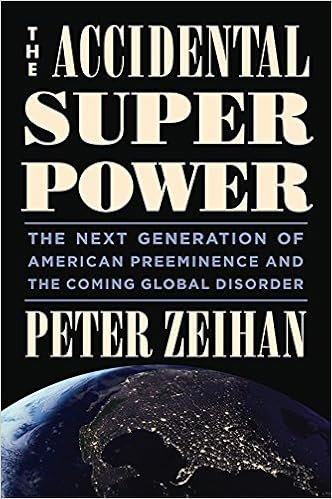
BR 193: The Accidental Superpower by Peter Zheihan

The accidental superpower, peter zheihan

Category: 1 – Read ASAP! (All Categories are 1 – Read ASAP!, 2 – BUY it!, 3 – SHELF it, 4 – SOMEDAY it)

Comments: This is a very powerful book. It is the sort of book that completely changes how you see the world. For example, I doubt I’ll ever look at a map of the world the same way again. It is also unlikely I’ll easily buy a story about how a country became a superpower. In this book, Peter Zheihan does a terrific job explaining why the world is the way it is from a geopolitics perspective. He, then, attempts to predict the future. You may not agree with his predictions. But, they are still worth listening to as they will likely help shape yours. In my case, I thought a lot of it was very prescient. I wish he’d been a bit more forthcoming about how we expected technology to change his assumptions though.

Top 3 Learnings:

1. Geography is the primary reason superpowers become superpowers. Typically, it is some combination of access to arable land, presence of internal waterways, and a location that isn’t easy to access that makes places superpowers.

2. Demographics are an important driver of economic growth. Kids and retirees drain economic resources. On the other hand, young adults make it consumption driven. And, older adults infuse a lot of capital. Thus, the majority group in the population drives the sort of activity in the economy.

3. The last few decades have witnessed unprecedented peace. That’s a result of an unusual move by “the accidental superpower” – the United States – to govern the world via free trade. However, this period is ending since the biggest reason for that pact was to keep Russia at bay. Now, with the absence of a cold war and the sheer expense to maintain this pact, it is perhaps only a matter of time before we see this pact (from the meeting at Bretton Woods in 1945) called off.

Book notes here.

1. Read ASAP! · Book Review Actions · Book Reviews · Business · Leadership · Management · Skills

BR 176: High Output Management by Andy Grove

high output management, andy grove

Category: 1 – Read ASAP! (All Categories are 1 – Read ASAP!, 2 – BUY it!, 3 – SHELF it, 4 – SOMEDAY it)

Comments: I finally got to reading this book thanks to Ben Horowitz publishing his foreword on his excellent blog. I read and loved the book and can see why Ben had such wonderful things to say. This book deserves its legendary status because it was one of the first examples of an incredible practitioner taking time out to share his wisdom and learning.

I nearly put this book down as priority 2 as Ben Horowitz outdoes this book with “The Hard Thing about Hard Things.” Other books have since lifted some of Andy’s insights and made them more commonplace. However, I decided against that as Andy Grove’s no nonsense style and piercing insights earns it a place among management classics.

Top 3 Learnings:

1. Management by outputs – the reason we have “OKRs” or “Objectives and Key Results” as a unit of measurement across all top technology companies

2. Training is the leader’s job. The less the subordinate’s task relevant maturity, the moer the leader should spend time structuring and training the subordinate. Customers should not pay for a poorly trained employee.

3. Meetings are a vital management tool. Don’t waste time criticizing them. Instead, prepare hard and make them worthwhile.

Book notes here.

1. Read ASAP! · Bio/Autobiographies · Book Review Actions · Book Reviews · Career · Creativity · Entrepreneurship · Philosophy · Self Improvement

BR 170: How to Fail at Everything and Still Win Big by Scott Adams

How to Fail at Everything and Still Win Big, Scott Adams,

Category: 1 – Read ASAP! (All Categories are 1 – Read ASAP!, 2 – BUY it!, 3 – SHELF it, 4 – SOMEDAY it)

Comments: I debated about whether this should be a priority 1 or priority 2 book. I went with priority 1 because I think this book mixes personal experience with provocative ideas and a solid collection of “good life” principles that I’ve found true. I also love (and try living by) Scott’s experimentation based approach to life.

Top 3 Learnings:

1. Goals are for losers. Focus on building systems that will last. E.g. instead of trying to lose 10 pounds in 6 months, focus on building a system of exercising 3 times every week.

2. Collect skills like a crazy person. Every skill you collect doubles your chances of success. Greatness is often a collection of mediocre skills.

3. Experiment away your way to a great life. Failure is an important part of experimentation

Book notes here

1. Read ASAP! · Bio/Autobiographies · Book Review Actions · Book Reviews · Career · Creativity · History · Psychology · Self Improvement · Skills

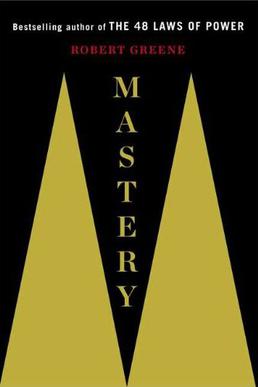
BR 168: Mastery by Robert Greene

Category: 1 – Read ASAP! (All Categories are 1 – Read ASAP!, 2 – BUY it!, 3 – SHELF it, 4 – SOMEDAY it)

Comments: A Robert Greene masterclass. Lovely mix of biographical stories wrapped within a compelling framework. A lot of the stuff isn’t new. But, the combination is potent.

Top 3 Learnings:

1. Mastery is a culmination of years of intense deep work. There is no easy way.

2. Apprenticeship is both awesome and dangerous. On the one hand, your learning curve speeds up with great mentors. However, very few mentors turn out to be large minded enough to “let go” – it is the typical bad parent problem all over again

3. Developing emotional intelligence is a useful tool to make sure your mastery gets the credit it deserves. This section spoke to me. I assumed I had high EI but had learnt from a relationship that that wasn’t the case. This chapter taught me one simple but critical lesson – stop listening to what people say. Instead, listen to what they do.

Book notes here

1. Read ASAP! · Business · Management

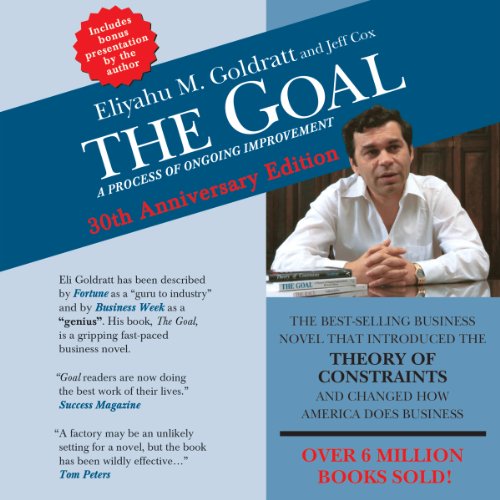
BR 159: The Goal by Eliyahu Goldratt

Priority: 1 – Read ASAP! (All Categories are 1) Read ASAP! 2) BUY it! 3) SHELF it 4) SOMEDAY it)

Comments: Outstanding book. I rated this a category 2 book as it is, at its heart, a book on operations management. It is, however, one of those books whose insights I’ve kept coming back to – both at work and in my life.

The other note – it is an excellent audio book as it is produced like an audio movie. Makes for a very interesting read.

Top 3 Learnings:

1. First, understand the goal and ONLY optimize with respect to the goal. Once you understand the goal, understand the bottlenecks. Imagine a plant’s bottleneck / constrained resource can produce 400 units. Having non bottleneck machines produce more than 400 only excess inventory. In fact, if market demand is 300, we are in our interest to produce around 300. The rest is waste.

2.  “Local efficiencies” are useless. Having one part of the plant product top class equipment while everyone is below average and late is useless. The big picture is what matters. Once again, understand the goal and only optimize for it. Beware metrics that result in optimizing parts of the picture at the expense of the whole (e.g. cost cutting on R&D that messes with future pipeline)

3. When trying to understand a problem, think of the Toyota 5 Why system. Ask why 5 times so you get to the route of the problem.

Book notes here.

Add on Mar 16, 2016: This book has had a huge impact on me in retrospect. Some very powerful life analogies here. 2 lessons I’ve repeated many a time –

1. Productivity is actions that us move toward the goal.

2. You can’t optimize sub-systems (point 2).

1. Read ASAP! · Book Review Actions · Book Reviews · Business · Entrepreneurship · Leadership · Management · Technology

BR 152: The Hard Thing about Hard Things by Ben Horowitz

Category: 1 – Read ASAP! (All Categories are 1 – Read ASAP!, 2 – BUY it!, 3 – SHELF it, 4 – SOMEDAY it)

Comments: If you are, even in the slightest, interested in running a company of your own someday, this book is an absolute must read. This is probably the closest any book will come to being a “CEO how-to” manual.

It is a book I will revisit from time to time.

Top 3 Learnings:

1. Leadership is about 3 things – the ability to articulate an idea so people follow you (The Steve Jobs attribute), the ability to be ambitious for the team and not for yourself /to have the right kind of ambition (the Bill Campbell attribute) and the ability to achieve the results you articulate (the Andy Grove attribute) – I’ve never heard leadership spelt out as clearly.

2. The purpose of an organization chart is to facilitate communication. The closer people are on an organization chart, the more they will communicate. (Such a simple idea but one I’d never understood.)]

3. A few money quotes –

The amount of communication required in a relationship is inversely proportional to the amount of trust there is.
‘Managing by numbers is like painting by numbers. It is only for amateurs.’
‘The hero and the coward feel the same. They just do different things. People who watch you judge you on what you do not what you feel.’
‘Hire for strength, not for lack of weakness’
‘Embrace the struggle and remember – the hard things will always be hard things.’

Book notes here.