1. Read ASAP! · Book Review Actions · Book Reviews · Philosophy · Psychology · Self Improvement

BR 317: The Courage To Be Disliked by Ichiro Kishimi and Fumitake Koga

Category: 1 – Read ASAP! (All Categories are 1 – Read ASAP!, 2 – BUY it!, 3 – SHELF it, 4 – SOMEDAY it)

Comments: I found the book to be revelatory. In retrospect, it is because it unified ideas that have resonated strongly with me under one roof. Adler’s approach is at the heart of the many powerful ideas that have changed my life and that I’ve shared on this blog over the years.

Insights that resonated:

(1) The overarching theme in Alfred Adler’s approach is that “life is simple.” By this, his philosophy asserts that freedom, happiness, and meaning are all within reach. We don’t need to over complicate this. Our problems are not one of ability but of courage.

(2) You have the means to choose your life path. You’re not controlled by your past, trauma, or environment — only by the meaning you assign to them. You are free to choose goals that help you go where you want to go.

(3) All problems are interpersonal problems – use problems as a trigger for growth. Most of our issues — anxiety, anger, insecurity — come from how we relate to others. We typically react by over-compensating for what we think we lack with bouts of inferiority or superiority. Use such moments as a trigger to strive for learning and growth.

(4) Freedom arrives when we summon the courage to be disliked. You must be willing to live by your values, even if others don’t like it.

(5) Cultivate horizontal relationships” and embrace “separation of tasks.” Vertical relationships assume someone is in a position of relative authority or power. They typically involve attempts to control the other person.

Horizontal relationships involve mutual respect and a focus on controlling ourselves – including accepting our normal self. Horizontal relationships thrive on a “separation of tasks” – where we do what’s in our control and empower others to do what’s in their control. We can lead a horse to water but cannot make it drink.

(6) Happiness comes from contribution. Not from being praised or special, but from feeling useful to others and connected – this is described as community feeling or “Gemeinschaftsgefühl“.

(7) We keep life simple by keeping a bright spotlight on the present. When we’re on stage and see a bright spotlight, we can’t see much else. If we have dim lights on the other hand, we will be able to look beyond what’s around us and attempt to see our past and present.

1. Read ASAP! · Book Review Actions · Book Reviews · Business · Entrepreneurship

BR 316: Starbucks – with Howard Schultz (The Acquired Podcast)

Category: 1 – Read ASAP! (All Categories are 1 – Read ASAP!, 2 – BUY it!, 3 – SHELF it, 4 – SOMEDAY it)

Comments: This episode of the Acquired podcast was both wonderful and educational.

Insights that resonated:

(1) When Howard Schultz first raised $1.6M for Il Giornale (which would eventually become Starbucks), he pitched 242 investors. 217 said no – a 90% rejection rate.

Good perspective for the next time we feel discouraged about things not going our way.

(2) Starbucks founder Howard Schultz told a fascinating story about his return to the company in 2008. For a collection of reasons, Starbucks was in disarray and was months away from being insolvent.

During this time, he was introduced to Steve Jobs and he began telling Steve about some of his problems over a call. Steve asked him to come over to Cupertino so they could take a walk and talk it over.

During the walk, Howard laid out all the problems he was facing and what he was planning to do about it. After listening to it all, Steve practically screamed – “You know what you should do? Fire your executive team.”

Howard’s response was along the lines of “C’mon, I can’t do that. Who will do the work?”

To this, Steve shared that he thought they’ll all be gone in the next 6 months anyway.

9 months or so later, there was one person from that team left. When Howard next met Steve, he told him his prediction had come through. And Steve just pointed out that he could have saved himself from time.

(3) There was a lovely moment when they discussed the Starbucks mobile app.

Howard’s reflection was that while the mobile app was undoubtedly seductive, the trade-off is that it has significantly hit the Starbucks experience. It replaced that intimate connection between barista and customer with a connection with the app.

There was a moment around then when one of the podcast hosts said – “I look at the mobile app and see which Starbucks around me is accepting mobile orders. If a store isn’t accepting mobile orders, I don’t go there.”

“That breaks my heart.” was Howard’s pithy response.

I was struck by this discussion and reflection. Every growth strategy has trade-offs. I’m sure the numbers from Starbucks’ app made the strategy feel trade-off free. Higher utilization, record usage, and so on.

(4) Fascinating bits of business trivia –

  • At a time when Howard Schultz was almost screwed over by a famous Seattle businessman, the person who saved him was Bill Gates’ father. It’s a great story – one that even Bill Gates never knew (a testament to the grounded nature of the man).
  • The original owners of Starbucks took over Peet’s coffee just as Il Giornale (by Howard) took over Starbucks. That was a fascinating story.
1. Read ASAP! · Book Review Actions · Book Reviews · History · Novel Concepts and Interesting Research · Technology

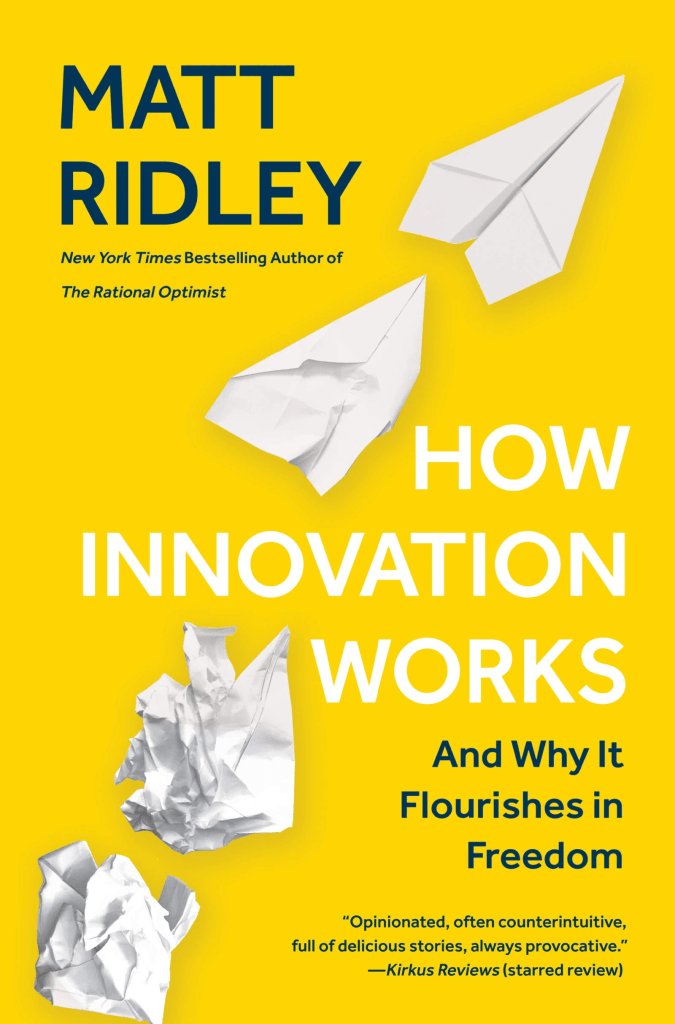
BR 314: How Innovation Works by Matt Ridley

Category: 1 – Read ASAP! (All Categories are 1 – Read ASAP!, 2 – BUY it!, 3 – SHELF it, 4 – SOMEDAY it)

Comments: Matt Ridley’s “How Innovation Works” was rich with insight. A great book.

Insights that resonated:

(1) “The main ingredient in the secret sauce that leads to innovation is freedom. Freedom to exchange, experiment, imagine, invest and fail; freedom from the expropriation or restriction by chiefs, priests and thieves. Freedom on the part of consumers to reward the innovations they like and reject what they don’t.”

This note from the final chapter is a point Ridley makes again and again. History has repeatedly shown free societies to be more innovative.

(2) Innovation works better bottoms up vs. tops down and when there is less burden of regulation. Example after example demonstrates how empires resist innovation (and even outright ban it). And, for a simple example of how burden of regulation kills innovation, we can look at how Europe’s regulatory changes over the past decade have only resulted in incumbents getting more entrenched and in the citizens of Europe getting access to sub-par technology.

(3) Regulation hobbles innovations because it increases the cost of learning. When learning costs go up, it is hard for us to iterate. Nuclear energy is a stand out example of this.

Also, regulation changes incentives. Instead of people spending energy to invent new things, they spend their energy in making friends with the government to bend the rules.

Iteration is key – it is what has saved millions of lives from diseases like whooping cough and malaria.

(4) “Innovation happens not within but between brains.” The “great man” theory is one we’ve created out of convenience and due (more recently) to intellectual property law.

Innovation has consistently arrived because of humans who chose to build on the work of their rivals and predecessors and combine existing ideas in interesting ways.

Crucial innovations are often thought to have been accelerated by war. However, most innovation has happened incrementally and has been driven forward by many people.

Innovations come when their time comes – regardless of the people involved.

(5) Growth never needs to stop. The nature of growth is such that we first figure out how to produce more. Then we learn how to produce more with less. Until our efficiencies far outweigh our appetite.

Light is a great example. Once the cost of light goes down, more people leave their lights on. However, the efficiency of LEDs mean we’re more efficient than ever before.

(6) Every innovation has been resisted. Politicians in India and Pakistan resisted the Green revolution. Europe was prejudiced against the humble potato.

These are examples of innovations that made their way through (most good ones make it over time). However, there are examples of innovations that haven’t – in multiple places because of successful smear campaigns.

Then again, there are others that were delayed. For example, Dyson fought a decade long battle to get its innovative bag-less vacuum cleaner approved in the EU (crazy, I know).

In effect, there is no such thing as a no brainer. As long as incentives to resist something exists, resistance will exist.

(7) “The main theme of human history is that we become steadily more specialized in what we produce, and steadily more diversified in what we consume: we move away from precarious self-sufficiency to safer mutual interdependence.”

Beautifully put.

1. Read ASAP! · Book Review Actions · Book Reviews · Health · Self Improvement

BR 313: Built to Move by Kelly Starrett and Juliet Starrett

Category: 1 – Read ASAP! (All Categories are 1 – Read ASAP!, 2 – BUY it!, 3 – SHELF it, 4 – SOMEDAY it)

Comments: Built to Move by Kelly and Juliet Starrett is built on a simple thesis – our body is built to move and the quality of our lives are dependent on making sure we’re allowing our body to do what it does best – move. They focus on 10 habits based on 10 vital signs –

  1. Getting up and down off the floor
  2. Breathe easy
  3. Extend your hips
  4. Walk
  5. Future-proof your neck and shoulders
  6. Eat healthy
  7. Squat
  8. Find your Balance
  9. Create a movement-rich environment
  10. Sleep

Each chapter has an assessment and a physical practice. And the book has had a life changing impact in the sense that I’ve adopted those physical practices as part of my week.

Insights that resonated:

(1) Don’t ice injuries. Ice makes it worse. More here

(2) There’s a great argument that our brains exist to help us move. More here with the story of the sea squirt.

(3) Changes I’ve made in my life

First, I’ve added 10-12 minutes to my morning workout routine to focus on the exercises laid out in the book. Specifically,

  • Mondays: Floor exercises – Sit and rise, various floor sitting stretches
  • Tuesdays: Hamstrings – mobilization, lockout, hip openers
  • Wednesday: Hips – extension, isometric, split squat
  • Thursday: Neck + shoulders (and some balance) – Airport scanner, rotations, wall hang

These workouts are all described in the book. While I carry the list with me on my phone, I keep the book near my workout mat so I can use it like a mobility manual of sorts.

Second, I’ve adopted a few of the small tweaks from the book – e.g., eating while sitting on the floor, balancing on one leg while I brush, and so on. These are easy and fun.

Third, a key part of building a movement rich environment is not sitting for more than 6 hours per day. I was definitely exceeding this regularly. Since the start of the year, I’ve made changes to ensure this happens – including defaulting to a standing desk and standing during meetings.

Fourth, thanks to both Built to Move and Good Energy, I’ve increased how much I walk and have lifted my daily average to 10,000+ per day. This has meant making tweaks too – e.g., parking 1000 steps away from the building where I work.

My final reflection – my lifestyle has changed dramatically in the past 15 months or so. It started with some significant changes after reading Peter Attia’s Outlive, accelerated significantly with Casey Means’ Good Energy, and then leveled up further with the Starrett’s Built to Move. These 3 books combined have changed my life.

In retrospect, I think “Good Energy” and “Built to Move” are the 101 books that I can’t recommend enough to anyone interested in these topics. They lay out the basics and lay out the path for a significantly healthier lifestyle. “Outlive” is the 201 book once you’ve made those changes.

Either way, I’m grateful to these authors for creating these books – they really are the user manual for my body that I didn’t know existed.

1. Read ASAP! · Book Review Actions · Book Reviews · Health · Novel Concepts and Interesting Research

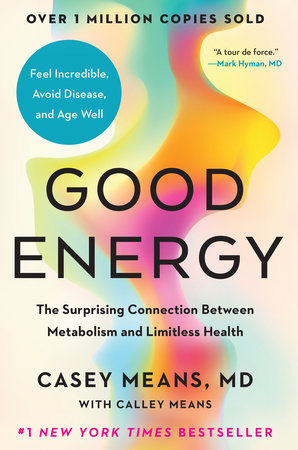
BR 312: Good Energy by Casey Means

Category: 1 – Read ASAP! (All Categories are 1 – Read ASAP!, 2 – BUY it!, 3 – SHELF it, 4 – SOMEDAY it)

Comments: When I reflect on books that have had the most profound impact on my life, this book is likely #2 on the list after Stephen Covey’s 7 Habits.

Insights that resonated:

(1) The conventional medical system is good at dealing with any acute issue that requires urgent attention. For anything chronic, it is useless.

(2) It is useless because it focuses on treating symptoms in silos rather than understanding the body as a whole. Dr Means makes the case that most chronic issues have the same underlying cause – metabolic dysfunction. When our metabolism works well, our cells are able to process all the energy we ingest and produce “Good Energy.” When it doesn’t, it leads to “Bad Energy” and this shows up with all sorts of chronic ailments and longer-term issues like diabetes.

(3) To clean up our act, we need to do 3 things.

First, we need to eat stuff that results in good energy. In simple terms, this means staying away from anything processed and eating a diverse collection of foods.

Second, it means respecting our biological clock. Sleeping well, respecting our circadian rhythms by getting enough sunlight and eating timely meals so our digestive system has time to do its work.

Third, it means doing things that modern lifestyles have taken away – movement, exposure to varying temperatures, and non-toxic living. Our bodies do better when they’re exposed to varying temperatures and, of course, the less toxins/more organic materials we use, the better.

While this is the high-level summary, I think Casey Means’ book excels in the detail. For all fellow fans of Peter Attia’s Outlive, I think this book is a great complement that outdoes Outlive in a few respects.

The single biggest takeaway from Outlive is the importance of exercise. Specifically, focusing on stability/mobility, then more time in Zone 2, then improving our grip strength, and growing our V02 Max by working out at high intensity. This takeaway alone has had a profound impact on my life.

Next, it emphasized the importance of protein and sleep. Those changed how I approached things too.

My only gripe with the book was that Peter Attia often recommended expensive scans and rushed to treatment (e.g., strong recommendations for statins) the moment he saw a symptom trending in the wrong direction.

Casey Means, on the other hand, takes an approach that feels closer to first principles. She focuses on lifestyle changes first. That resonated.

Since reading this book, I’ve been on a mission to “clean up my act.” Here are a few changes I’m working on:

(1) Sleep: I haven’t needed any convincing on the importance of sleep and generally sleep 7-8 hours daily, and longer on weekends. However, I still did a 6 hour day once every 2 weeks. I’ve been doing a better job at holding the line at 7 hours minimum.

(2) Movement: Casey Means did a good job explaining the importance of movement throughout the day. One small change has been targeting 7000 steps every day. I notice I don’t hit this when I’m working from home – so there’s more work to do here.

I’ve been more religious about the morning run once the sun rises to get light. And I’m working on adding 20 push ups every day.

(3) Nutrition: My morning protein shake used to have spinach and fruits. I incorporated seeds (Flax, hemp, chia) recently. I’ve added a scoop each of plant protein and whey as well.

I’ve become more disciplined about salad, nuts, and such during the day. And I’ve switched from white rice to (traditional) red rice and have reduced quantities over time. I’ve grown up as a rice eater – so this is a big change.

(4) Meal timing: The next big change is eating closer to 2 hours before bed. This is a no-brainer move – and way better than my previous average of 15 minutes. The other related change is going for a 15 minute walk after dinner most days to aid digestion.

(5) Next on the roadmap: I plan to go back to trying a CGM/continuous glucose monitor in the new year. I’d first tried one a few years ago and didn’t make the most of it. I know better now and I’m excited to try it and then follow it up with a few blood tests to see if these changes are taking effect.

(6) What I don’t intend to do: It is also worth calling out what I don’t intend to do. First on that list is cold water/ice baths. I’m all for naturally exposing my body to varying temperatures. But this feels like punishment I’d love to avoid unless absolutely necessary.

Second, Casey Means is a proponent of removing all grain/rice altogether from my diet. One idea I’ve applied as I’ve made changes is to ensure I’m ensuring there is a feeling of joy vs. punishment. I love rice. I’ve come to realize I can eat a lot less of it and I can also switch to low glycemic index/more nutritious varieties easily. I plan to do that.

One of the central tenets of this blog is “to learn and not to do is not to learn.” Outside of shaping my synthesis on diet and metabolism, the number of changes I’m working on is testament to how it has inspired a profound learning experience. It is among the most impactful I’ve ever read.

And for that, I’m grateful.

1. Read ASAP! · Book Review Actions · Book Reviews · Career · Money

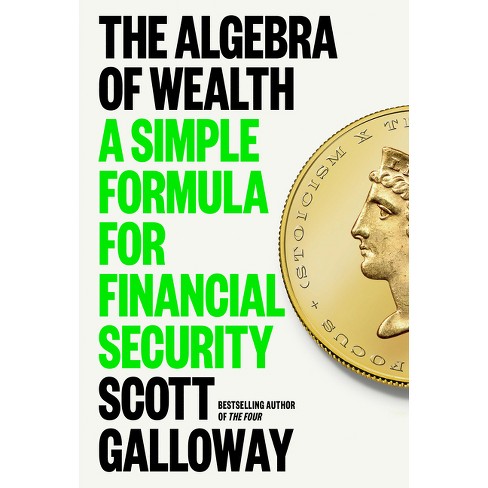
BR 310: The Algebra of Wealth by Scott Galloway

Category: 1 – Read ASAP! (All Categories are 1 – Read ASAP!, 2 – BUY it!, 3 – SHELF it, 4 – SOMEDAY it)

Comments: I debated whether this was a category 1 or a category 2. I eventually went with category 1 because it had a lot of earned wisdom. Lots of great insight – a particularly good book for someone who is thinking about these early in their career. I wish I’d had the opportunity to read it in my 20s.

Insights that resonated: 

(1) Most people are going to get wealthy slowly as a function of their ability to deploy capital that compounds over time.

(2) Always watch your burn. A dollar saved is more valuable than a dollar earned (thanks to taxes). Being able to live simply goes a long way in our ability to accumulate wealth. And if there’s one personal finance habit that helps above all others, it is tracking our spending.

(3) To build a great career, don’t follow your passion. Follow your talent. Then work hard at it – being out of balance in your 20s and 30s often gives us balance in our 30s and 40s. Get into the office, do the work.

(4) Diversify. Start with ETFs that cover the stock market. In time, make sure you’re exposed to different kinds of risks. Scott advocates testing buying and holding individual stocks we have conviction in with <=20% of our portfolio. He is also a proponent of real estate investing if you can handle the overhead (property management, maintenance, etc.)

(5) Get off social media and anything that results in us comparing our wealth. Someone will always have the bigger boat.

1. Read ASAP! · Book Review Actions · Book Reviews · History · Novel Concepts and Interesting Research · Psychology

BR 306: Same as ever by Morgan Housel

Category: 1 – Read ASAP! (All Categories are 1 – Read ASAP!, 2 – BUY it!, 3 – SHELF it, 4 – SOMEDAY it)

Comments: I have been a Morgan Housel fan for over a decade. He’s gone onto earn deserved praise for his exceptional writing style that mixes powerful anecdotes with timeless wisdom about investing and life.

Same as ever is classic Morgan Housel.

Insights that resonated: 

(1) The world isn’t crazier than it was before. With 8 billion people, crazy things every day are inevitable. 

(2) Calm plants the seeds of crazy. If stocks keep going up, the market is going to get too confident. That, then, will lead to a crash.

The world is calmer and safer than ever before – primarily because of the progress we’ve made against deadly diseases thanks to vaccines. But that made us over-confident and thoroughly unprepared for a pandemic. And so on.

Every time this (recession, pandemic, etc.) happens, we will feel the pain of the wound. The wounds will heal but the scars will last.

(3) Slow progress among a barrage of bad news is normal. Bad news is about what happened, good news is invisible because it is about things that didn’t happen. Improvements in heart disease at 1% per year for 70 years saved 25 million Americans. It’d never make the headlines any given year. But, over 7 decades, it is massive.

(4) Plan like a pessimist, dream like an optimist. The key is surviving the short term to make it to the long term. 

(5) It’s supposed to be hard

In 1990, David Letterman asked his friend Jerry Seinfeld how his new sitcom was going. Jerry said there was one frustrating problem: NBC supplied the show with teams of comedy writers, and he didn’t think they were getting much good material from them.

“Wouldn’t it be weirder if they were good?” David asked.

“What do you mean?” Jerry asked.

“Wouldn’t it be strange if they could all just produce reams of hilarious material day after day?”

Recalling the conversation a few years ago, Seinfeld laughed and told Letterman: “It’s supposed to be hard.”

(6) The grass is greener on the other side because it is fertilized by bullshit. You only get the smell when you come close enough. This idea might have been my favorite.

(7) Incentives are the most powerful force in the world.

1. Read ASAP! · Book Review Actions · Book Reviews · Business · Management

BR 305: Costco by Ben Gilbert and David Rosenthal (The Acquired Podcast)

Category: 1 – Read ASAP! (All Categories are 1 – Read ASAP!, 2 – BUY it!, 3 – SHELF it, 4 – SOMEDAY it)

Comments: This was a podcast episode – but I treated it as a short audio book. It was fantastic.

Insights that resonated: 

  1. The first part of the Costco story is the story of Sol Price – probably one of retail’s most prolific inventors. He invented modern retail as we know it with the creation of Fedmart (that inspired “Walmart” and “K mart” ) and then Price club which led to Costco.
  2. Sol Price was an inventor who was very aware of the fact that he wasn’t as good at running his inventions. However, I loved the anecdotes of just how principled he was. Sam Walton – the founder of Walmart – famously said he stole the most ideas from Sol Price. Sam Walton’s tape recorder was once confiscated at a Price Club. When Sol heard of this, he immediately mailed it back.
  3. Jim Sinegal, Costco’s co-founder, famously corrected someone who said he learnt a lot from Sol to emphasize “I learnt everything from Sol.” Costco’s origin and biggest ideas – memberships, the warehouse concept, unique approach to inventory, etc., can be traced in a straight line to Sol Price’s innovations.
  4. One of the magical parts of Costco’s strategy is the warehouse concept. As they’re a warehouse, suppliers deliver directly and items are immediately available to sell. They turn items over roughly 1 in 26 days – i.e., before supplier bills come due in 30 days. It is wild how beautifully their cash flow system works.
  5. Costco has a mandate of a maximum of 14% margin with an average at 11%. So, for every dollar they save, 89 cents of value goes right back to the customer.
  6. Costco doesn’t do loss leaders – goods sold at breakeven or at a negative profit – to bring customers into stores as it means fleecing the customer elsewhere. The only place where they barely break even is $1.50 hot dog – a tradition that has lasted four decades.
  7. Costco have been reducing their SKUs over time – they’re currently in the range of 3000-4000 (other retailers store 50,000+). It is a mark of how much their customers trust them to pick the right thing. This also means each buyer REALLY understands the cost of every ingredient and monitors it carefully. And while they have tremendous power over suppliers given they go big on few SKUs, they are known to be tough but fair. Their objective is passing value to the customer.
  8. Kirkland Signature is the largest consumer packaged goods brand in the US – $52B in sales out of ~$230B in 2023. Again, a symbol of how much customers trust Kirkland.
  9. Costco rarely vertically integrates. One of the few exceptions is with chicken where they’d otherwise have to deal with a small group of firms (who then have pricing power). They produce 200 million chickens in-house a year.
  10. They pride themselves to be learning machines. Stores in year 1 today are doing better than stores in year 5 from 2014. This shows up in their $ per squarefoot. They live in rarefied air – it is closer to Tiffany’s (who sell diamonds!) and are orders of magnitude above other retailers.
  11. Their memberships are a profit center which contributes to 70% of their operating income. Their memberships also ensures record low shrinkage/stolen goods. Another reason for that record is staff who are paid $26/hour vs. $19/hour in other places with fantastic benefits. This means 4x lower turnover and high loyalty.

    Finally, Costco’s executive membership costs twice the normal membership. And if you don’t get enough value to make up for the extra cost, they give the money back to you. Only at Costco.
  12. It is amazing how much Costco has inspired amazon. When Amazon was going through a difficult time after the dot com bust, Jim Sinegal and Jeff Bezos met for coffee and Sinegal explained to Bezos that there are two kinds of companies. The first focus on extracting value to customers and the second focuses on always giving customers value. Costco was firmly the second kind.

    That day, Bezos went back and sent an email to his team that Amazon would be the kind of company that was always focused on giving value back to customers. Prime memberships, of course, have strong parallels to Costco’s memberships.
  13. Most of Costco’s senior executive team started 30-40 years prior. Their current CEO started as a forklift driver.
  14. This, then, was the part I found most inspiring. The Costco exec team is such a phenomenal example of a quiet group that isn’t showy. Instead, they’re quietly focused on improving the retail experience for their customers. They’ve grown 10% every year, an incredible feat over a period of 30 years with no end in sight.

    I loved this because it is a beautiful counter example to job-hopping every 2 years. Complex fields take time to master. And I’m both inspired and grateful for the Costco executive team’s mastery over the business.
1. Read ASAP! · Book Review Actions · Book Reviews · Health · Novel Concepts and Interesting Research · Self Improvement

BR 300: Outlive by Peter Attia

Category: 1 – Read ASAP! (All Categories are 1 – Read ASAP!, 2 – BUY it!, 3 – SHELF it, 4 – SOMEDAY it)

Comments: I love that this is book #300 on this blog. It is likely it’ll be among the most impactful books I’ve read in a long time. I saw a review for the book on Amazon that said – “This is a user manual for the body that should be given free at birth.” That may be the best description I’ve come across.

It is a must read.

Insights that resonated: It is hard to distill what I’ve taken away in a couple of paragraphs. The book is a tour de force. There’s very little that is hand wavy. For instance, his case for medicine 3.0 is logical. The combination of scientific method and randomized control trials have made it possible for us to live longer. But, living longer does not equate to a high quality of life. That requires us to take control of our health.

The logic here is simple. He asks an innocent question – what would you like to be able to when you are a centenarian? Would you like to be able to walk unassisted? What about climbing stairs? And what about picking up a child?

Every one of these can be quantified in terms of the fitness levels required when you’re 90. And assuming normal muscle and strength degeneration, you can work backward into the level of fitness you need to have at this time.

The book ends with a powerful end note about Dr. Attia’s own struggles with depression. All in all, it manages to be insightful, powerful, and inspiring.

While I’m still thinking through all the changes I need to make, I’ve been making a few changes already. The biggest area is around freeing up time.

We’re working parents with two young kids who choose to not have any help at home. So, there isn’t much free time lying around. My first significant cut has been watching football/soccer and, perhaps more importantly, abstaining from catching up on news. This may not seem like much – but it is a big long-standing habit change for me. Timing matters – Manchester United’s sad start to the season has made it easier too.

The second is using the free time from a change like the one above to exercise longer every morning and evolve the mix of exercises. I’m still working through the changes here.

The third is around my diet. My ~2.5 years of intermittent fasting is coming to an end. Dr. Attia has made a compelling case for a protein shake and fruit breakfast. So that’s a big change too.

And, finally, I do intend to get to a collection of tests Dr. Attia recommends to get a sense of my risk factors.

I’ll be working on the insights from the book for a long time.

1. Read ASAP! · Book Review Actions · Book Reviews · Psychology · Relationships · Self Improvement

BR 298: Excellent Advice for Living by Kevin Kelly

Category: 1 – Read ASAP! (All Categories are 1 – Read ASAP!, 2 – BUY it!, 3 – SHELF it, 4 – SOMEDAY it)

Comments: I’ve loved Kevin Kelly’s birthday posts – pithy compilations of lessons he’s learned over the years. So I knew this book would be a treat. And it exceeded my high expectations. It is a wonderful compilation of 70 years of wisdom from a fascinating human being. I’m sure I’ll pick this book up from my shelf from time to time and I’ll be gifting it for years to come.

It also has made a profound impression on how I think about writing to have an impact. A great reminder of the power of brevity.

Insights that resonated: A choice few…

“To be rich, you don’t need to make more money; you chiefly need to better manage the money already flowing through your hands.”

“Measure your wealth not by the things you can buy but by the things that no money can buy.”

Before you are old, attend as many funerals as you can bear, and listen. Nobody talks about the departed’s achievements. They only thing people will remember is what kind of person you where while you were achieving.

“The big dirty secret is that everyone, especially, the famous, are just making it up as they go along.” 

“Things do not need to be perfect to be wonderful. Especially weddings.”

“To learn from your mistakes, first laugh at your mistakes.”

“Superheroes and saints never make art. Only imperfect beings can make art because art begins in what is broken.”

“Pros make as many mistakes as amateurs; they’ve just learned how to gracefully recover from their mistakes.”

“Being enthusiastic is worth 25 IQ points.”

“Generally, say less than necessary.” 

To build strong children, reinforce their sense of belonging to a family by articulating exactly what is distinctive about your family. They should be able to say with pride, “Our family does X.”

“Instead of asking your child what they learned today, ask them “who they helped today.”

“When you forgive others, they may not notice, but you will heal.

Forgiveness is not something we do for others; it is a gift to ourselves.”

“It is not hard to identify a thief. It is the one who believes everyone else steals.”

“Greatness is incompatible with optimizing in the short term. To achieve greatness requires a long view. Raise your time horizon to raise your goal.”

“Your best response to an insult is “You’re probably right.”

“If you can’t tell what you desperately need, it’s probably sleep.” 

“Forgiveness is accepting the apology you will never get.”

 “Don’t measure your success with someone else’s ruler.”