3. SHELF it · Book Review Actions · Book Reviews · Money · Parenting

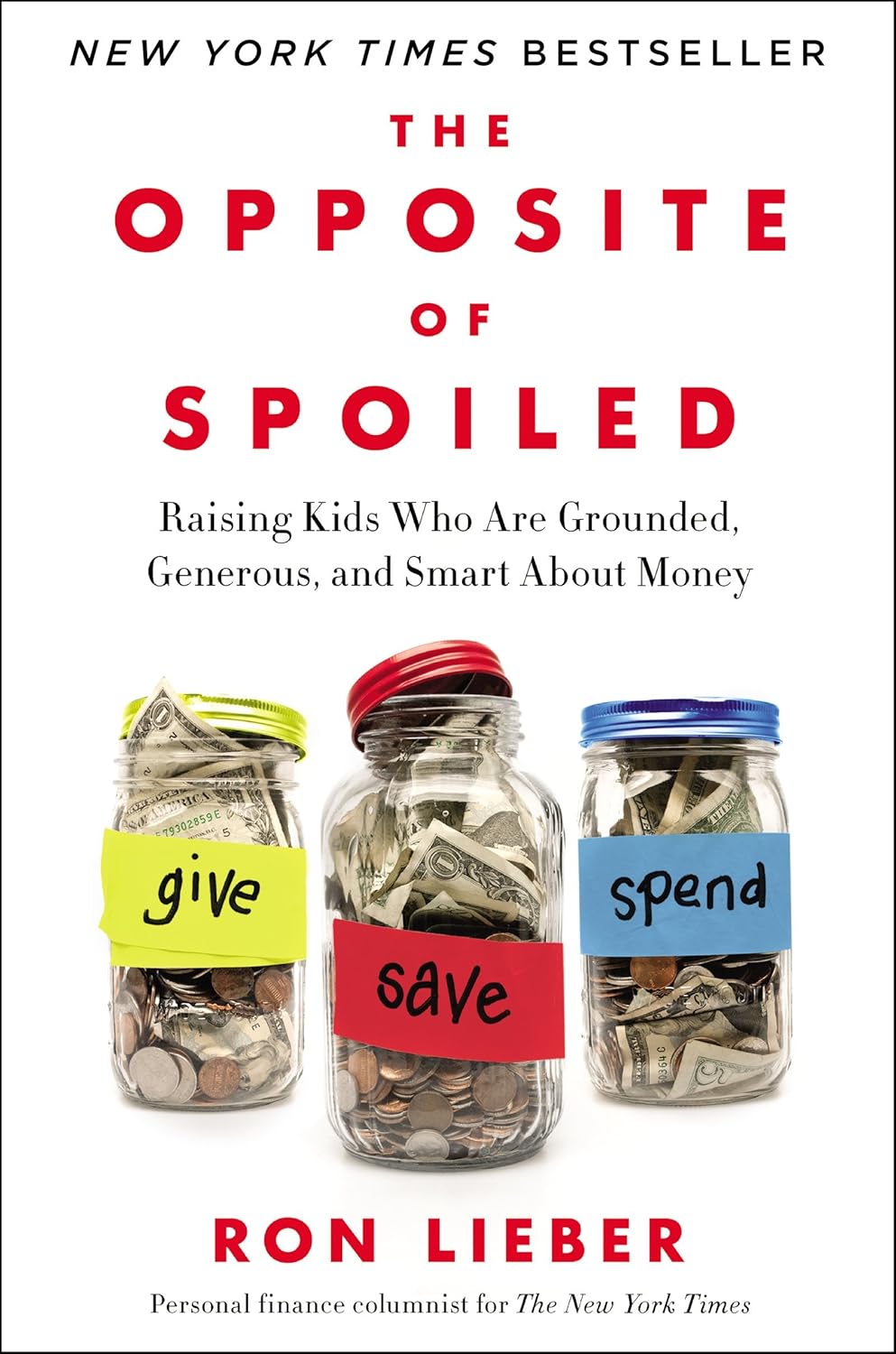
BR 307: The Opposite of Spoiled by Ron Lieber

Category: 3 – SHELF it (All Categories are 1 – Read ASAP!, 2 – BUY it!, 3 – SHELF it, 4 – SOMEDAY it)

Comments: A nice read.

Insights that resonated: I think the biggest insight from the book was to give kids a real experience with money by giving them an allowance and having them split it into “give,” “save,” and “spend” jars.

You can then get creative by introducing concepts like compound interest to them.

It isn’t something we’ve operationalized yet – but we definitely will.

1. Read ASAP! · Book Review Actions · Book Reviews · History · Novel Concepts and Interesting Research · Psychology

BR 306: Same as ever by Morgan Housel

Category: 1 – Read ASAP! (All Categories are 1 – Read ASAP!, 2 – BUY it!, 3 – SHELF it, 4 – SOMEDAY it)

Comments: I have been a Morgan Housel fan for over a decade. He’s gone onto earn deserved praise for his exceptional writing style that mixes powerful anecdotes with timeless wisdom about investing and life.

Same as ever is classic Morgan Housel.

Insights that resonated: 

(1) The world isn’t crazier than it was before. With 8 billion people, crazy things every day are inevitable. 

(2) Calm plants the seeds of crazy. If stocks keep going up, the market is going to get too confident. That, then, will lead to a crash.

The world is calmer and safer than ever before – primarily because of the progress we’ve made against deadly diseases thanks to vaccines. But that made us over-confident and thoroughly unprepared for a pandemic. And so on.

Every time this (recession, pandemic, etc.) happens, we will feel the pain of the wound. The wounds will heal but the scars will last.

(3) Slow progress among a barrage of bad news is normal. Bad news is about what happened, good news is invisible because it is about things that didn’t happen. Improvements in heart disease at 1% per year for 70 years saved 25 million Americans. It’d never make the headlines any given year. But, over 7 decades, it is massive.

(4) Plan like a pessimist, dream like an optimist. The key is surviving the short term to make it to the long term. 

(5) It’s supposed to be hard

In 1990, David Letterman asked his friend Jerry Seinfeld how his new sitcom was going. Jerry said there was one frustrating problem: NBC supplied the show with teams of comedy writers, and he didn’t think they were getting much good material from them.

“Wouldn’t it be weirder if they were good?” David asked.

“What do you mean?” Jerry asked.

“Wouldn’t it be strange if they could all just produce reams of hilarious material day after day?”

Recalling the conversation a few years ago, Seinfeld laughed and told Letterman: “It’s supposed to be hard.”

(6) The grass is greener on the other side because it is fertilized by bullshit. You only get the smell when you come close enough. This idea might have been my favorite.

(7) Incentives are the most powerful force in the world.

1. Read ASAP! · Book Review Actions · Book Reviews · Business · Management

BR 305: Costco by Ben Gilbert and David Rosenthal (The Acquired Podcast)

Category: 1 – Read ASAP! (All Categories are 1 – Read ASAP!, 2 – BUY it!, 3 – SHELF it, 4 – SOMEDAY it)

Comments: This was a podcast episode – but I treated it as a short audio book. It was fantastic.

Insights that resonated: 

  1. The first part of the Costco story is the story of Sol Price – probably one of retail’s most prolific inventors. He invented modern retail as we know it with the creation of Fedmart (that inspired “Walmart” and “K mart” ) and then Price club which led to Costco.
  2. Sol Price was an inventor who was very aware of the fact that he wasn’t as good at running his inventions. However, I loved the anecdotes of just how principled he was. Sam Walton – the founder of Walmart – famously said he stole the most ideas from Sol Price. Sam Walton’s tape recorder was once confiscated at a Price Club. When Sol heard of this, he immediately mailed it back.
  3. Jim Sinegal, Costco’s co-founder, famously corrected someone who said he learnt a lot from Sol to emphasize “I learnt everything from Sol.” Costco’s origin and biggest ideas – memberships, the warehouse concept, unique approach to inventory, etc., can be traced in a straight line to Sol Price’s innovations.
  4. One of the magical parts of Costco’s strategy is the warehouse concept. As they’re a warehouse, suppliers deliver directly and items are immediately available to sell. They turn items over roughly 1 in 26 days – i.e., before supplier bills come due in 30 days. It is wild how beautifully their cash flow system works.
  5. Costco has a mandate of a maximum of 14% margin with an average at 11%. So, for every dollar they save, 89 cents of value goes right back to the customer.
  6. Costco doesn’t do loss leaders – goods sold at breakeven or at a negative profit – to bring customers into stores as it means fleecing the customer elsewhere. The only place where they barely break even is $1.50 hot dog – a tradition that has lasted four decades.
  7. Costco have been reducing their SKUs over time – they’re currently in the range of 3000-4000 (other retailers store 50,000+). It is a mark of how much their customers trust them to pick the right thing. This also means each buyer REALLY understands the cost of every ingredient and monitors it carefully. And while they have tremendous power over suppliers given they go big on few SKUs, they are known to be tough but fair. Their objective is passing value to the customer.
  8. Kirkland Signature is the largest consumer packaged goods brand in the US – $52B in sales out of ~$230B in 2023. Again, a symbol of how much customers trust Kirkland.
  9. Costco rarely vertically integrates. One of the few exceptions is with chicken where they’d otherwise have to deal with a small group of firms (who then have pricing power). They produce 200 million chickens in-house a year.
  10. They pride themselves to be learning machines. Stores in year 1 today are doing better than stores in year 5 from 2014. This shows up in their $ per squarefoot. They live in rarefied air – it is closer to Tiffany’s (who sell diamonds!) and are orders of magnitude above other retailers.
  11. Their memberships are a profit center which contributes to 70% of their operating income. Their memberships also ensures record low shrinkage/stolen goods. Another reason for that record is staff who are paid $26/hour vs. $19/hour in other places with fantastic benefits. This means 4x lower turnover and high loyalty.

    Finally, Costco’s executive membership costs twice the normal membership. And if you don’t get enough value to make up for the extra cost, they give the money back to you. Only at Costco.
  12. It is amazing how much Costco has inspired amazon. When Amazon was going through a difficult time after the dot com bust, Jim Sinegal and Jeff Bezos met for coffee and Sinegal explained to Bezos that there are two kinds of companies. The first focus on extracting value to customers and the second focuses on always giving customers value. Costco was firmly the second kind.

    That day, Bezos went back and sent an email to his team that Amazon would be the kind of company that was always focused on giving value back to customers. Prime memberships, of course, have strong parallels to Costco’s memberships.
  13. Most of Costco’s senior executive team started 30-40 years prior. Their current CEO started as a forklift driver.
  14. This, then, was the part I found most inspiring. The Costco exec team is such a phenomenal example of a quiet group that isn’t showy. Instead, they’re quietly focused on improving the retail experience for their customers. They’ve grown 10% every year, an incredible feat over a period of 30 years with no end in sight.

    I loved this because it is a beautiful counter example to job-hopping every 2 years. Complex fields take time to master. And I’m both inspired and grateful for the Costco executive team’s mastery over the business.
3. SHELF it · Book Review Actions · Book Reviews · Fiction

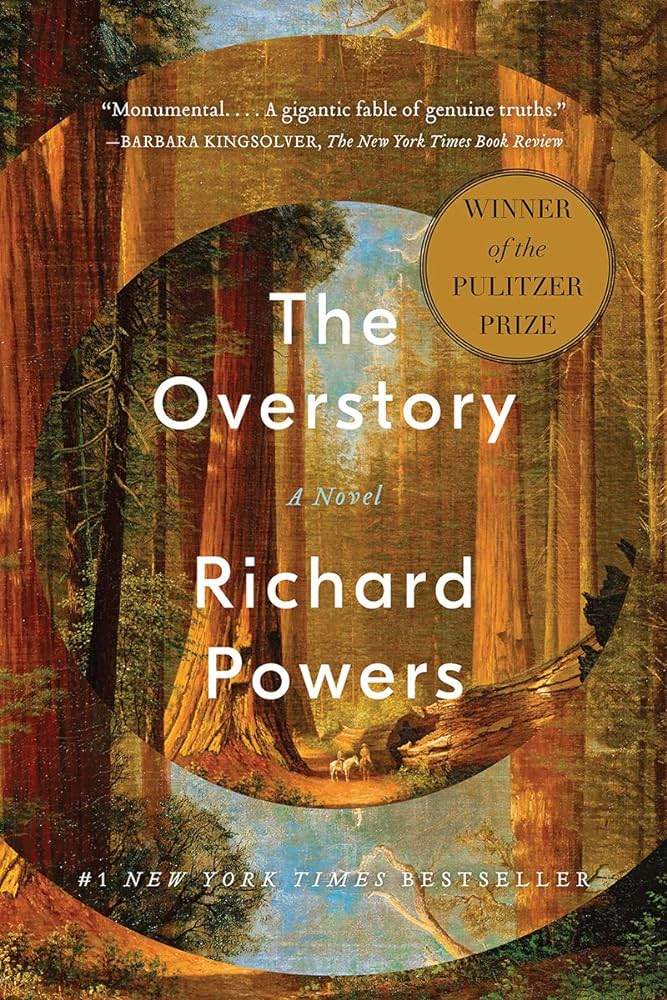
BR 304: The Overstory by Richard Powers 

Category: 3 – SHELF it (All Categories are 1 – Read ASAP!, 2 – BUY it!, 3 – SHELF it, 4 – SOMEDAY it)

Comments: This book is masterfully written – a fascinating tale of people whose lives become linked thanks to their love of trees.

Insights that resonated: 

(1) “Watching the man, hard-of-hearing, hard-of-speech Patty learns that real joy consists of knowing that human wisdom counts less than the shimmer of beeches in a breeze. As certain as weather coming from the west, the things people know for sure will change. There is no knowing for a fact. The only dependable things are humility and looking.”

(2) “The best arguments in the world won’t change a person’s mind. The only thing that can do that is a good story.”

(3) “Trees fall with spectacular crashes. Planting is silent and growth invisible.”

(4) “In fact, it’s Douggie’s growing conviction that the greatest flaw of the species is its overwhelming tendency to mistake agreement for truth. Single biggest influence on what a body will or won’t believe is what nearby bodies broadcast over the public band. Get three people in the room and they’ll decide that the law of gravity is evil and should be rescinded because one of their uncles got shit-faced and fell off the roof.” 

(5) “What you make from a tree should be at least as miraculous as what you cut down.”

(6) “Say the planet is born at midnight and it runs for one day. First there is nothing. Two hours are lost to lava and meteors. Life doesn’t show up until three or four a.m. Even then, it’s just the barest self-copying bits and pieces. From dawn to late morning—a million million years of branching—nothing more exists than lean and simple cells. Then there is everything. Something wild happens, not long after noon. One kind of simple cell enslaves a couple of others. Nuclei get membranes. Cells evolve organelles. What was once a solo campsite grows into a town. The day is two-thirds done when animals and plants part ways. And still life is only single cells. Dusk falls before compound life takes hold. Every large living thing is a latecomer, showing up after dark. Nine p.m. brings jellyfish and worms. Later that hour comes the breakout—backbones, cartilage, an explosion of body forms. From one instant to the next, countless new stems and twigs in the spreading crown burst open and run. Plants make it up on land just before ten. Then insects, who instantly take to the air. Moments later, tetrapods crawl up from the tidal muck, carrying around on their skin and in their guts whole worlds of earlier creatures. By eleven, dinosaurs have shot their bolt, leaving the mammals and birds in charge for an hour. Somewhere in that last sixty minutes, high up in the phylogenetic canopy, life grows aware. Creatures start to speculate. Animals start teaching their children about the past and the future. Animals learn to hold rituals. Anatomically modern man shows up four seconds before midnight. The first cave paintings appear three seconds later. And in a thousandth of a click of the second hand, life solves the mystery of DNA and starts to map the tree of life itself. By midnight, most of the globe is converted to row crops for the care and feeding of one species. And that’s when the tree of life becomes something else again. That’s when the giant trunk starts to teeter.”

(7) “To be human is to confuse a satisfying story with a meaningful one, and to mistake life for something huge with two legs. No: life is mobilized on a vastly larger scale, and the world is failing precisely because no novel can make the contest for the world seem as compelling as the struggles between a few lost people.”

3. SHELF it · Bio/Autobiographies · Book Review Actions · Book Reviews

BR 303: Be useful by Arnold Schwarzenegger

Category: 3 – SHELF it (All Categories are 1 – Read ASAP!, 2 – BUY it!, 3 – SHELF it, 4 – SOMEDAY it)

Comments: I picked this up as I was fascinated by Arnold’s career. It is hard to succeed in any one career – and quite something to manage it in three of them (bodybuilder, actor, politician). Arnold’s stories got a touch repetitive by the end – but it was nice to hear it all in his voice.

Insights that resonated: The message from the book was simple – take the time to develop clarity of vision, then go all in and work incredibly hard to make it happen.

Stories of his work ethic were awe-inspiring. He definitely walked the talk.

Note: I read this following the Elon musk autobiography. Arnold talks briefly about the mistakes he’s made in his family life. Sadly, it was another tale of infidelity and a broken family. Another one of those that made me reflect on how extreme success can be ruinous in the dimensions of our life that matter in the end.

3. SHELF it · Bio/Autobiographies · Book Review Actions

BR 302: Elon Musk by Walter Isaacson

Category: 3 – SHELF it (All Categories are 1 – Read ASAP!, 2 – BUY it!, 3 – SHELF it, 4 – SOMEDAY it)

Comments: Always fascinating, sometimes generous in its portrayal of Elon, and occasionally riveting.

Insights that resonated: I don’t yet know what I’ve taken away from the book. That’s not to say there isn’t much.

Elon’s ability to reason from first principles is always fascinating to read about. His ability to then convert this reasoning to simple and ambitious targets and then use it to rally his teams with “surges” is often inspiring. His surge to get Model 3 production up to 5000 per week was just a great display of operational excellence and leadership.

His approach to risk is mind blowing. I think there are few people on the planet who can reasonably label themselves as “risk takers” after watching Elon in action.

Then there is all the cringe-worthy drama that comes with all of this. I think it is lucky the book’s timeline stops when it does. Elon’s actions in the following months would have challenged the heart of Walter Isaacson’s message – which I interpreted to be “Elon is a complex character. All the cringe is just the flip-side of the traits that make the good possible. And there is more good than bad given the inspiring feats he’s pulled off.”

It is hard not to read the book and avoid reflecting on the trade-offs that come with extreme success and wealth.

Also, as someone who works in close relative proximity to Twitter, the portion of the book dedicated to that made for an interesting read. And it definitely inspired me to reflect on the kind of person and leader I wanted to be.

3. SHELF it · Book Review Actions · Book Reviews · Money

BR 301: Mindful Investing by Jonathan DeYoe

Category: 3 – SHELF it (All Categories are 1 – Read ASAP!, 2 – BUY it!, 3 – SHELF it, 4 – SOMEDAY it)

Comments: Jonathan DeYoe reached out after I shared a personal finance post on my blog and offered to send his book over. I love reading personal finance and investing books from time to time. They’re good reminders of the importance of sticking to the fundamentals. His book was definitely one of those.

Insights that resonated: Mindful investing is:

1. Mindfully looking at what you really need to make you happy (both now and in the long term), then making an investment plan to match your needs.

2. Once you’ve done that, avoiding the noise.

He shares a key concept in Taoist philosophy – “wu-wei” or intentional non-actiohn. Doing without doing.

The key is to do the planning part – determine the amount of money you’ll need in the future, save, and invest/rebalance regularly in a simple diversified portfolio. Then free yourself from market timing and investment selection judgements.

Make a plan, then wu-wei.

1. Read ASAP! · Book Review Actions · Book Reviews · Health · Novel Concepts and Interesting Research · Self Improvement

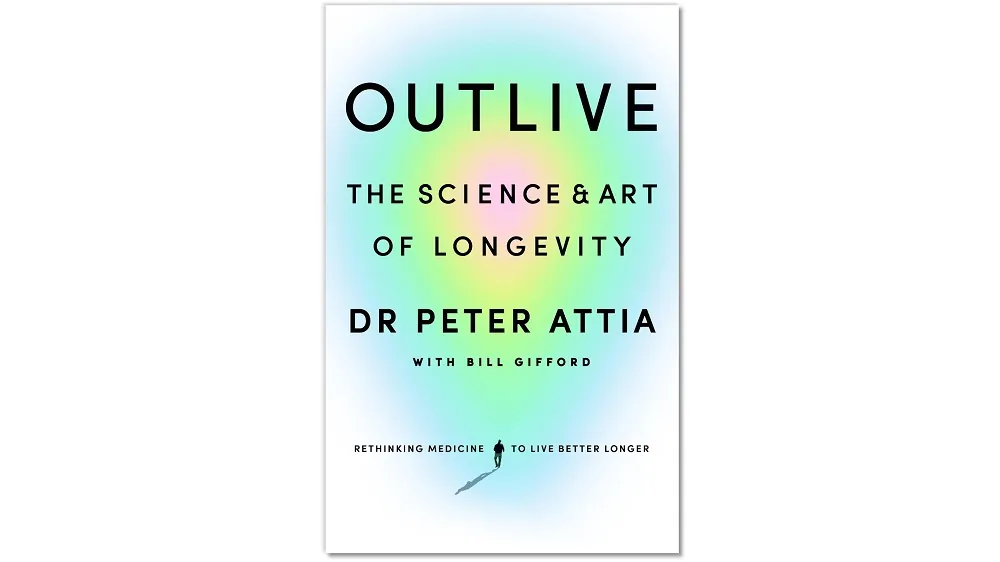
BR 300: Outlive by Peter Attia

Category: 1 – Read ASAP! (All Categories are 1 – Read ASAP!, 2 – BUY it!, 3 – SHELF it, 4 – SOMEDAY it)

Comments: I love that this is book #300 on this blog. It is likely it’ll be among the most impactful books I’ve read in a long time. I saw a review for the book on Amazon that said – “This is a user manual for the body that should be given free at birth.” That may be the best description I’ve come across.

It is a must read.

Insights that resonated: It is hard to distill what I’ve taken away in a couple of paragraphs. The book is a tour de force. There’s very little that is hand wavy. For instance, his case for medicine 3.0 is logical. The combination of scientific method and randomized control trials have made it possible for us to live longer. But, living longer does not equate to a high quality of life. That requires us to take control of our health.

The logic here is simple. He asks an innocent question – what would you like to be able to when you are a centenarian? Would you like to be able to walk unassisted? What about climbing stairs? And what about picking up a child?

Every one of these can be quantified in terms of the fitness levels required when you’re 90. And assuming normal muscle and strength degeneration, you can work backward into the level of fitness you need to have at this time.

The book ends with a powerful end note about Dr. Attia’s own struggles with depression. All in all, it manages to be insightful, powerful, and inspiring.

While I’m still thinking through all the changes I need to make, I’ve been making a few changes already. The biggest area is around freeing up time.

We’re working parents with two young kids who choose to not have any help at home. So, there isn’t much free time lying around. My first significant cut has been watching football/soccer and, perhaps more importantly, abstaining from catching up on news. This may not seem like much – but it is a big long-standing habit change for me. Timing matters – Manchester United’s sad start to the season has made it easier too.

The second is using the free time from a change like the one above to exercise longer every morning and evolve the mix of exercises. I’m still working through the changes here.

The third is around my diet. My ~2.5 years of intermittent fasting is coming to an end. Dr. Attia has made a compelling case for a protein shake and fruit breakfast. So that’s a big change too.

And, finally, I do intend to get to a collection of tests Dr. Attia recommends to get a sense of my risk factors.

I’ll be working on the insights from the book for a long time.

3. SHELF it · Book Review Actions · Book Reviews · Psychology · Self Improvement · Sports

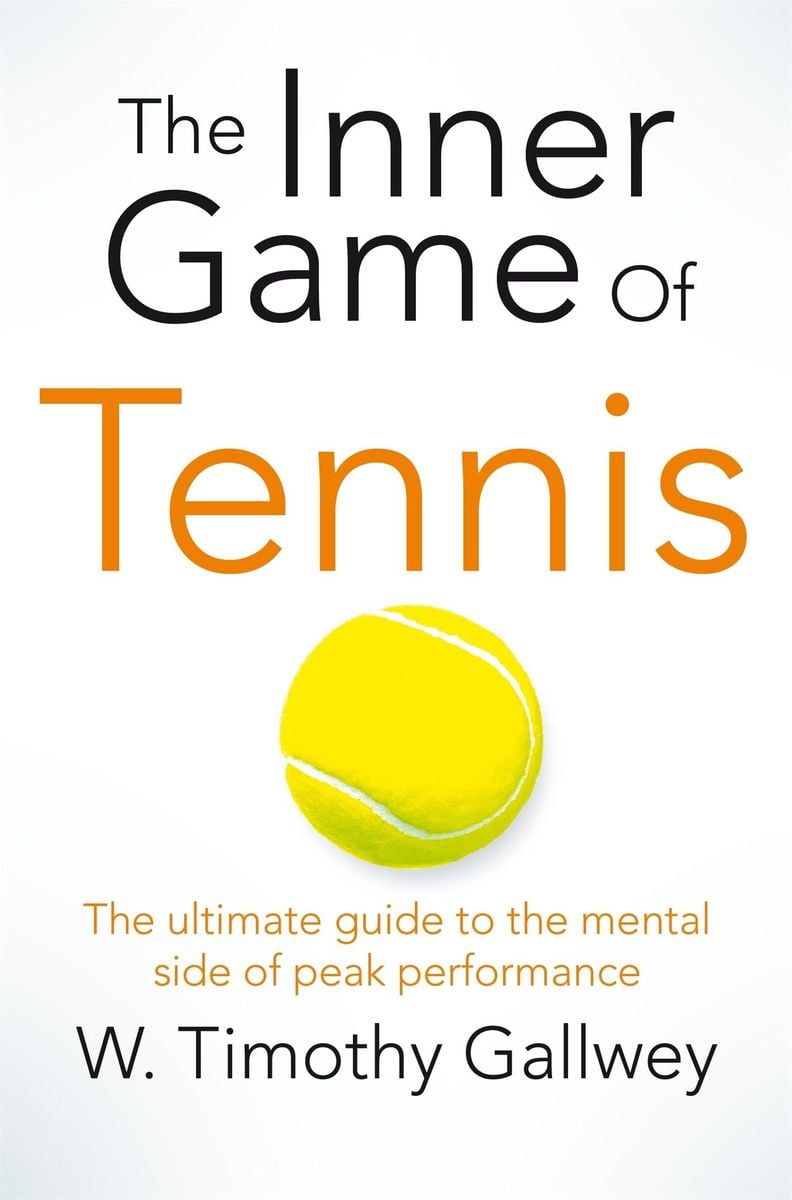
BR 299: The Inner Game of Tennis by W Timothy Gallwey

Category: 3 – SHELF it (All Categories are 1 – Read ASAP!, 2 – BUY it!, 3 – SHELF it, 4 – SOMEDAY it)

Comments: The premise of this book is understanding the mental side to peak performance from a former tennis coach. But it really is a book about our psychology and how we can learn to work with it to learn and coach.

It had an immediate impact on my attempts to teach my son. Long may this impact stay.

Insights that resonated: 

There are 3 core concepts in the book :

  • Self 1 vs. Self 2: Self 1 is our conscious, analytical mind that often gives instructions and critiques while Self 2 is the intuitive and, instinctive self-capable of executing tasks without conscious interference. The goal is to quiet the critical Self 1 to allow the more natural and skilled Self 2 to perform.
  • Non-Judgmental awareness and relaxed focus: Gallwey’s thesis is that our ability to harness Self 2’s incredible powers is by practicing non-judgmental awareness. This means observing our actions and performance without attaching harsh judgments or criticisms. This enables us to focus our attention on the task at hand and achieve a state of “relaxed concentration.”
  • Trust in the Body’s Abilities: Once we visualize what we want our body to do, our body will know how to do it. The key is to trust in its abilities and let it perform naturally.

One key theme in his anecdotes is about players who “over-coach” themselves. They talk too much to themselves instead of letting themselves just play. The body is an incredibly complex machine – any attempt to micromanage is laughable and counter-productive.

This resonated.

Growing up, I never trained in any sport as we moved homes often. When I was in my 8th grade, I finally got an opportunity to train in table tennis. I loved this and enjoyed training hard for the best part of two years.

I stopped training 2 years in – to focus on academics to go to a good college and because I was too late anyway – I still got the opportunity to participate in a few tournaments in high school during the ensuing years. And I almost always choked. When push came to shove, I seemed to find a way to lose games against players I’d normally be able to beat. Many of these players weren’t as good – but they were seasoned tournament players. And they always had me beat on the mental game.

That’s why Gallwey’s notes hit a nerve. It reminded me of the few times I played my absolute best – it was when I didn’t attempt to control every move.

I’ve been attempting to teach our 5 year old football/soccer recently. This book has changed how I approach it. Previously, I used to try to get him to kick or pass the ball with the right technique. And that would inevitably lead to “over-coaching.”

Instead, I’ve started asking him to simply look at the target and kick. And, in time, when the kicks are good, I ask him to simply remember the feeling and replicate it.

His kicks have gotten better much faster with this approach.

It makes sense. Our bodies are awe-inspiring machines. We often get the best results from giving it body some direction and getting out of the way.

1. Read ASAP! · Book Review Actions · Book Reviews · Psychology · Relationships · Self Improvement

BR 298: Excellent Advice for Living by Kevin Kelly

Category: 1 – Read ASAP! (All Categories are 1 – Read ASAP!, 2 – BUY it!, 3 – SHELF it, 4 – SOMEDAY it)

Comments: I’ve loved Kevin Kelly’s birthday posts – pithy compilations of lessons he’s learned over the years. So I knew this book would be a treat. And it exceeded my high expectations. It is a wonderful compilation of 70 years of wisdom from a fascinating human being. I’m sure I’ll pick this book up from my shelf from time to time and I’ll be gifting it for years to come.

It also has made a profound impression on how I think about writing to have an impact. A great reminder of the power of brevity.

Insights that resonated: A choice few…

“To be rich, you don’t need to make more money; you chiefly need to better manage the money already flowing through your hands.”

“Measure your wealth not by the things you can buy but by the things that no money can buy.”

Before you are old, attend as many funerals as you can bear, and listen. Nobody talks about the departed’s achievements. They only thing people will remember is what kind of person you where while you were achieving.

“The big dirty secret is that everyone, especially, the famous, are just making it up as they go along.” 

“Things do not need to be perfect to be wonderful. Especially weddings.”

“To learn from your mistakes, first laugh at your mistakes.”

“Superheroes and saints never make art. Only imperfect beings can make art because art begins in what is broken.”

“Pros make as many mistakes as amateurs; they’ve just learned how to gracefully recover from their mistakes.”

“Being enthusiastic is worth 25 IQ points.”

“Generally, say less than necessary.” 

To build strong children, reinforce their sense of belonging to a family by articulating exactly what is distinctive about your family. They should be able to say with pride, “Our family does X.”

“Instead of asking your child what they learned today, ask them “who they helped today.”

“When you forgive others, they may not notice, but you will heal.

Forgiveness is not something we do for others; it is a gift to ourselves.”

“It is not hard to identify a thief. It is the one who believes everyone else steals.”

“Greatness is incompatible with optimizing in the short term. To achieve greatness requires a long view. Raise your time horizon to raise your goal.”

“Your best response to an insult is “You’re probably right.”

“If you can’t tell what you desperately need, it’s probably sleep.” 

“Forgiveness is accepting the apology you will never get.”

 “Don’t measure your success with someone else’s ruler.”