2. BUY it! · Novel Concepts and Interesting Research · Psychology · Self Improvement · Skills

BR 205: Smarter, Faster, Better by Charles Duhigg

Category: 2 – BUY it!* (All Categories are 1 – Read ASAP!, 2 – BUY it!, 3 – SHELF it, 4 – SOMEDAY it)

Comments: Solid book. Lots of great stories and a compilation of powerful principles.

Top 3 Learnings:
1. A combination of many interesting studies and a long research project at Google determined that there is one attribute that all high performing teams share – they all enable psychological safety.

2. In all, it remains an intriguing thought: if you want to build a successful company, you should not seek to attract the biggest rock stars. Instead, a loyal orchestra of employees will perform better – provided there is a dissenting tone every once in a while, to keep everyone focused.

3. I found this story incredibly inspiring

Tetsuro Toyoda was visiting NUMMI (a plant in Fremont California that is a joint collaboration between Toyota and GM). He saw Joe, an assembly line worker, struggling to install a taillight. He kept imploring him to pull the Andon cord and stop the assembly line. After many attempts – “Joe, please,” Toyoda said. Then he stepped over, took Joe’s hand in his own and guided it to the andon cord, and together they pulled. A flashing light began spinning.

When the chassis reached the end of Joe’s station without the taillight correctly in place, the line stopped moving. Joe was shaking so much, he had to hold his crowbar with both hands. He finally got the taillight positioned and, with a terrified glance at his bosses, reached up and pulled the andon cord, restarting the line.

Toyoda faced Joe and bowed. He began speaking in Japanese.
“Joe, please forgive me,” a lieutenant translated. “I have done a poor job of instructing your managers of the importance of helping you pull the cord when there is a problem. You are the most important part of this plant. Only you can make every car great. I promise I will do everything in  my power to never fail you again.”

Next day, a dozen pulls happened. And in a week, a hundred. It still cost a lot but given the responsibility, employee motivation increased. Most productive GM plan. Absenteeism decreased from 45% to 3% and productivity soared. NUUMI was legendary.
1. Read ASAP! · History · Novel Concepts and Interesting Research · Technology

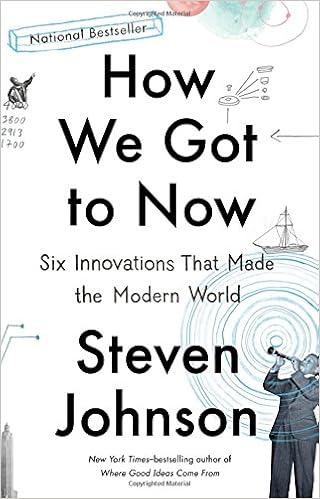
BR 204: How we got to now by Steven Johnson

Category: 1 – Read ASAP! (All Categories are 1 – Read ASAP!, 2 – BUY it!, 3 – SHELF it, 4 – SOMEDAY it)

Comments: This is a book that takes 6 parts of modern life and shows you how they were fundamental in making modern life what it is. It changed how I saw the world.

Top 3 Learnings:

1. Most innovations occur in the adjacent possible. Few make seemingly impossible leaps. The popular theory is the genius theory of innovation. But, there are plenty of high IQ individuals. If there is a common thread, it is that they worked at the intersection of multiple fields. Ada Lovelace could see the future of computers as she lived at the edge of science and art. Staying within the boundaries of your discipline can enable incremental improvements – which are critical to progress. But, to make leaps, we have to travel across borders – sometimes geographical to be in a different environment and sometimes conceptual. These time travelers often have hobbies and interests in varied fields. This is one of the reason “garages” have such a symbolic role in innovation as these are peripheral spaces.

2. The power of accurate measurement of time is that measuring time is key to measuring space. Every time we glance down at our phone to find our location, we’re triangulating between at least 3 of 24 atomic clocks that tell us our location based on the measurement. And, these clocks have been made possible by scientific advances that led us from astronomy (sundials) to dynamics (pendulums) to electromagnetics (quartz) to atomic physics (atomic clocks)

3. Thomas Edison didn’t invent the light bulb. Instead, he invented something more powerful – a process of innovation. He brought together diverse teams, built the first global supply chain, mastered the art of public relations and product launches, embraced experimentation and incentivized his teams with stock options. This is a model that continues today.

Book notes here.

3. SHELF it · Leadership · Psychology

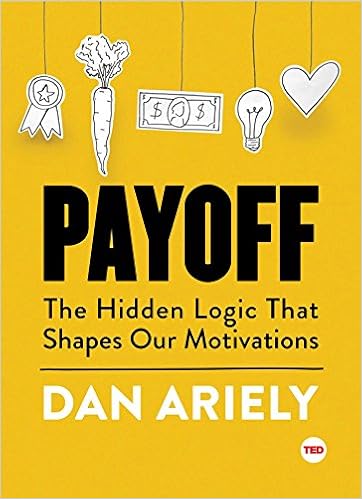
BR 203: Payoff by Dan Ariely

Category: 3 – SHELF it (All Categories are 1 – Read ASAP!, 2 – BUY it!, 3 – SHELF it, 4 – SOMEDAY it)

Comments: Payoff is a short book that is both simple and powerful. If you love Dan Ariely’s work and/or behavioral economics, you will enjoy this book.

Top 3 Learnings:
1. We tend to underestimate the power of goodwill in building motivated teams and work environments. If there’s one thing you take away from this book, it is that appreciation and goodwill are more powerful incentives than any financial incentives (assuming people’s pay covers basic needs).

2. Purpose matters over pleasure. Understanding why we do things goes a long way in helping us stay motivated.

3. As humans, we care a great deal about legacy. We’ve had a big fascination for life after death since the time of the pharaohs and that fascination continues today.

3. SHELF it · Creativity · Skills · Technology

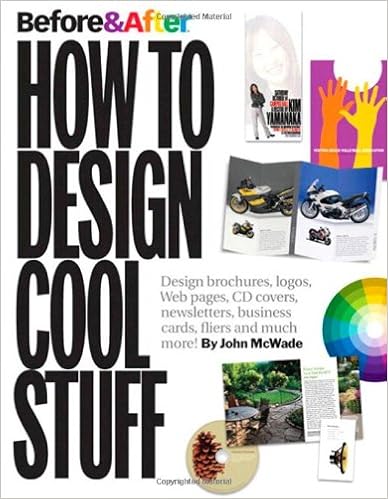
BR 202: How to Design Cool Stuff by John McWade

Category: 3 – SHELF it (All Categories are 1 – Read ASAP!, 2 – BUY it!, 3 – SHELF it, 4 – SOMEDAY it)

Comments: This is a beautifully designed book – as it should be. :) It has lots of interesting examples that demonstrate what is good design and what is bad design. I took away a fair number of tips – but I did miss principles.

Top 3 Learnings:
1. Colors such as yellow, orange and red are warm colors while colors such as blue and purple are cool colors. Cool colors point to professional settings.

2. Breaking images into multiple pieces can be very powerful. Scale: magnifying small pieces can greatly improve perception of importance. Similarly, Cropping images is a powerful tool. A small part of the image can tell a much more powerful story than the rest of the image.

3. Add a photo to the graph. If sales of strawberries, put a strawberry photo behind

Book notes here.

3. SHELF it · Skills

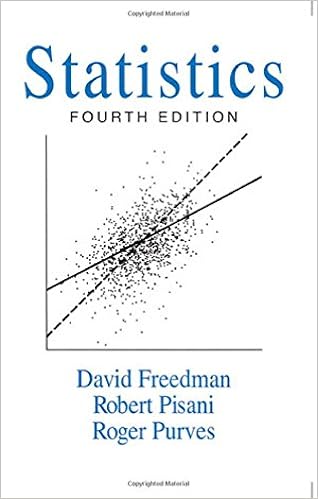
BR 201: Statistics, 4th Edition by Freedman, Pisani, Purves

Category: 3 – SHELF it (All Categories are 1 – Read ASAP!, 2 – BUY it!, 3 – SHELF it, 4 – SOMEDAY it)

Comments: This is a Statistics textbook. So, it definitely isn’t for everyone. However, if you are interested in Statistics, it is an awesome book. Lays out concepts with a ton of clarity.

Top 3 Learnings:
1. Let’s say you are tossing a coin.
The law of averages says nothing about an increased likelihood of a tail after 4 rows of heads. Instead, it says that – as you keep increasing the number of tosses, the chance error as a percentage of tosses keeps going down.

2. Regressions ONLY deal with associations or correlations. An increase in x is associated with an increase in y.

3. A test of significance gets at the question of whether an observed difference is real (alternative hypothesis) or just a chance variation (null hypothesis). The observed significance level is the chance of getting a test statistic as extreme or more extreme than the observed one. The chance is computed on the basis that the null hypothesis is right. Small values of p are evidence against the null hypothesis – i.e. the observed difference is real.

3. SHELF it · Book Review Actions · Book Reviews · Business · Skills · Technology

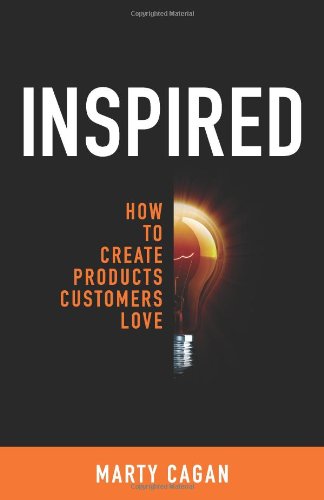
BR 200: Inspired by Marty Cagan

Category: 3 – SHELF it* (All Categories are 1 – Read ASAP!, 2 – BUY it!, 3 – SHELF it, 4 – SOMEDAY it)

*This is a really nice read if you are interested in Technology Product Management. I’d move this to “BUY It” in that case.

Comments: A really well written and well organized book that beautifully lays out the art and science of product management.

1. The job of the product manager is to discover a product that is valuable, usable, and feasible.

3 Steps to Building Products –

1. Is there a real opportunity?
2. Figure out what to build (build the right product) – is there enough evidence that it is valuable, useful and feasible?
3. Build it (building the product right).

2. Replace PRDs or Product Specs with a prototype. The majority of the product spec should be the high-fidelity prototype, representing the functional requirements, the information architecture, the interaction design, and the visual design of the user experience.

3. Fear, greed and lust. People buy and use products largely for emotional reasons. In the enterprise space, the dominant emotion is generally fear or greed. In the consumer space, the dominant emotions get more personal. If I buy this product or use this Web site, I will make friends (loneliness), find a date (love or lust), win money (greed), or show off my pictures or my taste in music (pride).

1. Read ASAP! · Book Review Actions · Book Reviews · Leadership · Parenting · Philosophy · Psychology · Relationships · Self Improvement

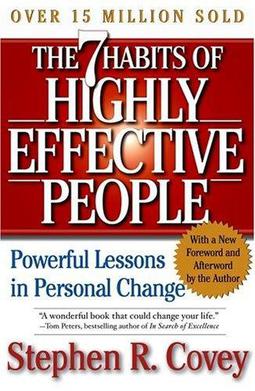
BR 199: The 7 Habits of Highly Effective People by Stephen Covey

Category: 1 – Read ASAP! (All Categories are 1 – Read ASAP!, 2 – BUY it!, 3 – SHELF it, 4 – SOMEDAY it)

Comments: I rarely re-read books but decided to re-read this during my end-of-year break as I’ve come to appreciate how wise this book is. It delivered, again. I’d spent most of my first reading in the first half/personal victories portion of the book. This time, I spent more time in the public victories. So much to learn, do and build.

Top 3 Learnings:
1. To know and not to do is not to learn. Beautifully drove home the point that I haven’t “learned” nearly as much I say I have.

2. Seek to understand and then to be understood. In the spirit of knowing and not doing, this has become an important part of “engagement” theme this year. I am still too impatient too often.

3. Seeking win-win requires a combination of courage and consideration.

Stephen Covey’s masterpiece is so good that it makes the “Read ASAP” list twice. :)

3. SHELF it · Bio/Autobiographies · Book Review Actions · Book Reviews · History

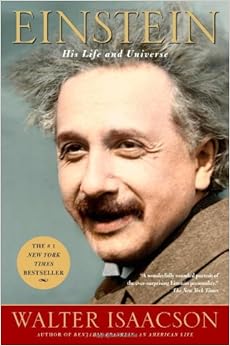
BR 198: Einstein by Walter Isaacson

Category: 3 – SHELF it (All Categories are 1 – Read ASAP!, 2 – BUY it!, 3 – SHELF it, 4 – SOMEDAY it)

Comments: I understand this book wouldn’t be for everyone. However, if you have any interest in science and the life and works of Albert Einstein, I’d suggest taking your time reading this one. The middle portion might get a bit boring. But, the end is worth it. Walter Isaacson takes his time to develop Einstein’s character. And, by the end, you realize that the time taken was completely worth it.

I began reading to understand Einstein the genius. And, I finished understanding Einstein, the wise human being. :)

Top 3 Learnings:

1. Einstein’s genius wasn’t about his brain but how his mind works. He was the true example of endless curiosity. You can imagine him as a kid lying sick and wondering about how the compass works and then wondering what it might be like to travel alongside a wave.

2. The most striking thing about Einstein was his wry detachment and equanimity. He never took himself or his work seriously. He may have blown hot or cold with his family when he felt confined. But, otherwise, he was a passionate and caring man who was adored by his colleagues. They hosted a wonderful 70th birthday ceremony where they spoke more about his character than his work.

He used his old age to defend the rights of those who were young and to use the luxury of his reputation to pursue his field theory. However, over the years, he relied more on complex math than the physics that had made him great. A part of his resistance was his now quaint refusal to accept quantum mechanics.

3.Is everything alright? “Everything is alright. I am not.” – he said to his secretary on his last day at the institute. :) His “wry detachment” is evident.

Book notes here.

2. BUY it! · Book Review Actions · Book Reviews · Psychology

BR 197: Daring Greatly by Brene Brown

Category: 2 – BUY it! (All Categories are 1 – Read ASAP!, 2 – BUY it!, 3 – SHELF it, 4 – SOMEDAY it) Comments: This is an important book. If you are interested in understanding topics like shame, vulnerability and insecurity, Brene Brown does a fantastic job putting her research and thinking together. Top 3 learnings: 1. Perfection doesn’t exist with parenting. Labeling good or bad parenting isn’t helpful. Are you engaged? Then make mistakes and have fun! 2. Women and men. Women feel shame due to a plethora of reasons – most dominant of those is their appearance and their ability to be mothers while being capable. Hence the whole pressure to have it all. 3. Men, on the other hand, are shamed by the idea of being a “pussy”. Being weak is seen as shameful. (So true) this is especially the case with the women in their lives who want them to man up more than they want them to be vulnerable. So, men keep silent. And when they are provoked, they either get pissed off or shut down. Book notes here.
2. BUY it! · Book Review Actions · Book Reviews · Business · Novel Concepts and Interesting Research

BR 196: The Signal and the Noise by Nate Silver

Category: 2 – BUY it! (All Categories are 1 – Read ASAP!, 2 – BUY it!, 3 – SHELF it, 4 – SOMEDAY it)

Comments: I think I might have called this a “Priority 1” book if it wasn’t for business school. This was a very good refresher on how to think about predictions and data. As the ultimate data geek, Nate Silver does a very good job introducing us to the world of prediction and statistics.

Top 3 learnings:

1. Sometimes, predictions change the nature of the thing. If everyone is using an app that predicts highway x will have lesser traffic, everyone could end up on highway x.

2. Bayesian approach was to make a small prediction and keep improving on it. Probability was seen by Laplace and Bayes  as a step toward progress. Bayes theorem is concerned with conditional probability. Think probabilistically. Require you to accept that your subjective representations of the world are not truth.

3. Terrorist attacks are similar to earthquakes – high uncertainty. However, when you plot frequency and destruction wrought by terrorist attacks on a double logarithmic scale, it is a straight line!

The broken windows theory was embraced in the US despite limited scientific evidence perhaps because it is easier for police to imprison a 16 year old with drugs than solve a difficult crime.

Israel has taken the opposite approach – it treats small acts of terror as normal but has worked hard to eliminate large threats. Israel’s power law distribution curve looks different from what you might expect – due to their strategic choices.

Book notes here.