2. BUY it! · Book Review Actions · Book Reviews · Psychology · Self Improvement · Skills · Sports

BR 181: Peak by Anders Ericsson and Robert Pool

Anders Ericsson, peak, performance

Category: 2 – BUY it! (All Categories are 1 – Read ASAP!, 2 – BUY it!, 3 – SHELF it, 4 – SOMEDAY it)

Comments: Peak is the culmination of the life’s work of a legendary researcher – Prof Anders Ericsson. Prof Ericsson has single handedly changed our understanding of performance and expertise. It is a lovely read – well written and flows beautifully. The only reason I have it as a category 2 is because author Geoff Colvin did a good job of bringing Prof Ericsson’s research to the mainstream with “Talent is Overrated.”

Top 3 Learnings:

1. There is absolutely no evidence for innate talent beyond a few physical advantages in certain sports. The dark side of this is denying kids the opportunity to get good with very little evidence (think Outliers).

While the average IQ of scientists is higher than the average person, there is no correlation between IQ and scientific productivity. Richard Feynman, one of the most brilliant physicists of all time wouldn’t make it to MENSA with his 126 IQ. Researchers have suggested that the minimum requirements for performing capably as a scientist are around 110 – beyond which there is little or no additional benefit. It is unclear if this requirement is one to succeed as a scientist or to do the writing and admission tests required to get a PhD.

Similarly, for some sports, one could speculate about some minimum talent requirements – e.g. some basic physical traits such as height and body size. Beyond that, however, practice trumps everything else.

We might be born with preference for music over sports, for example. But, that counts for little if we don’t practice it.

2. Our body literally changes with deliberate practice. The key difference between deliberate practice and purposeful practice is a teacher. Having a teacher who has been through what we’ve been through changes everything.

3. The focus when we perform deliberate practice is not on knowledge, but on skills. That will be key in making deliberate practice applicable in education.

Book notes here

2. BUY it! · Book Review Actions · Book Reviews · Career · Psychology · Self Improvement · Skills

BR 177: Deep Work by Cal Newport

deep work

Category: 2 – BUY it! (All Categories are 1 – Read ASAP!, 2 – BUY it!, 3 – SHELF it, 4 – SOMEDAY it)

Comments: I love Cal Newport’s thought process and approach to excellence and the idea of optimizing life for “deep work” is one that has stuck with me.

This book approaches the “Deep Work” idea exhaustively. I’ve put this as a priority 2 book simply because it is important you ease into this as this is more a “how to” book and requires the context before you buy into the hows and whats. The first step would be to read “So Good They Can’t Ignore You” by Cal Newport and then read this.

Top 3 Learnings:

1. The quality of your life is likely directly proportional to the amount of time you spend in deep work. A deep life is a good life.

2. Attention residue is the biggest problem with small distraction. Our brain takes time to switch between tasks and this task switching drains us.

3. A deep work approach to life requires you to make hard choices on what you spend time on. The point isn’t so much about whether something you spend time on gives you benefit. It is understanding everything we give up. Understanding trade-offs are critical.

Book notes here.

2. BUY it! · Bio/Autobiographies · Book Review Actions · Book Reviews · Business · Management

BR 174: The Outsiders by William Thorndike

outsiders, ceo, management

Category: 2 – BUY it! (All Categories are 1 – Read ASAP!, 2 – BUY it!, 3 – SHELF it, 4 – SOMEDAY it)

Comments: This is a very good book on the border of priorities 2 and 3. I debated pushing it down to priority 3 as I find myself becoming a tougher rater over time. The more books I’ve read, the harder it is to find new insight that truly changes the way I think. This book does a great job bringing together a few really good ideas. However, playing devil’s advocate again, I wonder if a long blog post / research paper would have sufficed.

Top 3 Learnings:

1. Counter intuitive results require counter intuitive moves. Outsider CEO’s were most defined as they zigged when their opponents zagged.

2. CEO’s can spend their time (their most valuable resource) doing 3 things – investor relations, operations, or capital allocation. The outsider CEO’s spent most of their time on capital allocation, little on operations and almost none on investor relations. Nearly every one of them adopted some financial instrument that was under used – e.g. buy backs, mergers, acquisitions, etc.

3. They ran lean central teams and often hired strong COO’s who complemented their strengths.

Book notes here.

2. BUY it! · Book Review Actions · Book Reviews · Business · Entrepreneurship · Philosophy · Psychology · Self Improvement

BR 166: Essentialism by Greg McKeown

Category: 2 – BUY it! (All Categories are 1 – Read ASAP!, 2 – BUY it!, 3 – SHELF it, 4 – SOMEDAY it)

Comments: Good book overall. Greg’s concepts and thoughts definitely resonated and felt consistent. However, I felt that the book repeatedly prescribed ways to do things and hardly ever spoke about the psychology or the “why” behind things. In that sense, I felt it lacked the depth I’d have liked and often skated over the difficult stuff. And, I felt it was often a collection of lists without structure. (as a good illustration, I had to go back to the book notes to write my 3 top learnings..)

Top 3 Learnings:

1. A lovely story about Stephen Covey prioritizing his daughter above a friend who he ran into. The learning here was that we need to learn to say no to stuff we don’t prioritize so we can say yes to the stuff we do prioritize

2. Mission statements need to be concrete and inspirational (think of them as a 2×2)

3. Less is more. :)

Book notes here

2. BUY it! · Entrepreneurship · Self Improvement

BR 160: What To Do When It’s Your Turn by Seth Godin

Category: 2 – BUY it! (All Categories are 1 – Read ASAP!, 2 – BUY it!, 3 – SHELF it, 4 – SOMEDAY it)

Comments and Learning: I pick up Seth’s books when I’m in need of inspiration and this one delivered. This one is special also because it features a post from yours truly. so, do buy it. :)

I think of this book as similar in style to “The War of Art” – it is a book you can pick up whenever you need inspiration and you will not be disappointed. It is also a much better paper book because it has a lot of images that makes reading it really easy.

2. BUY it! · Book Review Actions · Book Reviews · Money

BR 150: How an Economy Grows and Why it Crashes by Peter D Schiff and Andrew J Schiff

Category: 2 – BUY it! (All Categories are 1 – Read ASAP!, 2 – BUY it!, 3 – SHELF it, 4 – SOMEDAY it)

Comments: First, let me get the obvious out of the way – yes, this book isn’t perfect. It can be very simplistic at times and the writer does have a clear political agenda against the US government’s financial policy.

But it makes for a fascinating read. I say everyone because we all deserve to understand how an economy works. The authors lay out the principles of economics and call bullshit on the idea that micro economics is essentially different from macro economics. They do it by taking us through the growth and crash of an island’s economy (and do this with lots of digs at the US-China relationship. The islands are called Usonia and Sinopia :))

Fantastic book. It points to a scary conclusion – the whole idea of a paper currency anchored in nothing but trust is a massive experiment and one that could result in mass default and failure.

Top 3 Learnings:

1. Why should a country be treated differently from a household? Why should a country be allowed to spend more than it makes (via taxes)?

The reason governments take on so much debt is because the economic policy is driven by political agenda. As a result, instead of taking the hard decisions and cutting public spending, the government always attempts to take the easy way out by printing more money.

2. Deflation is not a bad thing. Deflation means productivity is increasing and things are getting cheaper. This means it is time to allocate resources to new investments – the technology industry is a good example of this. The American economy was deflationary until the 1930s when Keynesian economists came along and said inflation is the way to go. This has resulted in economists insisting that inflation needs to be maintained. When you hear that, ask why.

3. American consumption has been lauded as a strength. Well, it is not. Production is a strength. Consumption is not. An economy’s strength is built on savings. It is because of savings that interest rates fall and allow for cheaper credit and cheaper investments. America is surviving on the fact that China is hugely invested in it and the fact that it’s currency is global reserve currency. Things could fall very quickly (ominous, I know)

 My summary of the full book is on The Bookbytes Project.

2. BUY it! · Book Review Actions · Book Reviews · Novel Concepts and Interesting Research · Sports

BR 149: Moneyball by Michael Lewis

Category: 2 – BUY it! (All Categories are 1 – Read ASAP!, 2 – BUY it!, 3 – SHELF it, 4 – SOMEDAY it)

Comments: Another Michael Lewis masterpiece. I saw the movie before I read the book. The book was really interesting. Many of the baseball terms and statistics went a bit over the head as I’ve never watched baseball. However, the story and insight were fantastic.

Top 3 Learnings:

1. Value is created when you understand market inefficiencies and exploit them. In the case of baseball, the whole player measurement system was flawed and based on the look of a player rather than statistics that actually contributed to the team. Billy Beane simply went ahead and used these inefficiencies to cause a revolution in the way players were scouted.

2. If you HAVE to do a deal, you are doing to pay too much for it.

3. My favorite insight was Beane’s approach of building a baseball team rather than a collection of players. For example, Beane and his team identified that a play off team needed to score 900 runs to qualify for the play offs (if I remember right). So, they went about building a team that would score the runs together building on each other’s strengths. Focus on the whole, not on the parts. Don’t replace players.. Replace their statistics with one or more players. Top draw insight!

Book notes here.

2. BUY it! · Bio/Autobiographies · Book Review Actions · Book Reviews · Business · Entrepreneurship · Leadership · Management · Technology

BR 143: The Everything Store by Brad Stone

Category: 2 – BUY it! (All Categories are 1 – Read ASAP!, 2 – BUY it!, 3 – SHELF it, 4 – SOMEDAY it)

Comments: A very powerful insight into the one of the greatest entrepreneurs of this generation. It is symbolic that Bezos wanted to call Amazon “Relentless.com” because that is exactly what he is – relentless. Incredibly smart, incredibly driven, incredibly well read, and incredibly determined – a one in a billion combination.

A very inspiring story – there is a lot to learn from this book and from Bezos’ studied and researched style. I loved it. Must read for anybody interested in technology.

Top 3 Learnings
1. Bezos banned PowerPoint in Amazon’s meetings. Instead, he uses 1-6 page memos called narratives. He believes people can hide behind bullet points but it is impossible to not have clarity of thought if you are forced to write full sentences. He is absolutely right, of course. I’ve been using narratives in various projects and it means more thorough preparation than ever before.

2. As Bezos’ grandfather once taught him, it is harder to be kind than clever.

3. This learning isn’t so much from the book as much as it is as a synthesis on the man. The description that comes to mind when I think of is Bezos is “driven learning machine.” Bill Gates, Sergey Brin and Larry Page are examples. What’s amazing about these people is, aside from their penchant for learning, they are not afraid to take very big swings. It’s an awe inspiring combination and is a reminder that success isn’t a flash in the pan. As they illustrate, it’s a habit.

Book notes here

2. BUY it! · Book Review Actions · Book Reviews · Business · Career · Psychology · Relationships

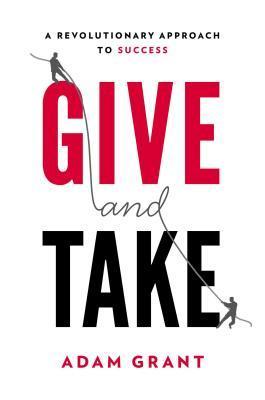
BR 141: Give and Take by Adam Grant

Category: 2 – BUY it! (All Categories are 1 – Read ASAP!, 2 – BUY it!, 3 – SHELF it, 4 – SOMEDAY it)

Comments: A very good book. It does really make you think about how you lead your life and establishes giving to be the best long term strategy.

Top 3 Learnings
1. There are 3 kinds of people – givers, takers and matchers. Takers never do well in the short term, matchers do consistently well whereever they go and the givers are either at the top or the very bottom of their fields. The givers at the top of their fields are what Grant calls “Other”-ish givers. They have a self interest in giving but don’t give at the expense of their performance. The givers at the bottom are those who give even if it is not in their long term interest to do so. Give a lot.. but be a bit selfish (not self centered) about it.

2. It is best to “chunk” your giving rather than do little bits every day. People who volunteer 3 hours on a  weekend are happier than those who do 30 mins every day. 100 hours was found to be the golden number for volunteering that gave maximum happiness returns.

3. It is in our interest to give a lot more than we get. In the old economy, takers weren’t as easily found out as today. Our track record follows us everywhere and being short term focused isn’t a good strategy.. and definitely isn’t a path to happiness.

Book notes here

2. BUY it! · Book Review Actions · Book Reviews · Creativity · Philosophy · Psychology · Relationships · Self Improvement

BR 140: Improv Wisdom by Patricia Ryan Madson

Category: 2 – BUY it! (All Categories are 1 – Read ASAP!, 2 – BUY it!, 3 – SHELF it, 4 – SOMEDAY it)

Comments: This is a really fast paced, fun book with many simple but actionable insights on how to live a happier life. Improv acting sounds very fun and Patricia Ryan Madson distils 12 principles for us to follow and incorporate into our lives.

I enjoyed the book and interviewed Patricia too – she was everything I’d imagined her to be after reading her book.

Top 3 Learnings

1. Life is no different from an improv act. You can make all the plans you want.. but you just have to learn to improvise to be happy.

2. Patricia cautions us against over preparation. Often, we overdo the amount of preparation and forget to be human and fallible.

3. Notice your gifts. Every day, we use and consume things that have been made with a lot of effort by others. It is only when we learn to notice these gifts and become more aware of our blessings do we get better at improv and thus, life.

Book notes here